



Why are buyers leaving L.A. and Orange County for Rancho Cucamonga?
County-to-county migration data shows a sustained flow of households moving from Los Angeles and Orange counties into San Bernardino County, and Rancho Cucamonga is one of the Inland Empire cities absorbing the most demand. The primary motivations are more home for the money, the ability to convert coastal equity into a larger and less leveraged property, hybrid work reducing commute frequency, and strong regional access through Ontario International Airport, Metrolink, and the 210, 15, and 10 corridors. But the move comes with real tradeoffs that deserve honest discussion.
Why This Matters Right Now in Rancho Cucamonga
If you own a home in Rancho Cucamonga, Alta Loma, or Etiwanda, this migration pattern directly affects your position as a seller. Buyers relocating from higher-priced coastal markets often arrive with significant equity, strong purchasing power, and clear expectations about what their money should buy. Understanding their motivations and concerns helps you price, prepare, and market your property to the audience most likely to write the strongest offer.
For those inheriting property in Rancho Cucamonga, this buyer pool is especially relevant. Many inherited homes sit in established neighborhoods that appeal directly to these relocating purchasers, and knowing the demand landscape can shape your timeline and strategy.
What the Migration Data Actually Shows About Rancho Cucamonga
Let’s be straightforward about what the numbers do and don’t tell us.
According to U.S. Census Bureau county-to-county migration data, one of the largest single migration flows in Southern California was from Los Angeles County to San Bernardino County, estimated at approximately 41,764 movers in the measured period. That is a historically significant corridor. Separately, according to U.S. Census Bureau Vintage 2022 estimates, the population of Los Angeles County decreased by over 90,000 residents between 2021 and 2022, the largest single-year decline among all 3,144 counties in the country. Riverside County, immediately adjacent to San Bernardino County, saw a 2.3% jump in population during the same period.
Important caveat: the IRS releases migration data annually based on year-to-year address changes reported on individual tax returns, though the most recent data generally reflects location changes from one to two filing years prior. So the figures driving current headlines are not from 2026. They reflect decisions made in 2021 through 2023.
What we do know at the city level: Rancho Cucamonga has a 2026 population of 178,442, per World Population Review estimates, growing at a rate of 0.33% annually, with population increasing by 2.17% since the 2020 Census recorded 174,655. That steady growth, in a city that’s already the 28th most populous in California, reflects ongoing demand.
More Home and Land for the Money in Rancho Cucamonga
This is the most straightforward motivator, and the data supports it clearly.
The median home price in Rancho Cucamonga varies by source and methodology. As of early to mid-2026, reported figures range from approximately $645,000 (per Amortio, April 2026) to $830,000 (per Redfin reporting, January 2026). RealtyTrac places the current figure at $810,149. Those figures do not match exactly because each platform uses a different methodology, but both point to the same broad takeaway: this is still a premium Inland Empire market, and it delivers substantially more square footage and lot size per dollar than comparable coastal ZIP codes.
We covered the full side-by-side breakdown of what a specific budget produces across markets in Rancho Cucamonga’s 2026 housing market analysis. Rather than repeat those tables here, the short version is this: the purchasing power difference is dramatic enough that coastal equity holders can often move into a larger, newer Rancho Cucamonga home with a lower mortgage balance than what they left behind.
Values vary widely by neighborhood within the city. According to market tracking data, Deer Creek is the highest-valued neighborhood, with a typical value of about $1.67 million, followed by Hermosa and North Day Creek. Foothill and luxury communities like Deer Creek, Haven View Estates, and Carriage Estates sit well above the median, while central condos and south-side homes fall below it. That range means there is a landing spot for buyers at multiple price points.
Newer Homes, Larger Lots, and Flexible Space in Rancho Cucamonga
Beyond price, the type of housing available here is a draw that simply does not exist at scale in most coastal markets.
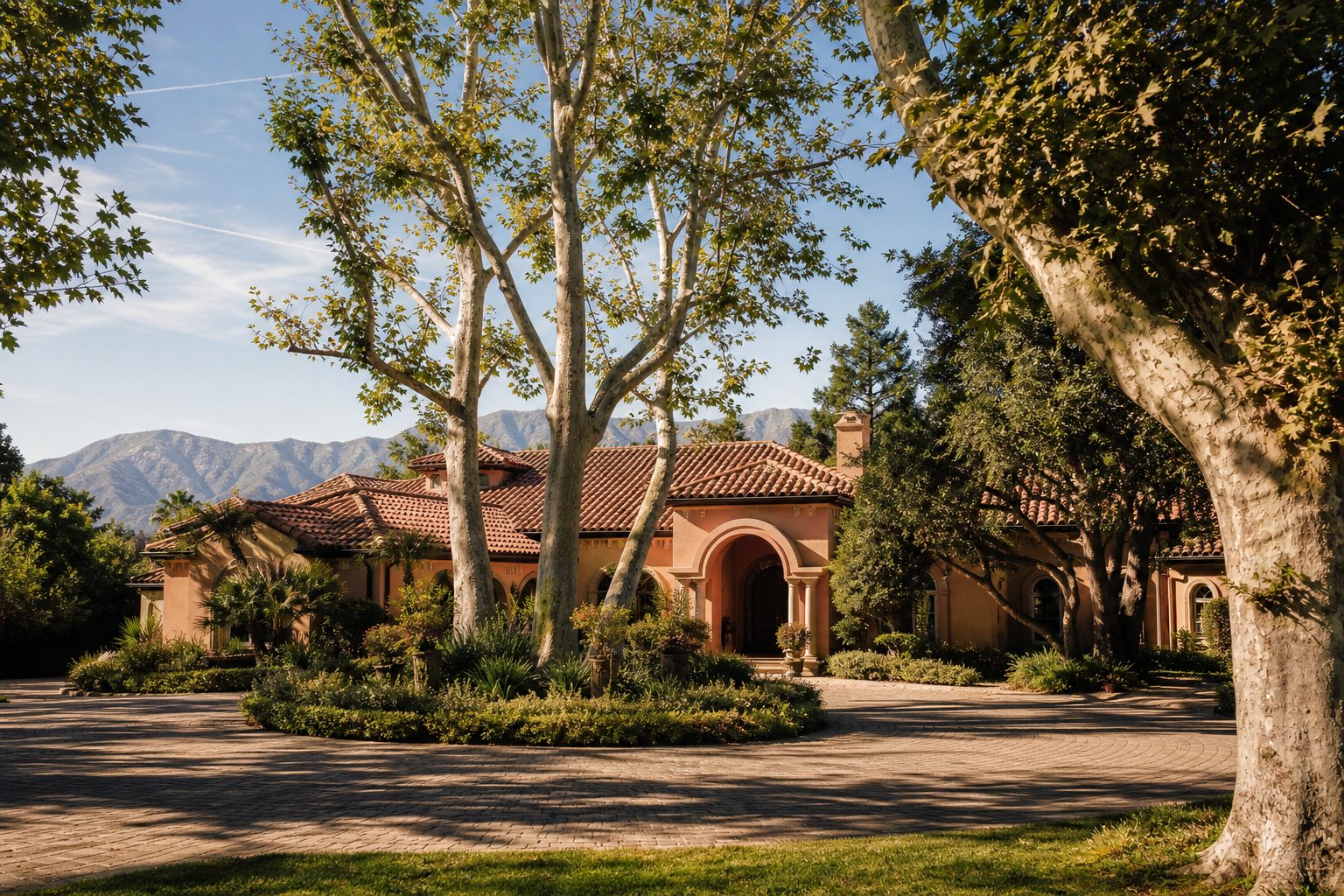
Rancho Cucamonga’s foothill communities were built with larger parcels, wider setbacks, and room for pools, sport courts, RV parking, and accessory dwelling units. These are features that are either prohibitively expensive or structurally impossible on a typical coastal lot. Many relocating buyers are specifically searching for properties with detached casitas, converted garages, or parcels large enough to permit new ADU construction, especially in the foothill corridors of Alta Loma and along the Etiwanda side of the city with foothill views and top schools.
Etiwanda tends to attract buyers who want newer homes, planned neighborhoods, and easier access to the 15 and 210 corridors. Alta Loma, by contrast, appeals to those who want a more established feel, larger lots in certain pockets, and foothill character. View corridors to the San Gabriel Mountains are a legitimate value factor. If you own a home in Alta Loma or Etiwanda with an unobstructed foothill view, that is financially relevant to coastal buyers accustomed to paying premium prices for scenery.
Home values in Rancho Cucamonga have seen a 5-year appreciation of 18.8%, per market tracking data. A homeowner who purchased at the median price of $542,929 five years ago would have gained approximately $102,071 in equity. That appreciation tells relocating buyers the market has legs, not just affordability.
Hybrid Work, Ontario Airport, and Regional Access
The shift to hybrid and remote work is arguably the single biggest structural change enabling this migration. When your commute drops from five days a week to two or three, the calculus on living 37 miles east of Downtown Los Angeles changes entirely.
Rancho Cucamonga’s transportation infrastructure supports that calculation. The city sits at the intersection of the 210, 10, and 15 corridors. Ontario International Airport is minutes away, which matters enormously for professionals who travel for work rather than commuting to a fixed office. Metrolink’s San Bernardino Line serves Rancho Cucamonga Station directly, providing rail access into Union Station and points west.
In Rancho Cucamonga, 87.1% of commuters drive to work, while 0.9% use public transportation, per Census data. That driving figure is worth noting honestly. If you are relocating and will commute on in-office days, test the drive during peak hours before making a decision. The freeway experience at 7:30 a.m. on a Tuesday is materially different from a Saturday afternoon test drive.
Tax Moves, Life-Stage Changes, and Lifestyle in Rancho Cucamonga
Proposition 19 Base-Year Transfers
For eligible homeowners aged 55 and older, severely disabled, or disaster victims, California’s Proposition 19 allows transfer of a property tax base value to a replacement home anywhere in California, subject to specific rules administered by the California State Board of Equalization. This creates a meaningful financial incentive for long-time L.A. or Orange County homeowners to sell and purchase in Rancho Cucamonga while preserving favorable tax treatment. Anyone considering this should verify current eligibility requirements with a tax professional before making assumptions.
Lifestyle and Amenities
Victoria Gardens serves as the premier retail destination, spanning 147 acres with over 150 stores. The Pacific Electric Trail provides multi-use trail access. Foothill hiking, local winery heritage, and proximity to the San Gabriel Mountains and Angeles National Forest round out the picture. The city’s school districts achieve graduation rates between 92% and 96%, significantly exceeding California’s state average of 87.3%. The local economy generates an estimated $8.2 billion in annual economic activity, representing 11% of San Bernardino County’s total GDP, with major employers including Coca-Cola, Frito-Lay, Mercury Insurance Group, Southern California Edison, and Amphastar Pharmaceuticals.
The Tradeoffs Relocating Buyers Actually Weigh
We believe in giving you the full picture, not just the highlight reel.
- Commute on in-office days. Even at two to three days per week, the drive from Rancho Cucamonga to West L.A. or Irvine in peak traffic can be significant. This is the single most common concern we hear from relocating buyers.
- Distance to the coast. You are roughly 50 miles from the nearest beach. For some families, that is a non-issue. For others, it changes weekend routines meaningfully.
- Summer heat. Inland Empire summers are materially hotter than coastal Southern California. Budget for air conditioning costs that may be unfamiliar if you are coming from a coastal ZIP code.
- Fire zones and insurance. Foothill properties in Alta Loma and parts of Etiwanda may fall within or near designated fire hazard zones. Insurance premiums have increased statewide, and coverage availability varies by address. Verify insurance availability and cost for any specific property before making an offer.
- Mello-Roos and CFD assessments. Many newer Rancho Cucamonga developments carry Community Facilities District assessments that add meaningfully to the annual tax bill beyond the base property tax. Median real estate property taxes paid for housing units with mortgages in 2024 were $5,325, per Census data, but Mello-Roos can push the effective total significantly higher. Always verify by address.
What This Means for Rancho Cucamonga Sellers
If you are selling a home in Rancho Cucamonga, understanding this buyer pool gives you a competitive edge.
Coastal buyers arrive with specific expectations. They are accustomed to polished presentations, professional photography, and homes that show well from the first online photo. Pricing right from day one matters more than ever. Homes that sit can go stale, while well-priced, well-presented homes still sell efficiently. The median sale-to-list-price ratio in Rancho Cucamonga was 99.24% in the most recent 30-day data, per Orchard, down 0.8 points compared to the same period last year. Meanwhile, 33.96% of homes listed dropped in price, up 12.8 points from last year, per the same source.
The months of supply was 5.09, up from 3.34 months last year, indicating a more balanced market. There were 53 homes sold, down from 85 last year. This is not a market where overpricing and waiting works. It is a market that rewards preparation and strategy.
For those who have inherited property in Rancho Cucamonga, selling an inherited home in probate can present unique timing considerations. California’s Proposition 19 means that if you do not plan to live in the inherited home as your primary residence, the property will likely be reassessed to current market value, potentially increasing annual property taxes from what may have been a few hundred dollars to several thousand. The carrying cost pressure, combined with active buyer demand from relocating purchasers, often points toward selling sooner rather than later to maximize the stepped-up cost basis advantage.
Moving From L.A. or Orange County to Rancho Cucamonga? What to Know First
If you are on the buying side of this migration, here is what we tell every relocating buyer to verify before committing:
- Verify property tax assessments by address. Base tax, Mello-Roos, and any supplemental assessments vary dramatically even between neighboring properties.
- Verify insurance availability and cost by address. Do not assume. Get quotes before you are in escrow.
- Test the commute at peak times. Drive it on a Tuesday at 7:30 a.m. and a Thursday at 5:30 p.m. Not on a weekend.
- Understand jumbo loan limits. San Bernardino County conforming loan limits differ from L.A. and Orange County limits, which can affect your financing structure.
- Check Prop 19 eligibility. If you are 55 or older and selling a primary residence, verify with a tax professional whether you qualify to transfer your tax base.
- Plan the sell-and-buy sequence. Coordinating the sale of a coastal home with a Rancho Cucamonga purchase requires strategy and timing.
Frequently Asked Questions
Why are people moving to Rancho Cucamonga?
The primary motivations are more home and lot for the money compared to coastal markets, the ability to leverage equity from higher-priced areas, hybrid work arrangements that reduce commute frequency, and strong regional access via Ontario International Airport, Metrolink, and the 210/15/10 freeways.
Are people moving from L.A. to the Inland Empire?
Yes. According to U.S. Census Bureau county-to-county migration data, the flow from Los Angeles County to San Bernardino County was estimated at approximately 41,764 movers in the measured period, making it one of the largest intrastate migration corridors in Southern California.
Is Rancho Cucamonga cheaper than Orange County?
Generally, yes. While Rancho Cucamonga’s median home prices range from roughly $645,000 to $830,000 depending on source and methodology as of early to mid-2026, this typically buys significantly more square footage and lot size than comparable spending in most Orange County ZIP codes.
How far is Rancho Cucamonga from L.A. and Orange County?
Rancho Cucamonga is approximately 37 miles east of Downtown Los Angeles. Drive times vary substantially based on time of day and specific destination. We strongly recommend testing the actual commute during peak hours before making a purchase decision.
Is Rancho Cucamonga good for remote workers?
The city’s infrastructure supports remote and hybrid work well. Proximity to Ontario International Airport benefits professionals who travel rather than commute daily, and Metrolink provides rail access for occasional trips into the L.A. basin.
Can I keep my property tax base if I move from L.A. or OC to Rancho Cucamonga?
Under Proposition 19, eligible homeowners (55 and older, severely disabled, or disaster victims) may transfer their property tax base value to a replacement home anywhere in California, subject to specific rules. Consult a tax professional and the California State Board of Equalization for current eligibility requirements.
What are the downsides of moving to Rancho Cucamonga?
Common concerns include the commute to coastal employment centers on in-office days, distance from the beach, summer heat, fire zone proximity for foothill properties, insurance availability and cost, and Mello-Roos assessments on newer developments. All of these vary by specific property and personal circumstances.
Which Rancho Cucamonga neighborhoods have larger lots?
Alta Loma and parts of Etiwanda offer some of the largest residential lots in the city, particularly in foothill areas. Luxury communities like Deer Creek, Haven View Estates, and Carriage Estates also feature larger parcels with premium amenities.
Do Rancho Cucamonga homes have Mello-Roos?
Many newer developments in Rancho Cucamonga carry Community Facilities District (Mello-Roos) assessments. The amount varies significantly by tract and address. Always verify the exact assessment amount for any specific property before making an offer.
How do I sell my L.A. or OC home and buy in Rancho Cucamonga at the same time?
Coordinating a sale and purchase across markets requires careful sequencing, often involving bridge strategies, contingency management, and timeline coordination. Working with an agent experienced in simultaneous transactions makes a significant difference in the outcome.
The Bottom Line
The data shows a real and sustained pattern of buyers moving from Los Angeles and Orange counties into the Inland Empire, and Rancho Cucamonga is one of the primary destinations. The motivations are grounded in economics, work patterns, and lifestyle priorities, not hype. For Rancho Cucamonga sellers, this means your buyer pool includes well-capitalized purchasers who know exactly what they want. For relocating buyers, this market delivers, but only if you verify the specifics by address before you commit.
Have questions about selling your Rancho Cucamonga home to reach these relocating buyers, or about making the move from L.A. or Orange County yourself?
Whether you are selling in Rancho Cucamonga or relocating from the coast, the decisions involved are too consequential to navigate without someone who understands both sides of this migration. We work with sellers preparing to reach coastal buyers and with relocating buyers who need honest guidance on what the move actually looks like day to day. If you have questions about your specific situation, we are here to help you think it through clearly before you commit to anything.
Questions about your own situation? Call or text Brent Blay at 909-641-8751 or visit soldbyblay.com.
Brent Blay | Sold By Blay at Park Regency Realty | CalDRE #02068178
Your family deserves the best.

Leave a Reply