
Is Rancho Cucamonga a good place to retire?
For many people, yes. Rancho Cucamonga offers more than 30 parks, regional healthcare access, cultural amenities, and housing options at a lower cost than coastal California, plus Prop 19 can make a move within the state more manageable for eligible homeowners 55 and older. The tradeoffs are real, too: California’s cost of living, hot summers, and wildfire considerations in some foothill areas all deserve honest evaluation.
Why This Matters Right Now
If you already own a home in Rancho Cucamonga, you are likely sitting on significant equity. According to market data, home appreciation over the last 10 years has been 130.1% in this city. That changes the retirement conversation entirely, because you may have more options than you realize, whether that means staying, rightsizing into something with less maintenance, or selling and relocating.
And if you are considering Rancho Cucamonga from somewhere else, understanding the full picture (not just the highlights) will help you make a confident decision. We walk homeowners through these choices every day, and we know the details that do not show up in a brochure. Let us break it all down.
If you are curious where you stand right now, start with a free home valuation. No pressure, just a clear, data-backed number.
Housing Costs and Your Options in Rancho Cucamonga
As of June 2026, the median home sale price in Rancho Cucamonga is approximately $826,000, at roughly $408 per square foot, with homes selling in a median of 26 days, according to local market data. That citywide figure, however, tells only part of the story.
Prices in the foothill Etiwanda areas typically run above the citywide median, while south Rancho Cucamonga offers the most attainable entry points. Condos run around $525,000, while single-family homes average closer to $850,000 as of mid-2026.
Here is how the housing landscape breaks down by property type:
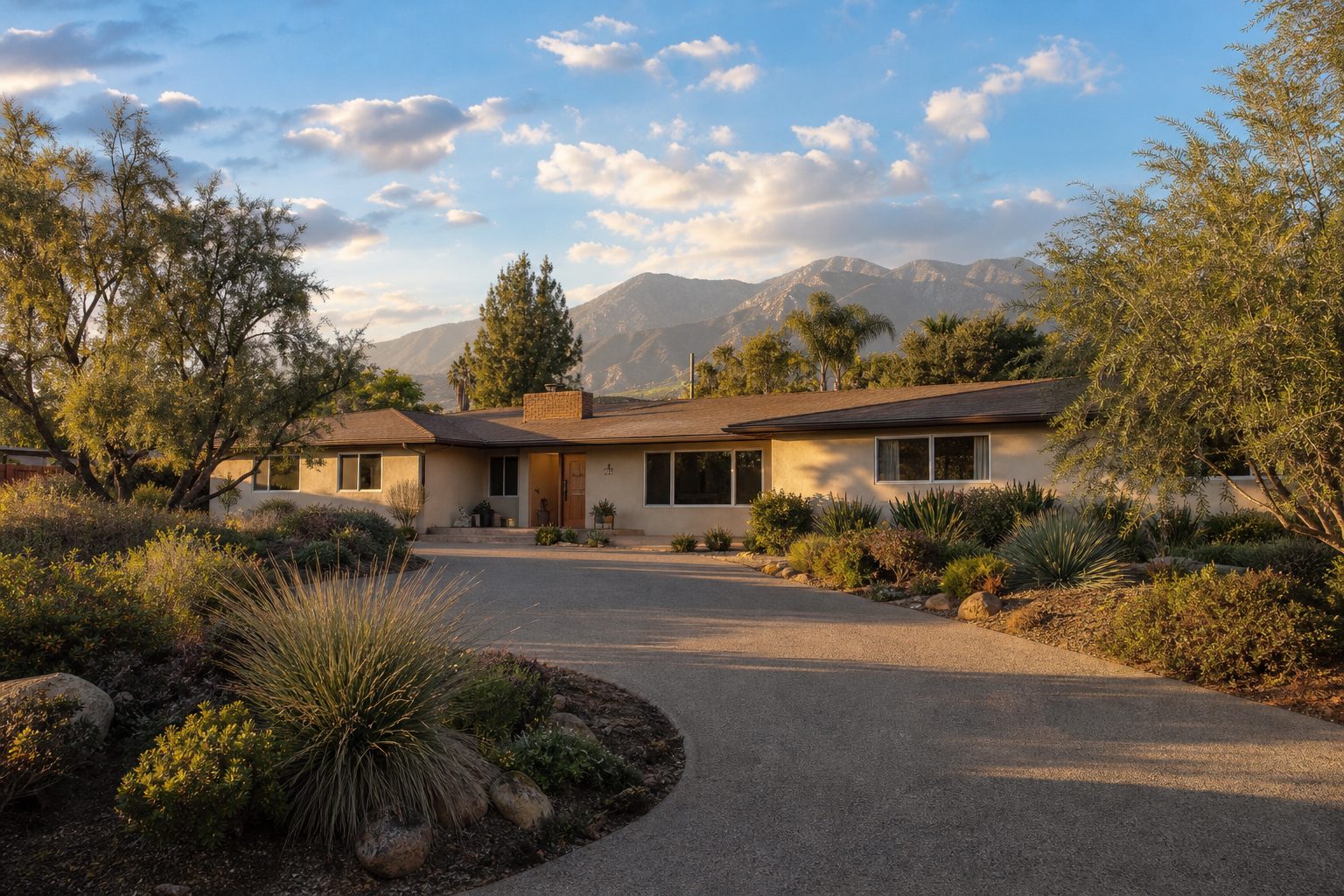
- Single-story homes and homes with main-floor primary suites are well-represented throughout Rancho Cucamonga, particularly in established neighborhoods along Milliken Avenue, Banyan Street, and the communities off Haven Avenue. These layouts are popular for accessibility and tend to hold value well.
- Condos and townhomes near Victoria Gardens and along Foothill Boulevard and Day Creek Boulevard offer a lower-maintenance option. HOA fees vary and are worth evaluating carefully before committing.
- Homes with ADUs or casitas provide flexible space for guests, visiting family, or supplemental income, and Rancho Cucamonga has seen a meaningful uptick in these configurations.
- 55+ communities operating under the Housing for Older Persons Act exist in and adjacent to Rancho Cucamonga. Verify current communities and their lawful age policies with a licensed local agent before relying on any list.
For a deeper comparison of new builds versus established resale homes, our guide on Rancho Cucamonga’s housing market changes covers the key differences. And if you are thinking about what buyers want in a higher-end home today, our post on living in Etiwanda with foothill views and top schools is worth a read.
Taxes and Property Tax Planning in Rancho Cucamonga
This is one of the most important, and most misunderstood, areas for homeowners approaching retirement. Here is a high-level overview. Please work with a licensed CPA and estate planning attorney for advice tailored to your situation.
Prop 19: Base-Year Value Transfers for Homeowners 55+
Under California Proposition 19 (effective February 16, 2021), eligible homeowners who are 55 or older may transfer their existing property tax base value to a replacement home anywhere in California, according to the California State Board of Equalization. This can be significant if you have owned your home for decades and your assessed value is far below current market value. Verify current eligibility rules, the allowable time window, the number of permitted transfers, and value adjustment calculations with the California State Board of Equalization and your CPA.
California Retirement Income Taxes
California does not tax Social Security benefits. However, most other retirement income, including pensions and IRA or 401(k) withdrawals, is generally taxable at the state level, per the California Franchise Tax Board. This is a key factor when comparing California to states with no income tax, and it deserves a conversation with your CPA before making any decisions.
Federal Home-Sale Exclusion
If you sell your primary residence, you may exclude up to $250,000 in capital gains (single) or $500,000 (married filing jointly) under IRS Publication 523, subject to ownership and use tests. Given the appreciation Rancho Cucamonga has experienced, this exclusion can save a substantial amount. Verify eligibility with your tax advisor.
*This article is general information, not legal, tax, or financial advice. Consult a licensed professional.*
Healthcare Access Near Rancho Cucamonga
Access to quality healthcare matters more as you plan for the next chapter. Rancho Cucamonga is served by several hospitals and major medical centers within a reasonable drive:
- San Antonio Regional Hospital in Upland, approximately 10 to 15 minutes from most Rancho Cucamonga neighborhoods
- Kaiser Permanente Fontana Medical Center, roughly 15 minutes away
- Pomona Valley Hospital Medical Center, approximately 20 minutes west
Numerous medical offices, urgent care facilities, and specialty practices operate throughout the city itself. Before making a decision, confirm that your preferred providers are in-network and verify drive times from your specific address.
Staying Active: Parks, Trails, Culture, and Community in Rancho Cucamonga
This is where Rancho Cucamonga genuinely stands out. More than 30 parks provide recreational opportunities throughout the city, and the Pacific Electric Trail, a 21-mile paved trail running through Rancho Cucamonga and surrounding communities, is one of the most popular amenities for walking, cycling, and simply getting outside.
Beyond the trails, the city offers:
- Victoria Gardens, the major outdoor shopping, dining, and entertainment center anchoring the city’s cultural life
- Lewis Family Playhouse, a performing arts venue hosting theater, concerts, and community events year-round
- City libraries and community centers with adult education classes, programs, and meeting spaces
- Red Hill Park, North Etiwanda Preserve, and numerous neighborhood parks with varying amenities
- Volunteer opportunities through community organizations, including the Rancho Cucamonga Rotary and other local groups
What we tell homeowners who are evaluating this city is simple: if you want to stay engaged and active, the infrastructure is here. The question is whether you want to be close to it.
Getting Around Rancho Cucamonga
Rancho Cucamonga is primarily a car-oriented suburb, but it does offer public transit options:
- Omnitrans provides bus service throughout the area, including paratransit options for eligible riders. Check Omnitrans for current routes and eligibility.
- Metrolink operates commuter rail on the San Bernardino Line, with the Rancho Cucamonga station at 11208 Azusa Court providing service toward downtown Los Angeles.
- Ontario International Airport is approximately 15 minutes south, making travel convenient without battling LAX traffic.
- Freeway access via I-15, I-210, and Foothill Boulevard (historic Route 66) connects Rancho Cucamonga to the broader region.
Walkability varies by neighborhood. Areas near Victoria Gardens and along Foothill Boulevard tend to offer more walkable daily errands, while foothill and estate-lot communities are more spread out.
The Tradeoffs to Consider in Rancho Cucamonga
We believe in giving you the full picture. Here is what deserves honest consideration:
- Cost of living. Living in Rancho Cucamonga costs about 77% more than the national average, according to cost-of-living index data. The local median household income of $111,895, per U.S. Census Bureau QuickFacts (July 2025 estimate), helps offset this, but if you are coming from a lower-cost area, the adjustment is significant.
- Summer heat. Rancho Cucamonga enjoys roughly 287 sunny days per year, but summers are hot and dry. If extreme heat is a concern, this is worth factoring in.
- Air quality. The Inland Empire sits within the South Coast Air Quality Management District and has historically experienced elevated ozone levels, particularly in summer. Check current data from the South Coast AQMD.
- Wildfire risk. Some foothill areas of Rancho Cucamonga are designated high or very high fire hazard severity zones by CAL FIRE. This affects insurance availability and cost, especially in the Alta Loma and northern Etiwanda areas. Verify current CAL FIRE hazard maps and speak with an insurance professional before purchasing in these zones.
None of these are dealbreakers by themselves, but together they form the realistic backdrop against which every housing decision should be made.
Stay, Rightsize, or Sell Your Rancho Cucamonga Home?
This is the decision at the heart of retirement planning for most homeowners. Here is how we help people think through it:
Staying in place. If you love your home and neighborhood, aging-in-place modifications (grab bars, wider doorways, main-floor living) can extend how long you stay comfortably. The tradeoff is that larger lots and older homes carry ongoing maintenance costs that tend to increase over time.
Rightsizing within Rancho Cucamonga. Many homeowners choose to sell a larger home and move into a smaller, lower-maintenance property in the same city. With Prop 19, eligible homeowners 55 and older may be able to transfer their property tax base, which can make this move far more financially manageable. Our detailed guide on selling a home in probate walks through the logistics step by step.
Selling and relocating. If you are leaving Rancho Cucamonga, the equity in your home can be substantial. With 11,182 fully paid-off homes in the city according to local market data, many long-term homeowners are in a strong position. Combine the federal home-sale exclusion with Prop 19 planning, and the financial picture can be compelling.
Whatever direction you are leaning, start by understanding what your home is worth today. Get your free valuation at soldbyblay.com/home-value.
Planning Ahead: Trusts and Your Rancho Cucamonga Home
Many homeowners hold property in a living trust, and there are good reasons for that. A properly funded trust can help your family avoid the California probate process, which typically takes 9 to 18 months and involves court filings through the San Bernardino County Superior Court. For families dealing with an inherited property, that delay creates real carrying costs: property taxes, insurance, maintenance, and potential Proposition 19 reassessment.
If you have not placed your home in a trust, or if you have inherited a property and are unsure of your options, our guide on selling a home in probate explains how we help families navigate these situations. We also have a detailed guide on whether to sell, rent, or keep a parent’s home in the Inland Empire.
This is not legal advice. Work with an estate planning attorney to set up or review your trust.
Your Retirement Move Checklist for Rancho Cucamonga
1. Get a current home valuation so you know your equity position 2. Meet with a CPA to review Prop 19 eligibility, capital gains exclusion, and California retirement income taxes 3. Consult an estate planning attorney about trust status and beneficiary planning 4. List your must-haves for the next chapter: single-story layout, proximity to healthcare, lower maintenance, specific neighborhood 5. Research insurance costs, especially if considering foothill areas with fire risk 6. Evaluate whether to stay and modify, rightsize locally, or sell and relocate 7. If selling, work with a Rancho Cucamonga real estate agent who understands Prop 19 timing and can coordinate the buy-and-sell process 8. Review your healthcare coverage: Medicare plans, provider networks, and proximity to your preferred facilities 9. Visit community centers, parks, and trails before making a final decision 10. Reach out to us to talk through your options with zero pressure
Frequently Asked Questions
Is Rancho Cucamonga a good place to retire?
For many people, yes. The city offers more than 30 parks, the 21-mile Pacific Electric Trail, regional healthcare access, Victoria Gardens for dining and entertainment, and a range of housing options from condos to single-story homes. The tradeoffs include California’s high cost of living, hot summers, and wildfire risk in some foothill areas. Your answer depends on what matters most to you.
What is the cost of living in Rancho Cucamonga?
According to cost-of-living index data, living in Rancho Cucamonga costs about 77% more than the national average, driven primarily by housing costs. However, you will generally pay less than you would in coastal California cities like those in L.A. or Orange County. The local median household income is $111,895, per U.S. Census Bureau QuickFacts (July 2025 estimate).
Can I transfer my property tax base to a home in Rancho Cucamonga?
Under California Proposition 19 (effective February 2021), eligible homeowners 55 or older may transfer their property tax base-year value to a replacement home anywhere in California, according to the California State Board of Equalization. Eligibility rules, timing requirements, and value adjustment calculations apply. Verify all details with the Board of Equalization and your CPA.
Does California tax Social Security?
No. California does not tax Social Security benefits, per the California Franchise Tax Board. However, most other retirement income, including pensions and IRA or 401(k) withdrawals, is generally taxable at the state level. Consult a licensed CPA for advice specific to your situation.
Are there 55+ communities in Rancho Cucamonga?
Yes, there are age-restricted communities operating under the Housing for Older Persons Act in and adjacent to Rancho Cucamonga, including 55+ apartments and mobile home communities. Verify current availability, lawful age policies, and pricing with a licensed local agent before relying on any list.
What hospitals are near Rancho Cucamonga?
San Antonio Regional Hospital in Upland is approximately 10 to 15 minutes away. Kaiser Permanente Fontana Medical Center is roughly 15 minutes, and Pomona Valley Hospital Medical Center is about 20 minutes west. Confirm your provider network and drive times from your specific address.
What is there to do in Rancho Cucamonga?
The city has more than 30 parks, the 21-mile Pacific Electric Trail, North Etiwanda Preserve for hiking, Victoria Gardens for shopping and dining, Lewis Family Playhouse for performing arts, and city libraries and community centers with adult programs. The Rancho Cucamonga area also provides access to mountain recreation within about an hour’s drive.
How hot does it get in Rancho Cucamonga?
Rancho Cucamonga enjoys approximately 287 sunny days per year with a Mediterranean climate, but summers are hot and dry. Santa Ana winds typically occur in fall and can elevate fire risk and reduce air quality. Check current conditions through the National Weather Service and the South Coast AQMD.
Should I downsize or stay in my home when I retire?
It depends on your financial position, maintenance tolerance, and lifestyle goals. Staying may work well with aging-in-place modifications, while rightsizing into a lower-maintenance property can free up equity and reduce upkeep. Prop 19 may allow you to transfer your property tax base, making a local move more affordable. We help homeowners evaluate both options.
Should my home be in a living trust?
Many California homeowners hold property in a living trust to help their families avoid the probate process, which can take 9 to 18 months in San Bernardino County. A trust can simplify the transfer of property to heirs and reduce legal costs. This is a conversation to have with an estate planning attorney. Our team works closely with probate and trust situations and can connect you with resources.
The Bottom Line
Rancho Cucamonga offers a genuine combination of parks, trails, cultural amenities, healthcare access, and housing variety that works well for many people planning retirement. The tradeoffs, including cost of living, summer heat, and wildfire risk in some areas, are real and worth evaluating honestly. With significant home equity, Prop 19 planning, and the right professional guidance, you have more options than you might think.
Have questions about planning a retirement move or your next move in Rancho Cucamonga? Let us talk. Whether you are buying, selling, or just planning ahead, we will give you honest advice and a clear plan. Learn more about homeownership resources from trusted sources, and reach out to us to discuss your specific situation.
Get your free home valuation at soldbyblay.com/home-value Schedule a consultation at soldbyblay.com/contact
Brent Blay | Sold By Blay | Park Regency Realty | DRE #02068178 📞 909-641-8751 | ✉️ brentblay@parkregency.com | soldbyblay.com Your family deserves the best.
*Information and data as of October 2026; figures change regularly.*

Leave a Reply