



Can you still get homeowners insurance in Rancho Cucamonga?
Yes. Most Rancho Cucamonga homes can still be insured, but your options, cost, and the time it takes to bind a policy vary significantly by address, fire hazard zone, roof condition, and mitigation measures already in place.
Why Rancho Cucamonga Homeowners Insurance Matters Right Now
If you own, are inheriting, or are looking to buy a home in Rancho Cucamonga, insurance is no longer a box you check at the end of a transaction. It is a deal variable that can affect your timeline, your buyer pool, and your bottom line. The California FAIR Plan’s 29.1% average rate increase took effect on October 15, 2026, per the California Department of Insurance. That means every new or renewing FAIR Plan dwelling policy in the state just repriced. Foothill neighborhoods in Rancho Cucamonga, including areas within the Alta Loma, Etiwanda, and Deer Creek communities, feel this most directly because a larger share of homes there rely on the FAIR Plan or surplus-lines carriers.
What does that actually mean for you? It means whether you are listing a home, making an offer, or managing an inherited property through probate, insurance needs to be part of the conversation from day one, not day 25.
How the California Insurance Market Affects Rancho Cucamonga in 2026
Here is where the statewide market stands as of October 2026, based on verified data:
- FAIR Plan average rate increase: 29.1%, effective October 15, 2026, per CDI approval. The FAIR Plan originally requested 35.8%.
- FAIR Plan policies in force: Approximately 696,562 as of June 2026, per FAIR Plan data.
- FAIR Plan total exposure: $768 billion as of June 2026, per FAIR Plan data.
- FAIR Plan policy growth since September 2022: Approximately 157%, per multiple reporting outlets in 2026.
- Share of California policies through FAIR Plan or surplus lines (2025): About 1 in 7, per the Insurance Information Institute, September 2026.
- California homeowners premiums increase since 2020: Approximately 84%, per a Stanford study reported by KQED in June 2026.
- New FAIR Plan business trend: Down about 25% in 2026. The FAIR Plan added roughly 12,000 residential policies in Q2 2026, the fifth straight quarter of declining additions, per Insurance Journal, September 10, 2026.
The encouraging news? Under Insurance Commissioner Ricardo Lara’s Sustainable Insurance Strategy, carriers that use Department-reviewed wildfire catastrophe models in their rate filings must commit to writing policies in wildfire-distressed ZIP codes equal to at least 85% of their statewide market share, per CDI and United Policyholders. Mercury, Farmers, and CSAA have been reported writing statewide. Allstate submitted a Sustainable Insurance Strategy filing on August 31, 2026, signaling intent to begin writing new residential policies in California for the first time since 2022. State Farm’s status remains mixed; some reports indicate limited new business in certain distressed ZIP codes, while other sources report them as still closed to most new homeowners business as of October 2026.
So, is the trend improving? Cautiously, yes. But “improving statewide” does not mean “easy at your specific address.” You need to verify carrier availability for your Rancho Cucamonga ZIP code, whether that is 91701 (Alta Loma), 91730, 91737, or 91739 (Etiwanda).
What Determines Your Insurance Options in Rancho Cucamonga
Not every Rancho Cucamonga home faces the same insurance landscape. Here are the property-level factors that make the difference:
Fire Hazard Severity Zone Designation
Rancho Cucamonga stretches from flat commercial corridors near the 10 Freeway up to steep foothill properties that border wildland. Neighborhoods like Etiwanda Estates, Rancho Etiwanda Estates, Carriage Estates, Sheridan Estates, and Andalusia sit closer to the wildland-urban interface. Homes above Baseline Road in the Alta Loma area and properties backing up to the San Gabriel Mountain foothills are more likely to carry a Very High Fire Hazard Severity Zone designation or fall within a State Responsibility Area. You can verify your specific parcel’s designation on the CAL FIRE FHSZ Viewer. This designation is the single largest factor in which carriers will write your address.
Roof Age and Material
A roof older than 20 to 25 years, or one built with wood shake, is a significant underwriting hurdle with most admitted carriers today. Many will not write a policy at all, or will add a premium surcharge, for non-Class A roofing. If you are selling, knowing your roof’s age, material, and installation date is essential.
Home Age and Claims History
Older homes with original electrical panels, aging plumbing, or construction materials that predate current wildland-urban interface building codes face tighter scrutiny. Additionally, a CLUE (Comprehensive Loss Underwriting Exchange) report shows up to seven years of prior insurance claims on a property. Multiple fire, water, or mold claims can make carriers cautious, even if you, as the current owner or heir, never filed a claim yourself.
Mitigation Measures
Documented fire-hardening features make a measurable difference: ember-resistant vents, Class A roofing, defensible space cleared to at least 100 feet, ember-resistant decking and fencing, and dual-pane windows. These are not just safety features. They are underwriting criteria that can determine whether a standard carrier will write your home and whether you qualify for discounts, including under California’s “Safer from Wildfires” discount framework.
FAIR Plan, DIC, and Standard Policies: What Rancho Cucamonga Homeowners Need to Know
If you cannot obtain a standard homeowners policy (often called an HO-3), the California FAIR Plan is the insurer of last resort. Here is how the three main options compare:
Standard HO-3 Policy
- Broad coverage for your dwelling and personal property
- Covers most perils except those specifically excluded (like flood and earthquake)
- Includes liability coverage
- Available from admitted carriers when they are writing in your area
California FAIR Plan (Dwelling Policy)
- Named-peril coverage only: fire, lightning, internal explosion, and smoke, per FAIR Plan and CDI summaries
- Does NOT include theft, liability, water damage, or many other perils
- Maximum residential dwelling limit is $3 million per policy, per CDI and the FAIR Plan
- The 29.1% average rate increase took effect October 15, 2026; individual policy changes range from roughly a 20% decrease to a 50% increase depending on the property’s risk profile
- Available to any California property owner who has been denied coverage in the admitted market
Difference in Conditions (DIC) Policy
- A supplemental “wrap-around” policy purchased alongside a FAIR Plan policy
- Fills coverage gaps: theft, liability, water damage, additional living expenses, and other perils not covered by the FAIR Plan
- Purchased from a separate carrier (often a surplus-lines insurer)
- Combined cost of FAIR Plan plus DIC typically exceeds a standard HO-3 premium
If you are buying or selling a home in Rancho Cucamonga that sits in a higher fire-risk area, understanding this FAIR Plan plus DIC structure is critical. A buyer’s lender will require adequate coverage before funding the loan, and a bare FAIR Plan policy without a DIC may not satisfy lender requirements for full replacement cost coverage.

What Rancho Cucamonga Sellers Should Do Before Listing
If you are preparing to sell your Rancho Cucamonga home, especially in the foothill areas or if you have inherited the property, insurance should be part of your pre-listing strategy, not an afterthought. Here is what we recommend:
- Contact the existing insurer immediately. If you have inherited a home, reach out to transfer or maintain the existing policy. If the property will be vacant during probate, standard policies typically exclude vacant properties after 30 to 60 days. You may need a specialized vacant-property or dwelling-fire policy.
- Document everything a buyer’s insurer will want to see. Roof age, material, and installation date. Any fire-hardening upgrades. Defensible space clearance. Ember-resistant vent documentation. Updated electrical and plumbing records.
- Share your current carrier and premium information with qualified buyers early. This gives them a head start and reduces the chance of a deal falling apart late in escrow because the buyer could not bind coverage.
- Maintain the property. Insurers may cancel coverage on visibly neglected properties. Clear brush, maintain defensible space per CAL FIRE requirements, and keep the home in presentable condition.
- Disclose the fire hazard zone. California law requires Natural Hazard Disclosure, including fire hazard zone designation. Consult your Rancho Cucamonga real estate agent to ensure full compliance.
For probate and inherited-property sellers, this is especially important. Properties that sit vacant for months during the probate process are extremely difficult to insure, and the carrying costs of property taxes (the effective rate in Rancho Cucamonga is approximately 0.71%, per Livability Calc data), insurance, utilities, and maintenance add up quickly.
If you are an heir or trustee managing an inherited home in Rancho Cucamonga, we work with families in exactly this situation regularly. With 105 transactions closed and a focus on probate, trust, and inherited properties, we understand the timeline pressures and legal complexities that make insurance just one more piece of a much bigger puzzle.
What Rancho Cucamonga Buyers Should Do Before Making an Offer
Do not wait until you are three weeks into escrow to find out whether you can get insurance on the home you want. Here is the approach we walk our buyers through:
- Shop for insurance during due diligence, not at the end. Once you have identified your top candidates, get preliminary quotes before writing an offer, especially if the home sits in the Alta Loma foothills, Etiwanda, or any area near the wildland-urban interface.
- Work with an independent insurance broker. An independent broker can quote multiple carriers and navigate the FAIR Plan, DIC, and surplus-lines options in a single conversation. We do not recommend specific brokers, but we strongly recommend using one who is familiar with San Bernardino County foothill properties.
- Understand the FAIR Plan plus DIC structure. If a standard HO-3 is not available for your address, you will likely need a FAIR Plan dwelling policy paired with a DIC policy. Budget accordingly; the combined cost typically exceeds a standard policy.
- Budget for insurance in your total monthly payment. With California homeowners premiums up approximately 84% since 2020 (per a Stanford study reported in June 2026), your insurance line item may be substantially higher than historical norms for the area.
- Request the property’s CLUE report. This shows past claims history and helps you anticipate underwriting questions.
- Verify your lender’s insurance requirements. Some lenders require full replacement cost coverage, which a bare FAIR Plan policy may not satisfy without a DIC supplement.
Mortgage lenders will not fund your loan without proof of insurance. If binding coverage takes longer than expected, it can push back your closing date, and in a market where Rancho Cucamonga homes sell in a median of 26 days (as of June 2026, per local market data), a delayed close can mean losing the home.
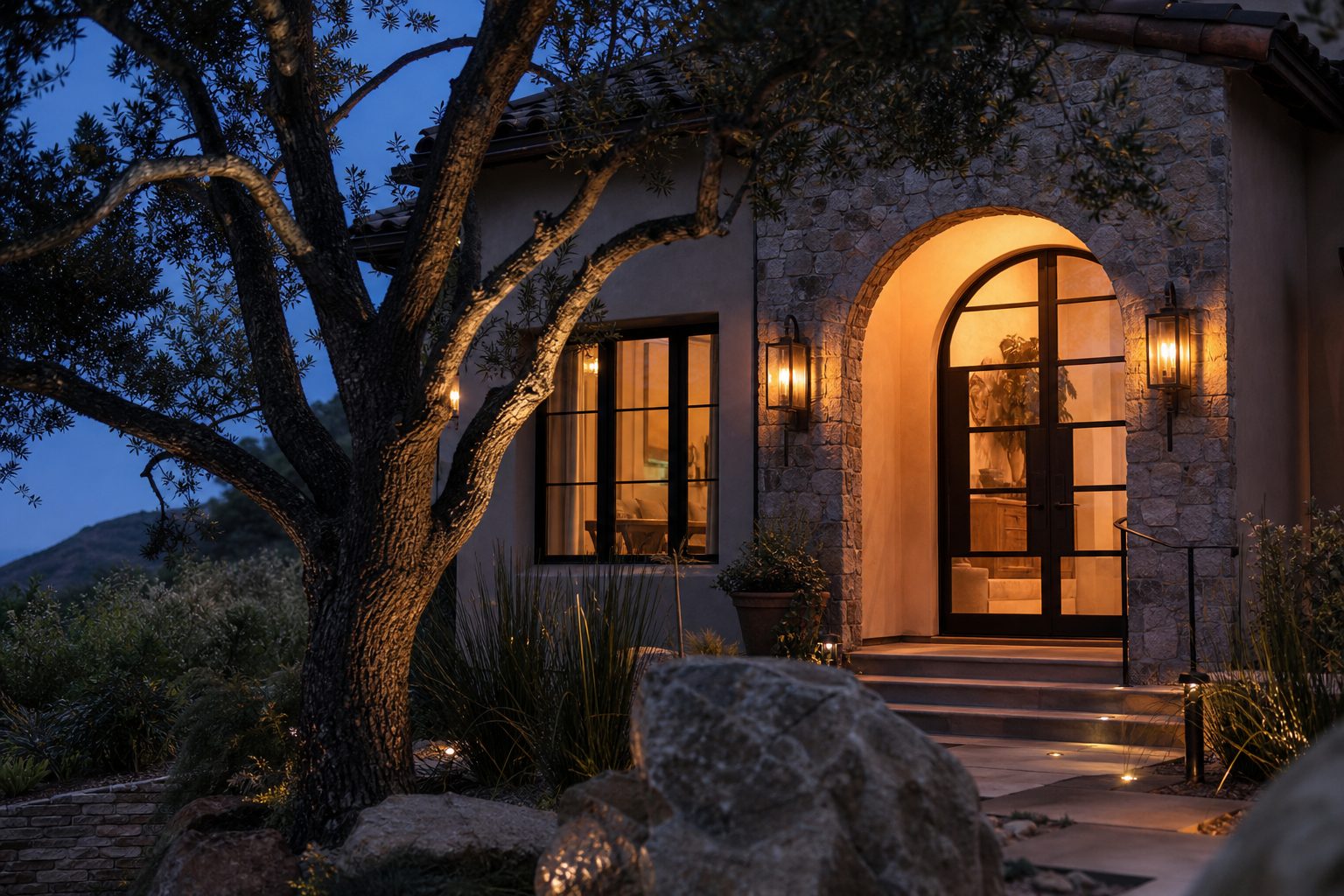
Insuring a Luxury Home in the Rancho Cucamonga Foothills
For homes in Rancho Cucamonga’s premier foothill communities—including the neighborhoods featured in Living in Etiwanda—insurance carries an additional layer of complexity. Neighborhood values in Deer Creek average around $1,668,181, Hermosa around $1,287,867, and North Day Creek around $1,265,324, per Zillow neighborhood values reported as of February 2026. The Trails and Olive Grove neighborhoods also carry typical values above $1.1 million.
The FAIR Plan’s maximum residential dwelling limit is $3 million per policy, per CDI and the FAIR Plan. For most Rancho Cucamonga homes, that ceiling is sufficient. But here is the nuance: insurance is based on rebuild cost, not market value. A home that sells for $1.5 million might cost $1.8 million or more to rebuild to current code. For the highest-value foothill estates, rebuild costs can approach or exceed the FAIR Plan cap, which means you may need excess coverage from a high-net-worth carrier or a surplus-lines policy.
This is an area where planning ahead makes a real difference. If you are selling a luxury home in Rancho Cucamonga and your buyer needs to piece together FAIR Plan, DIC, and possibly excess coverage, the timeline to bind all three can stretch well beyond what a standard 30-day close accommodates. We factor this into our listing strategy from the start.
With 46 client reviews at a 4.9 out of 5 star average and a specialty in luxury homes, we understand the stakes when a foothill listing is on the line. Our 104% list-to-sale ratio and average of 13 days on market reflect how we prepare properties and position them so that insurance does not become the bottleneck.
Ways to Lower Your Homeowners Insurance Premium in Rancho Cucamonga
You cannot control the statewide market, but you can influence your own quote. Here are the most effective levers:
- Fire-harden your home. Class A roofing, ember-resistant vents, enclosed eaves, tempered glass or dual-pane windows, and non-combustible decking and fencing near the structure. California’s “Safer from Wildfires” discount framework rewards documented mitigation.
- Maintain defensible space. CAL FIRE requires at least 100 feet of defensible space. Exceeding the minimum, especially in Zone 0 (the immediate 0 to 5 feet around the structure), can improve your insurability and your premium.
- Upgrade your roof. If your roof is approaching 20 years old, a reroof with Class A materials can open doors to carriers that would otherwise decline.
- Update electrical, plumbing, and HVAC. Bringing these systems current reduces underwriting risk and can lower premiums.
- Bundle policies. Many carriers offer discounts when you bundle home and auto coverage.
- Raise your deductible. A higher deductible lowers your annual premium, though you need to be comfortable covering the higher out-of-pocket cost in a claim.
- Use the CDI’s Home Insurance Finder. The California Department of Insurance offers a tool that matches your address with carriers currently writing in your area. It is a starting point, not a complete market scan, but it is free.
- Check the FAIR Plan clearinghouse. The FAIR Plan operates a clearinghouse that offers FAIR Plan policyholders to admitted insurers. If a carrier picks up your policy, you may get broader coverage at a competitive rate.
Frequently Asked Questions About Homeowners Insurance in Rancho Cucamonga
Can you still get homeowners insurance in Rancho Cucamonga?
Yes. Most Rancho Cucamonga homes can obtain coverage through either the admitted market (standard carriers) or the California FAIR Plan paired with a DIC policy. Your specific options depend on your address, fire hazard zone, roof condition, home age, and mitigation measures. Start shopping early and work with an independent broker for the broadest view of your options.
Which insurance companies are writing new homeowners policies in California right now?
As of October 2026, Mercury, Farmers, CSAA (AAA), Kemper, and Travelers have been reported writing statewide or expanding under the Sustainable Insurance Strategy, per CDI and multiple industry sources. Allstate filed its intent to begin writing new residential policies on August 31, 2026. State Farm’s status remains uncertain; verify directly for your specific ZIP code.
What is the California FAIR Plan, and how much did it go up?
The FAIR Plan is California’s insurer of last resort for property owners who cannot obtain coverage in the admitted market. CDI approved a 29.1% average rate increase on dwelling policies, effective October 15, 2026. Individual renewals may range from roughly a 20% decrease to a 50% increase depending on the property’s fire-risk profile.
What does the FAIR Plan not cover?
The FAIR Plan dwelling policy is named-peril only, covering fire, lightning, internal explosion, and smoke, per FAIR Plan and CDI summaries. It does not cover theft, liability, water damage, wind (in most cases), or additional living expenses. You typically need a DIC policy to fill those gaps.
What is a DIC policy?
A Difference in Conditions policy is a supplemental policy purchased alongside a FAIR Plan policy to cover perils the FAIR Plan excludes, including theft, liability, water damage, and loss of use. Together, a FAIR Plan plus DIC approximates the coverage of a standard homeowners policy, though the combined cost is usually higher.
Can insurance problems delay or cancel a home sale in Rancho Cucamonga?
Absolutely. A buyer’s mortgage lender requires proof of insurance (a binder) before closing. If the buyer cannot bind coverage in time, the closing date gets pushed back. In difficult-to-insure foothill locations, this delay can be significant. Starting insurance shopping during the inspection and contingency period, rather than at the end of escrow, reduces this risk.
When should a Rancho Cucamonga buyer start shopping for homeowners insurance?
During your inspection and contingency period, or even before writing an offer on foothill properties. Binding coverage can take days or weeks depending on the carrier, the fire zone, and the property’s condition. Waiting until the final week of escrow is one of the most common and most preventable reasons for closing delays.
How can I lower my homeowners insurance in a fire zone?
Document and implement fire-hardening upgrades: Class A roof, ember-resistant vents, defensible space exceeding the 100-foot minimum, non-combustible materials within five feet of the structure, and dual-pane windows. California’s “Safer from Wildfires” discount framework rewards these measures. Also consider raising your deductible and bundling policies.
What should probate sellers know about insuring an inherited home in Rancho Cucamonga?
Inherited homes that sit vacant during probate are extremely difficult to insure. Standard policies typically exclude vacant properties after 30 to 60 days. Contact the existing insurer immediately to transfer or maintain the policy, and consider a specialized vacant-property or dwelling-fire policy. Carrying costs, including insurance, property taxes, and maintenance, add up quickly during a probate timeline that can stretch 12 to 18 months or longer.
What dates should Rancho Cucamonga homeowners and buyers be watching?
The FAIR Plan’s 29.1% average rate increase took effect October 15, 2026. The November 3, 2026 election includes the California Insurance Commissioner race, which could influence future regulatory direction. Watch for new insurance consumer laws that may take effect January 1, 2027. Check CDI announcements for carrier filings under the Sustainable Insurance Strategy.
The Bottom Line on Homeowners Insurance in Rancho Cucamonga
You can still get homeowners insurance in Rancho Cucamonga. The question is not “if” but “through which path, at what cost, and how far ahead do you need to plan.” For sellers, documenting your home’s insurability features and sharing policy details early makes your listing stronger and your buyer pool wider. For buyers, shopping for insurance alongside your home search, not after, keeps your closing on track. And for heirs and trustees managing inherited properties, getting coverage in place quickly is one of the most important steps you can take to protect the estate.
This article is general information, not insurance, legal, or financial advice. Consult a licensed insurance professional for guidance specific to your property and situation.
Information and data as of October 19, 2026; figures change regularly.
Have questions about homeowners insurance or your next move in Rancho Cucamonga? Let’s talk. Whether you are buying, selling, or managing an inherited property, we will give you honest advice and a clear plan so nothing catches you off guard.
Brent Blay | Sold By Blay | Park Regency Realty | DRE #02068178 📞 909-641-8751 | ✉️ brentblay@parkregency.com | soldbyblay.com Your family deserves the best.

Leave a Reply