
How does wildfire risk affect home insurance in North Etiwanda, and what do sellers and buyers need to know?
North Etiwanda’s foothill location in northeast Rancho Cucamonga places many homes in California’s Very High Fire Hazard Severity Zone, which directly affects insurance availability, premium costs, and what you must disclose when selling. Whether you are preparing to list or shopping for a home in this corridor, understanding fire coverage before escrow opens can mean the difference between a smooth closing and a deal that falls apart.
*This article is general information, not legal or insurance advice. Consult a licensed insurance professional and a real estate attorney for guidance specific to your property. Information and data as of November 2026; figures change regularly.*
Why Fire Coverage Matters in North Etiwanda
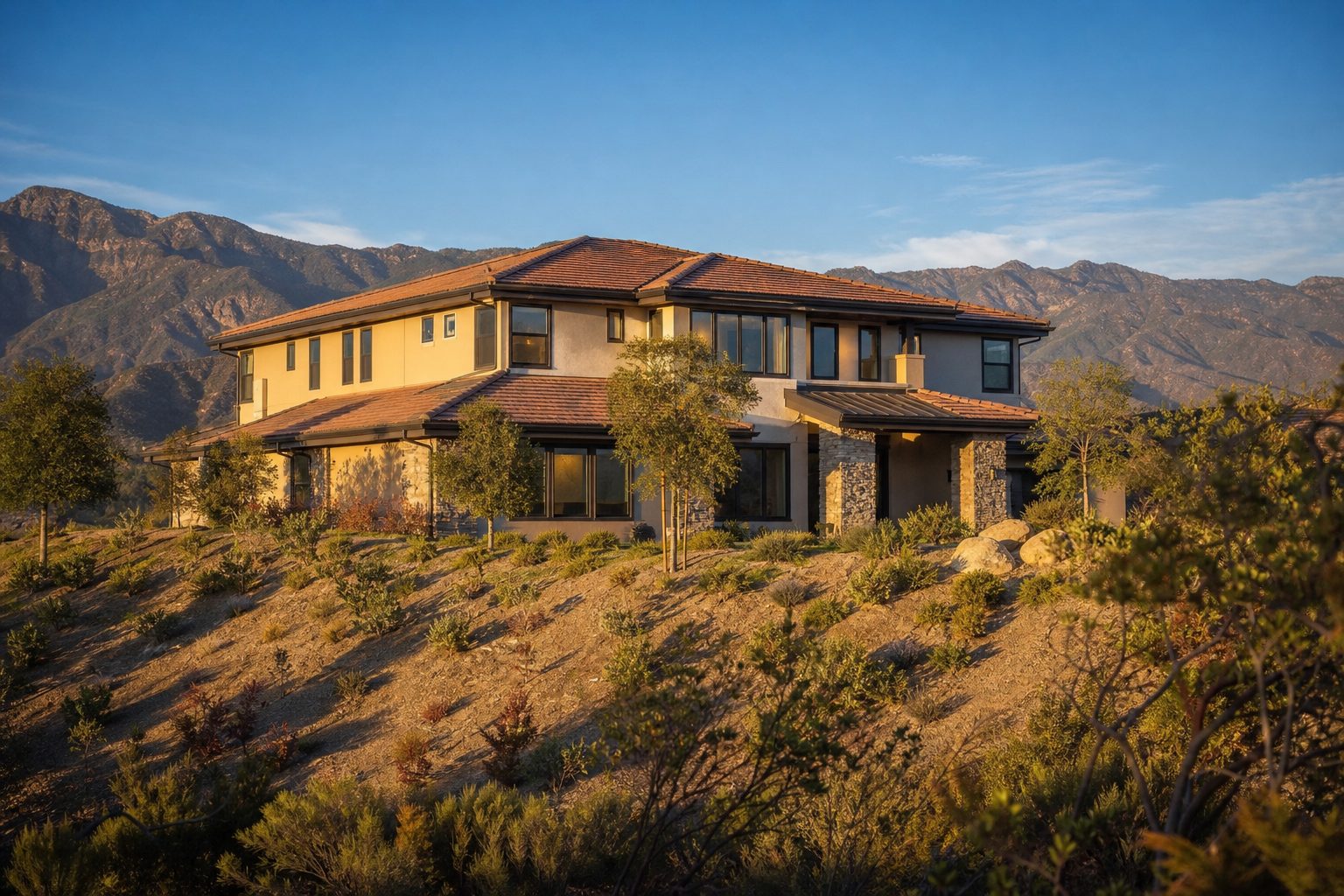
Rancho Cucamonga’s northern boundary sits along a wildland-urban interface where Etiwanda and Alta Loma neighborhoods meet the San Gabriel Mountains, an area the state has designated a Very High Fire Hazard Severity Zone. Communities like Etiwanda Estates, Rancho Etiwanda Estates, and Carriage Estates are bordered on the north by open wildland, including the 764-acre North Etiwanda Preserve. The City of Rancho Cucamonga has pointed to the terrain and recurring Santa Ana wind events as factors that let fires spread quickly once they ignite, and that preserve has been subject to precautionary closures due to high fire danger.
So why does this matter for your real estate transaction? Because insurance is not a background detail here. It is a core deal point. Conventional mortgage lenders require proof of homeowner’s insurance before funding a loan. If you cannot obtain coverage, or if the cost of coverage pushes a buyer’s monthly payment beyond qualification limits, the transaction stalls. We see this play out in escrow regularly, and the sellers and buyers who plan ahead are the ones who close on time.
Fire Hazard Severity Zones in Rancho Cucamonga Explained (and How to Check Your Address)
California’s fire hazard severity zones are mapped by CAL FIRE under the authority of the State Fire Marshal. Each zone is based on fuel loading, slope, fire weather, and wind patterns, per the department’s published methodology. There are three tiers: Moderate, High, and Very High. Very High is the most restrictive classification and triggers the most compliance obligations.
Recent Map Updates You Need to Know
Here is what changed recently and why it matters to you. CAL FIRE’s zone designations for State Responsibility Areas became effective April 1, 2024, and recommendations for Local Responsibility Areas were issued March 24, 2025, per CAL FIRE. According to those Phase 4 LRA recommendations for San Bernardino County, Rancho Cucamonga has approximately 915 acres in the Moderate zone, 1,123 acres in the High zone, and 8,871 acres in the Very High zone. That Very High acreage expanded significantly from 5,553 acres in the 2011 maps. The Very High designation applies near Haven View Estates and north Etiwanda, per CAL FIRE’s current mapping.
How to Check a Specific Address
You can verify your zone designation by visiting CAL FIRE’s online fire hazard severity zone viewer (search “CAL FIRE FHSZ viewer” in your browser) and entering your address or parcel number. You can also check with the Rancho Cucamonga Fire District at their offices at 10500 Civic Center Drive during regular business hours. We always recommend confirming by address, not by neighborhood name alone, since zone boundaries do not follow subdivision lines. Do not rely on a designation from several years ago.
The California Home Insurance Market Right Now in Rancho Cucamonga
California’s homeowners insurance market has been under significant stress, and 2026 represents a period of ongoing reform rather than full recovery.
Insurance Commissioner Ricardo Lara’s Sustainable Insurance Strategy, launched in 2023 and substantially implemented by 2025, represents the most significant reform of California’s insurance regulatory architecture in decades, per the California Department of Insurance. The core trade-off: insurers that use forward-looking catastrophe modeling must commit to writing policies in wildfire-distressed areas proportional to their statewide market share. The regulations call for carriers to either write 85% of their market share in high-risk areas, grow their policies 5% in such areas, or increase their number of policies 5% by taking customers out of the FAIR Plan.
Progress is real but gradual. Travelers announced in April 2026 that it would expand California homeowners coverage under the Sustainable Insurance Strategy, per the California Department of Insurance, marking the first major new commitment from a top-10 carrier since the Palisades and Eaton fires. Farmers removed the cap on new homeowners policies entirely in November 2025 once reforms cleared.
What does this actually mean for your wallet? California’s average home insurance costs have risen 5% so far in 2026, one of the biggest increases in the nation. For properties in Very High Fire Hazard Severity Zones like North Etiwanda, costs vary considerably depending on a home’s hardening level, documented defensible space, and claim history. The market is reorganizing month by month under carrier commitments, so quotes that were unavailable last year may be available now. Working with a licensed insurance professional who actively places coverage in Inland Empire fire-zone communities is essential.
The California FAIR Plan and DIC Policies for North Etiwanda Properties
The California FAIR Plan is a state-mandated insurance pool that provides fire coverage to property owners who have been denied by at least two traditional carriers in the voluntary market, per the California FAIR Plan Association. It is a last-resort backstop, not a preferred option, but for some North Etiwanda properties it may be the only admitted-market fire coverage available. The FAIR Plan offers basic fire coverage capped at $3 million for a dwelling.
What the FAIR Plan Does Not Cover
The FAIR Plan provides fire and smoke coverage, but it does not include liability, theft, or water damage. You will likely need a separate Difference-in-Conditions (DIC) wraparound policy to fill those gaps. A DIC policy picks up the coverages the FAIR Plan leaves out, giving you a package that functions more like a standard homeowner’s policy. The combination typically costs more than a traditional policy would in a lower-risk area, but it satisfies lender requirements and protects your investment.
If you are inheriting a property in North Etiwanda and need to maintain coverage during probate or a trust administration, the FAIR Plan plus a DIC policy may be the most practical path while the estate is settled. Learn more about selling a home in probate if you are managing an inherited property in the area.
Home Hardening and Defensible Space: Protecting Your Rancho Cucamonga Home and Your Premium
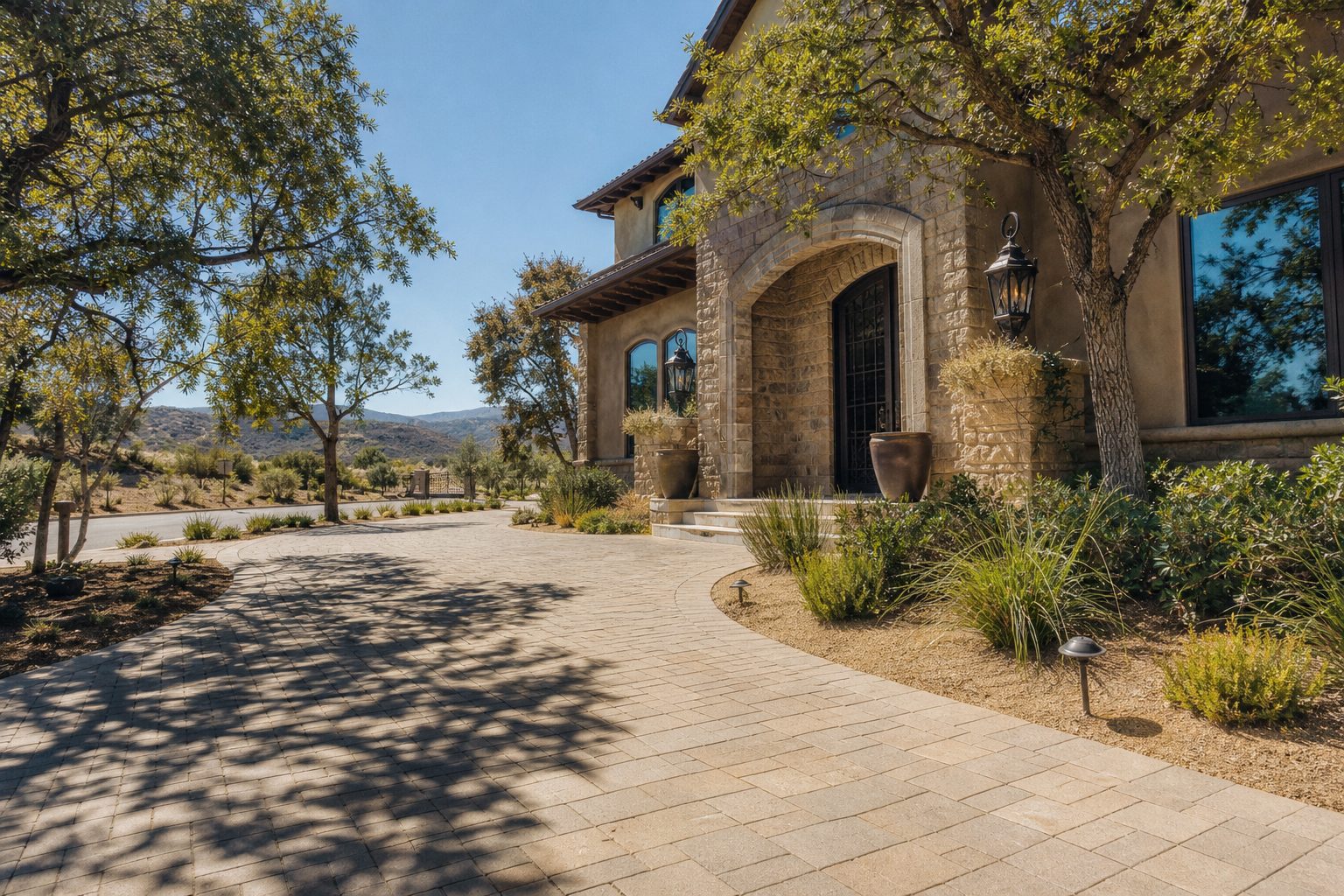
One of the most practical things you can do, whether you are selling or staying, is invest in fire mitigation. California’s Safer from Wildfires framework encourages hardening measures that can qualify your home for insurance discounts or make your property insurable where it otherwise might not be.
Key Hardening Measures
- Ember-resistant vents: Replace standard attic and soffit vents with fine-mesh ember-resistant versions
- Class A roofing: Ensure your roof meets Class A fire rating (most newer Etiwanda homes already have concrete tile)
- Enclosed eaves: Box in open eaves to prevent ember intrusion
- Tempered or dual-pane windows: Upgrade single-pane windows, especially those facing slopes
- Noncombustible gutters and gutter guards: Remove leaf debris traps along rooflines
Defensible Space Zones
California law requires 100 feet of defensible space around structures in fire hazard zones. Zone 0, the ember-resistant zone extending 0 to 5 feet from your home, requires noncombustible materials, hardscape, and no combustible vegetation directly against the structure. Zone 1 (5 to 30 feet) requires lean, clean, and green landscaping. Zone 2 (30 to 100 feet) requires reduced fuel and spacing between plants and trees. These zones apply to properties in both High and Very High Fire Hazard Severity Zones. Having been an EMT and paramedic for seven years before entering real estate, we understand what emergency access and preparedness look like from the first-responder side, and we can tell you that these measures genuinely matter.
What North Etiwanda Sellers Need to Know About Disclosures and Preparation
If you are selling a home in a High or Very High Fire Hazard Severity Zone in California, you have specific disclosure and compliance obligations.
Disclosure Requirements
- Natural Hazard Disclosure (NHD) report: This will flag your property’s fire hazard severity zone status. You are required to provide this to buyers under California Civil Code §1103
- Insurance history: Buyers and their agents will ask whether coverage has been denied, non-renewed, or is currently active. Having this documentation ready streamlines the process
- Fire-related damage history: Any past fire or smoke damage must be disclosed as a known material fact
- Defensible space compliance: Current California law requires sellers in designated zones to provide documentation of defensible space compliance. Keep records of any inspections, weed abatement, or hardening work you have completed
Marketing a Hardened Home
Here is something we tell sellers that makes a real difference: if you have invested in hardening measures, document everything. Receipts for Class A roofing, photographs of ember-resistant vents, a recent defensible space inspection report. These documents do not just satisfy disclosure requirements. They become marketing assets. In a corridor where insurance availability is a buyer concern, a home with documented mitigation stands out. It tells buyers, “You can insure this property,” and that confidence translates directly into stronger offers.
With homes in North Etiwanda carrying median listing prices around $1,387,500, per recent market data, and many properties sitting in the $1M-plus range, the stakes are significant. Every seller decision, from pricing strategy to pre-listing preparation, benefits from working with someone who understands the Rancho Cucamonga housing market.
What Rancho Cucamonga Buyers Should Do Before Making an Offer in North Etiwanda
If you are shopping for a home in the Etiwanda corridor, including neighborhoods like Andalusia, La Ventana, Sheridan Estates, or Coral Sky, insurance should be part of your planning before you write an offer, not after.
Start Insurance Shopping Early
Contact a licensed insurance professional and request quotes on the specific property you are considering before your offer is accepted. Waiting until escrow to discover that coverage is unavailable, or that premiums add significantly to your monthly costs, puts the entire deal at risk. With homes in Rancho Cucamonga selling in a median of 26 days as of mid-2026, per local market data, you do not have time to scramble. To better understand what you want to spend on your home purchase, use the CFPB’s budgeting guide.
Budget Realistically
Factor insurance costs into your affordability calculation from day one. In lower-risk parts of Rancho Cucamonga, annual premiums may run in one range. In the Very High zone communities of North Etiwanda, the cost can be substantially higher. Ask your lender to model the higher premium into your debt-to-income ratio before you fall in love with a home you cannot close on.
What to Ask the Seller
- Is the property currently insured, and with what type of policy (standard, FAIR Plan, surplus lines)?
- Has coverage ever been denied or non-renewed?
- What hardening or defensible space work has been completed?
- Are there Mello-Roos or special assessments? (Many Etiwanda properties carry these.)
Seller and Buyer Checklists for North Etiwanda Fire Coverage
Seller Checklist
- Confirm your fire hazard severity zone by address on CAL FIRE’s viewer
- Verify your current insurance status and gather policy documents
- Complete defensible space compliance and document it with photos and receipts
- Compile hardening records (roof, vents, windows, gutters, landscaping)
- Order your NHD report early in the listing process
- Disclose all known fire-related facts to buyers through required forms
- Price your home with insurance costs in mind, understanding that buyer affordability is affected
Buyer Checklist
- Get insurance quotes before making an offer, not during escrow
- Ask your lender to model the actual premium into your qualification
- Request the seller’s hardening and defensible space documentation
- Review the NHD report carefully for fire hazard zone status
- Budget for potential FAIR Plan plus DIC costs if standard coverage is unavailable
- Schedule a fire-focused inspection to identify mitigation needs before closing
Frequently Asked Questions About Fire Insurance in North Etiwanda
Is North Etiwanda in a high fire zone?
Many properties in North Etiwanda fall within California’s Very High Fire Hazard Severity Zone, per CAL FIRE’s updated maps. According to CAL FIRE’s March 2025 Phase 4 LRA recommendations for San Bernardino County, Rancho Cucamonga has approximately 8,871 acres in the Very High zone. However, zone boundaries do not follow neighborhood lines exactly, so you should verify your specific address using CAL FIRE’s online viewer.
How do I check if my Rancho Cucamonga home is in a fire hazard severity zone?
Search “CAL FIRE FHSZ viewer” in your browser and enter your property address or parcel number. The interactive map will display the current zone designation. You can also contact the Rancho Cucamonga Fire District at 10500 Civic Center Drive. Do not rely on older designations, as the maps were updated in 2024 and 2025.
Can I get homeowners insurance in Rancho Cucamonga?
Yes, but availability depends heavily on your specific location and your home’s fire mitigation features. Properties in lower-risk areas generally have more carrier options. Properties in the Very High zone, including parts of North Etiwanda, may need to explore the California FAIR Plan, surplus lines carriers, or recently returning admitted carriers under the Sustainable Insurance Strategy reforms.
What is the California FAIR Plan?
The California FAIR Plan is a state-mandated insurance pool that provides basic fire coverage to property owners who have been denied by at least two voluntary market carriers, per the California FAIR Plan Association. Coverage is capped at $3 million for a dwelling. It covers fire and smoke damage but does not include liability, theft, or water damage.
What is a DIC policy?
A Difference-in-Conditions policy is a wraparound policy that fills the coverage gaps left by the FAIR Plan. It typically adds liability, theft, and water damage coverage, creating a package that functions more like a traditional homeowner’s policy. Most mortgage lenders will accept a FAIR Plan plus DIC combination.
How can I lower my home insurance premium in a fire zone?
Invest in documented home hardening measures: ember-resistant vents, Class A roofing, enclosed eaves, noncombustible landscaping within Zone 0, and full defensible space compliance. California’s Safer from Wildfires framework recognizes these improvements, and carriers increasingly factor mitigation into their underwriting and pricing.
What do I have to disclose when selling a home in a fire zone in California?
California law requires you to provide a Natural Hazard Disclosure report identifying the property’s fire hazard severity zone, disclose any known fire-related damage, report any insurance denials or non-renewals if asked, and provide defensible space compliance documentation for properties in designated zones.
Do I need a defensible space inspection to sell my home in Rancho Cucamonga?
For properties in High or Very High Fire Hazard Severity Zones, California law requires sellers to provide documentation of defensible space compliance. Whether a formal inspection is required versus a self-certification depends on local enforcement. We recommend having documentation ready regardless, as buyers and their agents will ask.
When should buyers get insurance quotes in North Etiwanda?
Before you submit an offer. Insurance availability and cost directly affect your affordability and your ability to close. Getting quotes early lets you budget accurately and avoids escrow delays. Ask a licensed insurance professional to quote the specific property you are considering.
Does being in a fire zone affect home values in Rancho Cucamonga?
Fire zone status is one factor among many that influence market value. Properties with documented hardening and defensible space compliance tend to perform better because buyers can obtain coverage more easily. Living in Etiwanda offers foothill views, top schools, and new construction luxury, and the broader North Etiwanda corridor remains one of Rancho Cucamonga’s most desirable areas, with median listing prices around $1,387,500 per recent market data, reflecting the demand for foothill homes with views and larger lots.
The Bottom Line
Fire coverage in North Etiwanda is a real transaction issue, but it is a manageable one. Sellers who document their hardening measures, maintain defensible space compliance, and prepare their disclosure packages ahead of time put themselves in the strongest possible position. Buyers who shop for insurance before making an offer and budget for the true cost of coverage avoid the surprises that derail deals. The California insurance market is reforming, carriers are gradually returning to fire-zone communities, and well-prepared properties in this corridor continue to attract strong demand.
Have questions about fire insurance in North Etiwanda or your next move in Rancho Cucamonga? Let’s talk. Whether you are buying, selling, or just planning ahead, we will give you honest advice and a clear plan.
Brent Blay | Sold By Blay | Park Regency Realty | DRE #02068178 📞 909-641-8751 | ✉️ brentblay@parkregency.com | soldbyblay.com Your family deserves the best.
*This article is general information, not legal or insurance advice. Consult a licensed insurance professional and a real estate attorney for guidance specific to your property. Information and data as of November 2026; figures change regularly.*

Leave a Reply