


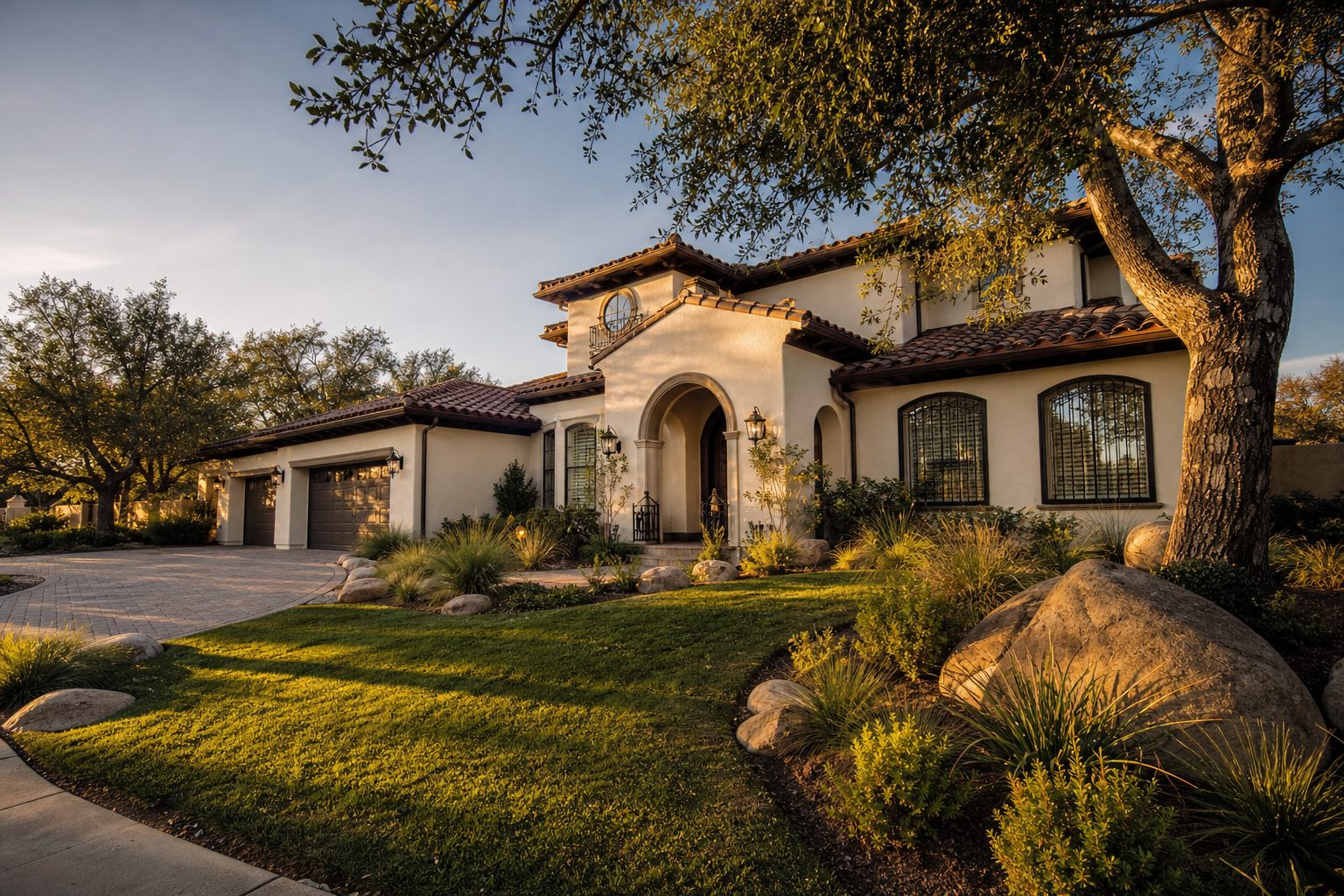
Did you just inherit a house in Rancho Cucamonga, and you’re not sure what to do next?
The five most expensive mistakes heirs make are letting the legal path go undefined, ignoring ongoing Mello-Roos and HOA costs, misunderstanding Proposition 19’s limits, mispricing a higher-value estate, and allowing family disagreements to stall the sale. Each one is avoidable, and knowing what to watch for before you make a move can protect tens of thousands of dollars of your family’s inheritance.
Why This Matters for Rancho Cucamonga Heirs Right Now
Rancho Cucamonga is not an inexpensive market. The median sale price was approximately $785,000 as of recent 2026 data, per Redfin, with neighborhoods like Deer Creek, Hermosa, and North Day Creek pushing well above $1.2 million according to mid-2026 home value estimates. That means the financial stakes on an inherited property here are significant, and the margin for error is slim.
At the same time, roughly 78.28% of properties in Rancho Cucamonga are high-equity homes, and 12,117 are fully paid off, according to local market data as of mid-2026. Many of those belong to long-term homeowners. With the city’s 65-and-older population at approximately 30,385 per recent Census estimates, a growing number of Rancho Cucamonga families are navigating exactly this situation right now.
If you are one of them, here are the five mistakes we see heirs make most often, what they cost, and exactly how to avoid them.
Mistake #1: Not Knowing If It’s a Trust Sale or a Probate Sale in Rancho Cucamonga
The first and most costly mistake is failing to determine the correct legal path before doing anything with the property.
The difference between a trust sale and a probate sale is not just paperwork. It is months of time, thousands of dollars in fees, and a buyer pool that responds very differently to each path.
Here is how they compare:
- Trust Sale: Court involvement = None, if the trust was properly funded. Typical timeline = 30 to 90 days to close. Notices required = Successor trustee must send the Probate Code Section 16061.7 notice within 60 days of the settlor’s death. Contest window = 120 days from receipt of that notice, per Probate Code Section 16061.8. Buyer perception = Cleaner title, faster close.
- Probate Sale: Court involvement = Required through the San Bernardino Superior Court. Typical timeline = 9 to 18 months or longer. Notices required = Court files notice to creditors; notice of proposed action for buyers. Contest window = Objections raised during the court hearing. Buyer perception = Many buyers discount their offer because of court confirmation delays and uncertainty.
Why does this matter specifically in Rancho Cucamonga? Because most homes here now exceed the $750,000 threshold under AB 2016, which allows certain simplified petitions under Probate Code Section 13151 only for primary residences worth $750,000 or less (for deaths on or after April 1, 2025). At today’s median price, that shortcut is out of reach for most Rancho Cucamonga properties.
If there is no trust, full probate is almost certainly required. Under California Probate Code Section 10810, statutory attorney and executor fees are each calculated on the estate’s gross value (not equity). On a property with a gross value of $900,000, the combined statutory fees for the attorney and executor can reach roughly $42,000 before any other costs.
If there is a trust, getting the Section 16061.7 notice out promptly matters. A delayed notice extends the contest window and can stall your ability to sell. For guidance specific to inherited properties, the Consumer Finance Protection Bureau offers detailed resources on managing inherited mortgages. We help Rancho Cucamonga families identify which path applies within the first consultation so there are no surprises.
Mistake #2: Forgetting Mello-Roos, HOA Dues, and Special Taxes on a Rancho Cucamonga Inherited Home
Mello-Roos assessments and HOA dues do not stop when the owner passes away, and unpaid balances quietly shrink the estate before closing.
In Rancho Cucamonga, Mello-Roos Community Facilities District charges are concentrated in the newer developments, particularly in the Etiwanda area north of Foothill Boulevard near Day Creek. These CFD charges fund schools, roads, parks, and infrastructure built in master-planned communities. They are levied on the property itself, which means they continue accruing through every day of probate or trust administration.
If you inherited a home in neighborhoods like Rancho Etiwanda Estates (near Wardman Bullock Road and Wilson Avenue), Day Creek communities, or newer tracts east of Milliken Avenue, the annual property tax bill may include both a base tax and a separate Mello-Roos CFD line item. The quickest way to verify what is owed is to pull the San Bernardino County Assessor-Recorder-Clerk’s property tax bill for the specific parcel number.
Here is what heirs often miss:
- HOA dues in gated communities like Sheridan Estates, Carriage Estates, and portions of Etiwanda Estates continue to accrue monthly. If the estate goes through 12 to 18 months of probate, those payments add up fast.
- Delinquent HOA dues can result in a lien on the property that must be paid at close of escrow, reducing net proceeds to heirs.
- HOA transfer fees and capital contributions are frequently due from the estate at sale, not just from the buyer.
- Mello-Roos delinquencies accrue penalties and interest and can cloud title.
Your practical step: within the first 30 days, request a copy of the full property tax bill and the HOA statement from the management company. Build those ongoing costs into your holding-cost projection. Property taxes at the median effective rate of 1.11% on a $777,000 home amount to roughly $8,625 annually, per local market data as of mid-2026, according to local property tax rate estimates. Add insurance (which is typically 50% to 100% more expensive on a vacant home), utilities, and maintenance, and you could easily face over $1,000 per month in carrying costs on a property nobody is living in.
Mistake #3: Expecting Prop 19 to Fully Protect the Tax Base on Your Rancho Cucamonga Inheritance
Proposition 19 offers real protection for heirs who move in, but it has a hard cap, and many Rancho Cucamonga homes have appreciated well past it.
Here is how Prop 19 actually works for inherited properties. If a child or grandchild inherits a family home and makes it their primary residence within one year, the property tax base is partially preserved. The exclusion is capped at the parent’s factored base year value plus $1,044,586, per the California State Board of Equalization, for transfers occurring between February 16, 2025, and February 15, 2027.
What does that look like in practice? Consider a simplified illustration with round numbers. A parent purchased a home in Rancho Cucamonga decades ago, and the assessed (taxable) value under Proposition 13 grew slowly to $250,000 over time. The home’s current market value is $1,500,000. Under Prop 19, the child’s new assessed value would be the parent’s factored base year value plus $1,044,586. The portion of the home’s market value that exceeds that combined figure is subject to reassessment. For a home worth $1.5 million, $2 million, or more, particularly in neighborhoods like north Alta Loma, Hermosa, or Deer Creek (where typical values can reach $1.2 million to $1.6 million or higher according to mid-2026 home value estimates), the tax increase on even a move-in scenario can be substantial.
If you do not move in and instead rent the property or hold it as a second home, there is no exclusion at all. The entire property is reassessed to current market value. For a home with a Prop 13 assessed value of $200,000 that is now worth $780,000, the annual property tax could jump significantly.
This creates real urgency. If you are not planning to live in the inherited home, the carrying costs under a full reassessment make holding the property much more expensive.
We always recommend that heirs consult a CPA who understands California’s Prop 19 rules before making a keep-or-sell decision.
Mistake #4: Mispricing a Higher-Value Rancho Cucamonga Estate
Online automated estimates are least reliable at the top of the market, and overpricing an inherited home is one of the fastest ways to lose money in 2026.
Here is the reality of pricing in Rancho Cucamonga right now. The share of listings with price reductions has climbed from roughly 45.78% to 58.11%, according to mid-2026 market data. About 54.9% of homes sold under their list price, while approximately 32.8% sold over it. The sale-to-list price ratio sits at approximately 100%, meaning homes that are priced correctly from day one are closing at or very near asking.
What separates sellers who get strong results from those whose listings sit? Price from day one. This is not the market where you can skip staging, overprice by $50,000, and still get multiple offers.
For inherited estates in neighborhoods like Etiwanda Estates, Rancho Etiwanda Estates, Sheridan Estates, Carriage Estates, and north Alta Loma, the pricing challenge is even more acute. Automated valuation models struggle with custom floor plans, lot premiums, view corridors, and varying levels of deferred maintenance. A home that an algorithm values at $1.4 million might sell for $1.25 million if it has not been updated since 1998, or for $1.55 million if it has recent kitchen and bath renovations.
You need two things:
- A date-of-death appraisal, which establishes your stepped-up cost basis for capital gains tax purposes. Under federal tax law, heirs receive a stepped-up basis equal to the fair market value at the date of death. If a parent bought a home decades ago for $120,000 and it is now worth $780,000, your basis is $780,000, meaning little to no capital gains tax if you sell promptly. Waiting too long means the property could appreciate beyond that stepped-up basis, creating a taxable gain, and California’s top income tax rate is 13.3%.
- A professional comparative market analysis (CMA) from an agent who specializes in this price range and these neighborhoods. We handle higher-value and luxury estate sales throughout Rancho Cucamonga, Alta Loma, and Etiwanda. If you want to know what your inherited home is actually worth in today’s market, a home valuation is a good starting point.
Mistake #5: Letting Family Disagreements Stall the Sale of a Rancho Cucamonga Inherited Home
When multiple siblings or family members inherit a property together, disagreements about whether to sell, rent, or keep the home are one of the most common reasons estates bleed money.
Every month of indecision adds carrying costs. Every month of vacancy adds risk of deferred maintenance becoming structural damage. And every month of delay in a market where active inventory is climbing (Rancho Cucamonga showed roughly 1.9 months of housing supply with 351 active listings as of mid-2026, according to local market data) means you may be competing with more listings by the time you are ready.
Here are the most common resolution paths when co-heirs disagree:
- Buyout: One sibling buys out the others at fair market value. This requires a current appraisal and often financing.
- Sell and split proceeds: The property is listed, sold, and net proceeds are divided according to the will, trust, or intestate succession rules.
- Partition action: If co-heirs truly cannot agree, California law allows any co-owner to petition the court for a forced sale. This is expensive, adversarial, and almost always results in a lower net outcome for everyone.
What we recommend: get a professional valuation done early so every heir is working from the same number. Many family disagreements stem from different assumptions about what the home is worth. When everyone sees the same data, the conversation shifts from emotion to math.
This article is general information, not legal or tax advice. Consult a licensed professional for guidance specific to your situation.
What Rancho Cucamonga Heirs Should Do in the First 30 Days
Here is a practical checklist to protect the estate:
- Locate the trust or will and determine whether probate is required
- Send the Probate Code Section 16061.7 notice (if there is a trust) within 60 days
- Secure the property: change locks, check for water leaks, set lights on timers
- Contact the homeowner’s insurance company and update the policy for a vacant or estate-owned property
- Pull the full property tax bill from the San Bernardino County Assessor-Recorder-Clerk to identify any Mello-Roos or special assessments
- Request the HOA statement if the property is in an HOA community
- Order a date-of-death appraisal to establish the stepped-up basis
- Meet with a probate attorney and CPA before making any keep, sell, or rent decision
- Request a professional home valuation to understand current market value
Frequently Asked Questions
Does a house in a living trust go through probate in California?
No, if the trust was properly funded, meaning the home’s title was transferred into the trust before the owner passed. The successor trustee can sell the property without court involvement. However, the trustee must still send the Probate Code Section 16061.7 notice to all beneficiaries within 60 days, and beneficiaries have 120 days to contest.
How long does a trustee have to sell a house in California?
California law does not set a hard deadline for a trustee to sell. However, the trustee has a fiduciary duty to administer the trust in a reasonable timeframe and in the best interests of the beneficiaries. Unnecessary delays that cause carrying costs or market depreciation can expose the trustee to personal liability.
What is the statutory probate fee on a $1 million estate in California?
Under Probate Code Section 10810, statutory fees are calculated on the gross estate value. On a $1 million estate, the attorney and executor each receive approximately $23,000, for a combined total of roughly $46,000. These fees are based on gross value, not equity, so a $1 million home with a $500,000 mortgage still generates fees based on the full $1 million.
Will my property taxes go up if I inherit my parents’ house in Rancho Cucamonga?
It depends on whether you move in. Under Proposition 19, if you make the inherited home your primary residence within one year, the tax base is partially preserved, subject to a cap of the parent’s factored base year value plus $1,044,586 (for transfers between February 16, 2025, and February 15, 2027), per the California State Board of Equalization. If you do not move in, the property is fully reassessed to current market value.
Do I still pay Mello-Roos on an inherited house in Rancho Cucamonga?
Yes. Mello-Roos Community Facilities District assessments are levied on the property, not the owner. They continue to accrue regardless of ownership changes. Many Rancho Cucamonga homes in the Etiwanda and Day Creek areas carry these special taxes, and they will appear on the property tax bill until the CFD bonds are retired.
Can one sibling force the sale of an inherited house in California?
Generally, yes. Any co-owner can file a partition action in court to force a sale. However, partition actions are expensive and adversarial. A negotiated buyout or voluntary sale almost always produces a better net result for all parties involved.
Should I fix up an inherited house before selling in Rancho Cucamonga?
It depends on the scope of work needed and the potential return. In the current market, where nearly 58.11% of Rancho Cucamonga listings have taken price reductions according to mid-2026 data, cosmetic updates and deep cleaning can help a home sell faster and closer to asking price. Major renovations are rarely worth the investment on an inherited property unless the numbers clearly support it.
Do I pay capital gains tax when I sell an inherited home?
You receive a stepped-up cost basis equal to the fair market value at the date of death. If you sell the property promptly at approximately that value, your capital gains tax liability would be minimal or zero. If you hold the property and it appreciates beyond the stepped-up basis before selling, the gain above that basis is taxable. California’s top income tax rate is 13.3% on capital gains.
How long does probate take in San Bernardino County?
Probate in San Bernardino Superior Court typically takes 12 to 18 months, though complex estates or contested cases can take longer. Court scheduling, creditor notice periods, and the confirmation hearing process all contribute to the timeline.
What is a date-of-death appraisal and why do I need one?
A date-of-death appraisal establishes the fair market value of the inherited property as of the date the owner passed away. This value becomes your stepped-up cost basis for federal and state capital gains tax purposes. Without this appraisal, you may lack the documentation needed to prove your basis and could face a larger tax bill when you sell.
The Bottom Line
Inheriting a house in Rancho Cucamonga comes with real financial complexity, from determining the right legal path to navigating Prop 19’s limits, managing carrying costs, and pricing the home accurately in a market where nearly 6 in 10 listings are taking price cuts. Every one of these five mistakes is avoidable when you have the right guidance from the start. The Rancho Cucamonga housing market continues to shift, which means timing matters. The heirs who protect the most value are the ones who act with a clear plan in the first 30 days, not the ones who wait and hope things sort themselves out.
Information and data as of November 2026; figures change regularly.
Have questions about selling an inherited home or your next move in Rancho Cucamonga? Let’s talk. Whether you’re navigating a trust sale, working through probate, or just trying to figure out what the property is worth, we will give you honest advice and a clear plan.
Get your free home valuation at soldbyblay.com/home-value
Schedule a consultation at soldbyblay.com/contact
Brent Blay | Sold By Blay | Park Regency Realty | DRE #02068178 909-641-8751 | brentblay@parkregency.com | soldbyblay.com Your family deserves the best.

Leave a Reply