

If you’re considering a move to Rancho Cucamonga but work in Los Angeles or Irvine, you’re probably wondering: can you actually make that commute work every day?
Yes, and thousands of professionals already do. Rancho Cucamonga sits about 37 miles east of downtown Los Angeles, per the city’s own geographic data. By Metrolink train, you can reach L.A. Union Station in roughly 1 hour 14 to 20 minutes. By car, you’re looking at 50 to 60 minutes off-peak or 75 to 105 minutes during the morning rush on I-10. For Irvine and Orange County, expect a car commute of roughly 45 to 85 minutes depending on traffic and whether you use toll roads. The honest truth: with hybrid work schedules, express lanes, and the right neighborhood, many families find the tradeoff very much worth it.
Why the Rancho Cucamonga Commute Question Matters Right Now
We hear this question constantly, and the answer has changed significantly over the past two years. The I-10 express lanes opened in 2024, adding two dedicated lanes in each direction between the Los Angeles/San Bernardino county line and Etiwanda Avenue, according to San Bernardino County Transportation Authority (SBCTA). Brightline West high-speed rail is building its western terminus right here in Rancho Cucamonga, with the Cucamonga Station set to offer Metrolink transfers once complete in the late 2020s. And with hybrid work now standard for many white-collar professionals, the math has shifted: instead of five brutal commuting days, many buyers only need to make the trip two or three times per week. What that means in real terms is you get a four-bedroom home with a yard, top-performing schools (graduation rates between 92% and 96%, well above California’s 87.3% state average, per local district data), and San Gabriel Mountain foothills views for what a two-bedroom condo costs closer to the coast.
Commuting to Downtown L.A. by Metrolink From Rancho Cucamonga
The Metrolink San Bernardino Line is genuinely one of the better commuter rail options in Southern California, and the Rancho Cucamonga station at 11208 Azusa Court (just west of Milliken Avenue) puts it within easy reach of most neighborhoods. The station has 960 parking spaces, including 24 accessible spaces, plus bike racks and lockers, according to Metrolink station data. On a typical weekday, 32 San Bernardino Line trains serve this station (16 in each direction), with the first L.A.-bound departure at approximately 4:11 a.m. and roughly hourly service through the morning rush.
The trip to L.A. Union Station takes about 1 hour 14 to 20 minutes depending on the specific train, per the Metrolink timetable effective May 2026. The ride itself is comfortable; commuters regularly use Wi-Fi aboard to answer emails, read, or take calls with headphones in. It is not a packed subway experience. It is a true commuter train with cushioned seats and legroom, and that travel time becomes productive time rather than wasted time.
Fares, Passes, and Connections
In 2025, Metrolink simplified its fare structure by eliminating certain pass categories and implementing a systemwide weekday pass and a central Los Angeles pass, in addition to a pre-existing systemwide weekend pass. Students receive a 50% discount. We recommend verifying current one-way and monthly pricing directly through Metrolink’s app or timetable, as fare structures continue to evolve. Metrolink tickets and passes are also accepted on certain Amtrak Pacific Surfliner trains through a codeshare program, which gives you flexibility for some trips.
From L.A. Union Station, you connect to the entire Metro Rail system: the A Line and E Line serve downtown and the Westside; the B and D Lines head to Hollywood and North Hollywood; and the A Line extension runs toward Pasadena. If your office is in Pasadena, the train-plus-Metro combination is often faster and far less stressful than fighting SR-210 during rush hour.
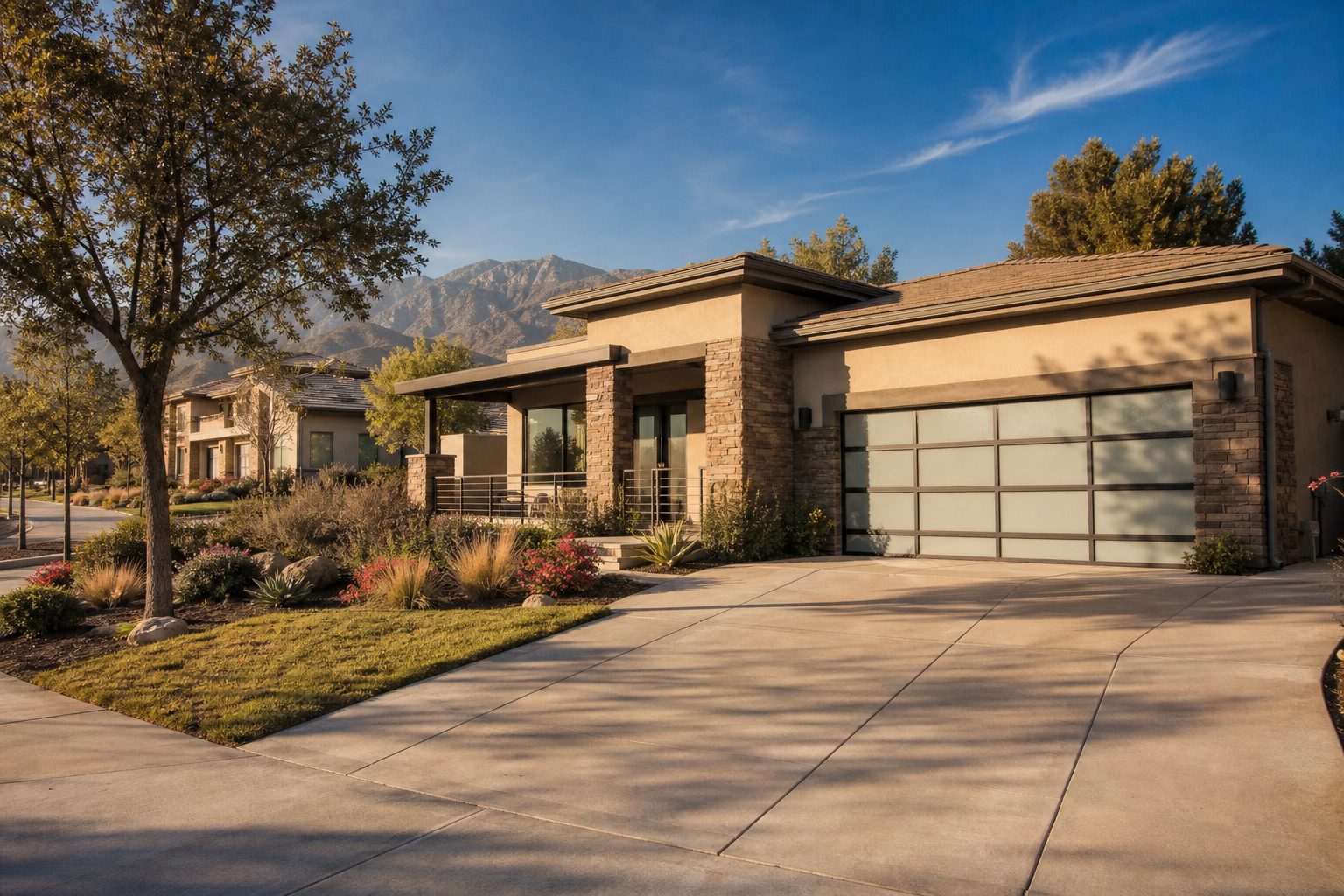
What we tell our clients who are Metrolink commuters: look at The Resort community in south Rancho Cucamonga first. It is a walkable, amenity-rich master-planned neighborhood right off Haven Avenue, close to the Victoria Gardens retail corridor at Milliken Avenue and Foothill Boulevard. You can walk or bike to the Metrolink platform. It is one of the most transit-convenient neighborhoods in the entire Inland Empire.
Driving to L.A., Pasadena, and the Westside From Rancho Cucamonga
Not everyone is a train person, and some destinations simply require a car. Here is what you can realistically expect when driving from central Rancho Cucamonga (near Victoria Gardens) during different times of day.
Downtown L.A. via I-10
- Off-peak: Roughly 50 to 60 minutes
- Peak (7 to 8 a.m. weekday): Roughly 75 to 105 minutes
- Best tip: Leave before 6 a.m. to shave 20 to 30 minutes off your drive
I-10 Express Lanes: A Game Changer
The SB Express Lanes on I-10, which opened in 2024 per SBCTA, added about 10 miles of dedicated express lanes between the L.A./San Bernardino county line and Etiwanda Avenue in Rancho Cucamonga. HOV 3+ vehicles ride free with a FasTrak Flex switchable transponder. Motorcycles ride free. Clean-air vehicles get a discount. Solo drivers pay dynamic tolls that fluctuate with demand. A walk-in customer service center is located inside Rancho Cucamonga City Hall. Phase 2, extending from Etiwanda Avenue to Pepper Avenue in Colton, was planned to begin construction around late 2025 (verify current status with SBCTA for the latest timeline).
Pasadena via SR-210
- Off-peak: Roughly 35 to 50 minutes
- Peak: Roughly 60 to 80 minutes
- Notes: No tolls on SR-210. This is one of the more manageable commutes from Rancho Cucamonga
Century City and the Westside via I-10 to I-405
- Off-peak: Roughly 60 to 75 minutes
- Peak: Roughly 90 to 120+ minutes
- Honest assessment: Friday afternoons heading back east are brutal. If you commute to the Westside, hybrid scheduling is almost essential
Commuting to Irvine and Orange County From Rancho Cucamonga
This is the route that takes the most planning. There is no direct train from Rancho Cucamonga to Irvine. Metrolink’s Inland Empire to Orange County Line runs from Riverside and San Bernardino, not from Rancho Cucamonga, making it impractical for most residents here. The commute to Orange County is car-dependent, and your experience hinges almost entirely on how you use toll roads.
Irvine Spectrum and Irvine Business Complex
- Primary route: I-15 south to SR-91 west, then SR-241 south
- Off-peak: Roughly 45 to 65 minutes
- Peak: Roughly 65 to 85 minutes
- Toll cost: The 91 Express Lanes and SR-241 toll road together can range from a few dollars to over $15 each way during peak periods (pricing is dynamic). Verify current rates with The Toll Roads and OCTA
Anaheim and Orange
- Primary route: I-15 south to SR-91 west (SR-57 as an alternative)
- Off-peak: Roughly 40 to 60 minutes
- Peak: Roughly 60 to 80 minutes
We are honest with clients about this commute: if you work in Irvine five days a week and cannot tolerate 70+ minutes in traffic, Rancho Cucamonga may not be the right fit. But if you work hybrid, two or three days a week in the office, the math changes completely. You save significantly on housing, gain space and quality of life, and the toll road days become manageable rather than miserable.
Which Rancho Cucamonga Neighborhood Fits Your Commute?
Choosing the right neighborhood based on your commute corridor is one of the most impactful decisions you will make, and it is where we spend a lot of time with clients during the search process.
South Rancho Cucamonga and The Resort (Metrolink and I-10 Commuters)
If you are taking Metrolink to downtown L.A. or driving I-10, you want to be in south Rancho Cucamonga. The Resort neighborhood is walkable to the Metrolink station. The Victoria Gardens corridor (147 acres, over 150 stores) is your daily convenience hub. I-10 on-ramps are minutes away. This is the ideal setup for L.A.-bound commuters.
Etiwanda and North Etiwanda (SR-210 and I-15 Commuters)
If you commute to Pasadena via SR-210 or to Orange County via I-15, Etiwanda gives you fast freeway access and newer construction. Etiwanda often attracts families relocating from Orange County who want planned neighborhoods with top schools and easy access to both the 210 and 15 corridors. Learn more about living in Etiwanda.
Alta Loma (SR-210 Access, Foothill Character)
Alta Loma offers a more established neighborhood feel with larger lots in many pockets, foothill character, and solid SR-210 access for Pasadena-bound commuters. Homes here are typically priced above the citywide median, according to local market data.
Victoria and Terra Vista (Central Access)
These centrally located neighborhoods give you balanced access to I-10, SR-210, and I-15 without being locked into one corridor. If your commute destination varies or if two household members commute in different directions, central Rancho Cucamonga offers the most flexibility.
Making the Commute Work: Hybrid Schedules, Tolls, and Smart Timing
The single biggest factor that makes a Rancho Cucamonga commute viable is not a faster freeway. It is working from home two or three days per week. When you only commute two to three days, you can time your trips strategically, take the train on certain days, and drive the express lanes on others.
Practical tips we share with every relocating buyer
- Leave before 6 a.m. for I-10 or SR-210 and you often beat the worst congestion
- Get FasTrak Flex set up before your first week; the I-10 express lanes reward carpools of 3+ with free passage
- Ask your employer about transit benefits; many L.A. companies offer pre-tax commuter benefit accounts
- Use train time productively; over an hour of uninterrupted work time on Metrolink can actually increase your daily productivity
- Budget for tolls honestly; if you use the 91 Express Lanes and SR-241 to Irvine regularly, expect a meaningful monthly toll expense, and factor that into your housing savings calculation
Ontario International Airport: Your Hidden Advantage
One commute advantage that surprises many new residents is the proximity to Ontario International Airport, just 10 to 20 minutes from most Rancho Cucamonga neighborhoods. If your work involves travel, skipping LAX entirely is a quality-of-life upgrade that is hard to overstate.
What’s Coming: The Commute Is Getting Better in Rancho Cucamonga
Several infrastructure projects will improve commute options from Rancho Cucamonga over the next few years.
- I-10 Express Lane Phase 2: Extension from Etiwanda Avenue to Pepper Avenue in Colton (verify current construction timeline with SBCTA)
- Brightline West High-Speed Rail: The western terminus, Cucamonga Station, will be built in Rancho Cucamonga with Metrolink transfer capability. The city has referenced an anticipated opening around 2028, though other reports suggest late 2029. Verify current projections, but this will be transformative for regional connectivity
- West Valley Connector Bus Rapid Transit: A planned BRT corridor that would improve local transit connections (verify current status with Omnitrans/SBCTA)
- Local Job Growth: The Reyes Coca-Cola flagship plant broke ground in February 2026 with an approximately $500 million investment. Major employers already based here include Frito-Lay, Mercury Insurance Group, Southern California Edison, and Amphastar Pharmaceuticals. More local jobs mean fewer people commuting at all
Is the Commute Worth It? The Space-for-Time Tradeoff in Rancho Cucamonga
This is the real question, and we always encourage buyers to think about it honestly. As of mid-2026, the Rancho Cucamonga housing market shows median home sale prices of approximately $826,000 at roughly $408 per square foot, with homes selling in a median of 26 days, according to recent market data. Values range widely, from the mid-$700,000s in central areas to over $1.6 million in foothill communities like Deer Creek, per RealtyTrac data.
Compare that to what the same budget buys in Westside L.A., Irvine, or Pasadena. In Rancho Cucamonga, your dollar stretches into a single-family home with a yard, a two-car garage, and mountain views in a community with a median household income of $111,895 (per World Population Review, 2026 data) and a homeownership rate of 62.3%, which is 12% higher than California’s state average of 55.9%, according to U.S. Census data for Rancho Cucamonga.
What we tell every family weighing this decision is simple: if you can commute two to three days per week instead of five, and you value space, schools, and neighborhood quality, the time you spend on a train or a freeway buys you a fundamentally different lifestyle. That is not a sales pitch. That is what we watch happen with families who make this move, year after year.
Frequently Asked Questions About the Rancho Cucamonga Commute
How long is the commute from Rancho Cucamonga to downtown L.A.?
By Metrolink train, the trip from Rancho Cucamonga station to L.A. Union Station takes approximately 1 hour 14 to 20 minutes, per the Metrolink timetable effective May 2026. By car on I-10, expect roughly 50 to 60 minutes off-peak or 75 to 105 minutes during the 7 to 8 a.m. rush. The I-10 express lanes can shave time during peak hours.
Is there a train from Rancho Cucamonga to Los Angeles?
Yes. The Metrolink San Bernardino Line stops at the Rancho Cucamonga station at 11208 Azusa Court. On weekdays, 32 trains serve this station (16 in each direction), with the first L.A.-bound departure at approximately 4:11 a.m. and roughly hourly service through the morning. The station has 960 parking spaces.
How much is Metrolink from Rancho Cucamonga to L.A.?
Metrolink simplified its fare structure in 2025, introducing systemwide weekday and weekend passes while eliminating some older pass categories. Students receive a 50% discount. We recommend checking Metrolink’s current fare schedule for exact one-way and monthly pass pricing, as options continue to evolve.
How long is the drive from Rancho Cucamonga to Irvine?
Driving from Rancho Cucamonga to the Irvine Spectrum area via I-15 south to SR-91 west and SR-241 south takes roughly 45 to 65 minutes off-peak and 65 to 85 minutes during peak hours. Using the 91 Express Lanes and SR-241 toll road can shave 10 to 20 minutes off your trip during congestion.

Leave a Reply