



Is your Rancho Cucamonga home ready for fire season?
Santa Ana wind season is here, and your home needs a defensible space check, an insurance review, a go-bag, and an evacuation plan before the next red flag warning hits.
Why This Matters Right Now in Rancho Cucamonga
The first major Santa Ana wind event of the 2026 season arrived the week of October 14, bringing red flag warnings and high wind warnings across the Inland Empire, according to the National Weather Service. Two fires ignited in Southern California counties within days. Early October also brought extended heat waves, with Inland Empire highs reaching approximately 103 degrees Fahrenheit and wildfire smoke air-quality alerts in parts of LA County, per KTLA reporting from October 4, 2026.
No major fire burned in Rancho Cucamonga during this particular event. But if you live anywhere north of Baseline Road, in the foothill neighborhoods of Alta Loma, Etiwanda, Etiwanda Estates, Rancho Etiwanda Estates, Carriage Estates, Sheridan Estates, or Andalusia, you already know the conditions were identical to those that have started fires here before. The gap between “quiet weekend” and “mandatory evacuation” is measured in wind direction and a single spark.
If there is an active fire near you, follow official evacuation orders immediately. This article is for advance planning, not emergency instructions.
*This article is general information, not legal, insurance, or financial advice. Consult a licensed professional for guidance specific to your situation. Information and data as of October 19, 2026; figures change regularly.*
What Just Happened: October 2026 Fire Activity Across Southern California
You may have seen the headlines. Here is what we know as of October 19, 2026:
Norte Fire (San Clemente and San Juan Capistrano, Orange County)
The Norte Fire broke out around 11:30 a.m. on Friday, October 16, in the brush near Portico Del Norte and Eminencia Del Norte in San Clemente, per CAL FIRE and OCFA reporting via multiple outlets. Within a single hour, the blaze had grown to 250 acres. Seven homes were destroyed or damaged, mostly on Via La Mirada in San Juan Capistrano. At its peak, roughly 16,000 residents were under evacuation orders, according to San Clemente Chief of Police Services Justin Chevalier. As of October 18, the Norte Fire stood at 570 acres and was 60% contained, with all evacuation orders lifted. The cause remains under investigation.
Bryson Fire (Malibu, Los Angeles County)
The Bryson Fire consumed an estimated 147 acres near the intersection of Mulholland Highway and Encinal Canyon Road in the Santa Monica Mountains. As of October 18, it was 74% contained, per the latest CAL FIRE update. All evacuation orders were lifted on October 17, and officials confirmed no structures were lost, per CBS Los Angeles.
These fires unfolded during the same Santa Ana wind event that put our part of the Inland Empire under high wind warnings. That is not a coincidence. It is a pattern.
Lessons From the Fires That Shaped Rancho Cucamonga and Our Region
Every major fire in this area has taught us something specific. Here are the ones that matter most:
2003 Grand Prix Fire: Rancho Cucamonga, Alta Loma, Etiwanda
The Grand Prix Fire began on October 21, 2003, and burned across the mountains directly above our foothill neighborhoods, including Alta Loma and Etiwanda, before merging with the Old Fire. According to a widely cited summary of the incident, the fire destroyed 13 homes and damaged 9 others in Alta Loma. The Santa Ana winds drove flames down from the national forest into the wildland-urban interface. The lesson: if your backyard borders open hillside or national forest land, brush clearance and a defensible perimeter are not suggestions. They are the first line of defense.
April 2014 Etiwanda Area Foothill Fire
According to Associated Press reporting from 2014, wind gusts up to approximately 80 mph drove a foothill fire in the Etiwanda area that grew to roughly 1,000 acres on April 30, 2014. Mandatory evacuations were ordered for approximately 1,650 homes, and several schools were closed. Remarkably, no homes burned. Two lessons here: fire season is not only a fall event (this fire burned in April), and rapid, organized evacuations work. Knowing your two ways out before a fire starts is what makes that speed possible.
2024 Line Fire: Highland and San Bernardino National Forest
The Line Fire started September 5, 2024, near Baseline Road in Highland. According to ABC7 reporting from October 2024, the fire burned more than 43,900 acres, threatened tens of thousands of structures, and the cause was arson, with a suspect charged by CAL FIRE. The lesson for you: a major fire in San Bernardino County can disrupt life for weeks, making insurance coverage (especially Additional Living Expenses) and go-bag readiness essential.
January 2025 Eaton and Palisades Fires
The Eaton Fire in Altadena burned about 14,000 acres and destroyed approximately 9,400 structures. The Palisades Fire burned 23,448 acres and destroyed 6,837 structures. At least 29 people lost their lives across both fires, according to the LA County Medical Examiner and CAL FIRE reporting via multiple outlets from January and February 2025. Those fires were a devastating reminder that embers can carry fire deep into neighborhoods far from the brush line. Home hardening matters even if you do not back up to open hillside.
October 2026 Norte Fire
Seven homes were destroyed or damaged in hours during the first Santa Ana event of the season. A fire can go from a few acres to hundreds in an afternoon. Preparation is what separates “we were ready” from “we lost everything.”
What we tell every homeowner we work with is simple: you do not wait for a fire to find out if you are prepared. You prepare, and you hope you never need it.
How to Get Your Rancho Cucamonga Home Ready: Defensible Space and Home Hardening
This is the core of your fire prep. California law (PRC 4291) requires 100 feet of defensible space around structures in fire-prone areas. Here is how to approach it by zone:
Zone 0: The Ember-Resistant Zone (0 to 5 Feet From Your Home)
This is the most critical zone, and the one most homeowners skip. The area immediately surrounding your home is where embers land and ignite.
- Remove all combustible materials: firewood, lumber stacks, dried leaves, wood mulch
- Replace organic mulch with gravel, stone, or decomposed granite within 5 feet of the structure
- Move patio furniture cushions, doormats, and propane tanks away from the house
- Ensure no combustible fencing (wood lattice, vinyl) connects directly to the structure
*Note: California’s Zone 0 regulations have been evolving. Verify the current status and effective dates of state Zone 0 rules with CAL FIRE’s “Ready for Wildfire” resources before making structural changes.*
Zone 1: The Lean, Clean, and Green Zone (5 to 30 Feet)
- Trim trees so the lowest branches are 6 to 10 feet from the ground
- Space trees and large shrubs so their canopies do not touch or overlap
- Remove dead vegetation, dry grass, and accumulated leaf litter
- Keep your lawn (if you have one) mowed and irrigated during dry months
Zone 2: The Reduced Fuel Zone (30 to 100 Feet)
- Create spacing between trees (at least 10 feet between canopy edges on flat ground; more on slopes)
- Clear dead and dying vegetation
- Remove heavy accumulations of ground litter, fallen branches, and debris
Home Hardening Checklist
These upgrades can significantly reduce your home’s vulnerability to embers and radiant heat:
- Roof: Confirm Class A fire-rated roofing material (most newer Rancho Cucamonga homes already have this; older homes may not)
- Gutters: Clean out leaves, pine needles, and debris; consider metal gutter guards
- Vents: Install or verify 1/8-inch mesh screening on all attic and foundation vents to block embers
- Eaves: Enclose open eaves (boxed eaves are more ember-resistant than open rafter tails)
- Windows: Dual-pane tempered glass windows resist radiant heat far better than single-pane
- Fencing: Replace combustible fencing (wood, vinyl) within 5 feet of the structure with non-combustible alternatives (metal, masonry)
- Address visibility: Confirm your house number is clearly visible from the street for emergency responders
- Exterior sprinklers: In high-risk foothill areas, exterior sprinkler systems may provide an additional layer of protection
You can check your property’s fire hazard severity zone on CAL FIRE’s Fire Hazard Severity Zone maps by searching your specific address. We strongly recommend every homeowner in Rancho Cucamonga do this, because risk varies block by block, and it is not accurate to label an entire neighborhood as “safe” or “unsafe.” Also check with the Rancho Cucamonga Fire Protection District (now part of San Bernardino County Fire) and the City of Rancho Cucamonga Community Improvement Division for local weed abatement and brush clearance requirements and deadlines.
How to Get Your Family Ready: Evacuation Plans, Go-Bags, Alerts, and Power Shutoffs
Your home is one asset. Your family is everything.
Evacuation Plan
- Know two ways out of your neighborhood. If you live in a foothill area with limited road access, practice both routes.
- Identify a meeting point outside your neighborhood (a relative’s house, a specific address) so everyone knows where to go.
- Make sure every driver in your household knows the plan.
- Practice. Even once makes a difference.
The Ready, Set, Go! program, used by local fire agencies, breaks it down into three stages: Ready (prepare your home and family), Set (situational awareness when a fire is nearby), Go (leave immediately when told to evacuate). Do not wait to be told. If you see a fire approaching and conditions are dangerous, go early.
Go-Bag Essentials
- Important documents (or copies): IDs, insurance policies, deeds, passports, medical records
- Medications (a 7-day supply at minimum)
- Phone chargers and backup battery packs
- Cash (ATMs and card readers may be down)
- Change of clothes for each family member
- Water and non-perishable snacks
- Pet supplies: leash, carrier, food, medications
- N95 masks for smoke
Emergency Alerts
San Bernardino County residents should register for the county’s emergency notification system to receive evacuation orders and warnings by phone, text, and email. Also know your evacuation zone; San Bernardino County’s Office of Emergency Services provides zone lookup tools.
Power Shutoffs
Southern California Edison conducts Public Safety Power Shutoffs (PSPS) during high wind and fire weather events. If you lose power:
- Have a plan for medical devices that require electricity
- Keep your cell phone charged (car chargers, portable battery packs)
- Know where your flashlights and batteries are
- If you have a garage with an electric opener, know how to release it manually
From our perspective, having spent years in emergency medicine before real estate, preparation is what keeps families calm and safe when minutes matter. You cannot control the fire. You can control how ready you are.
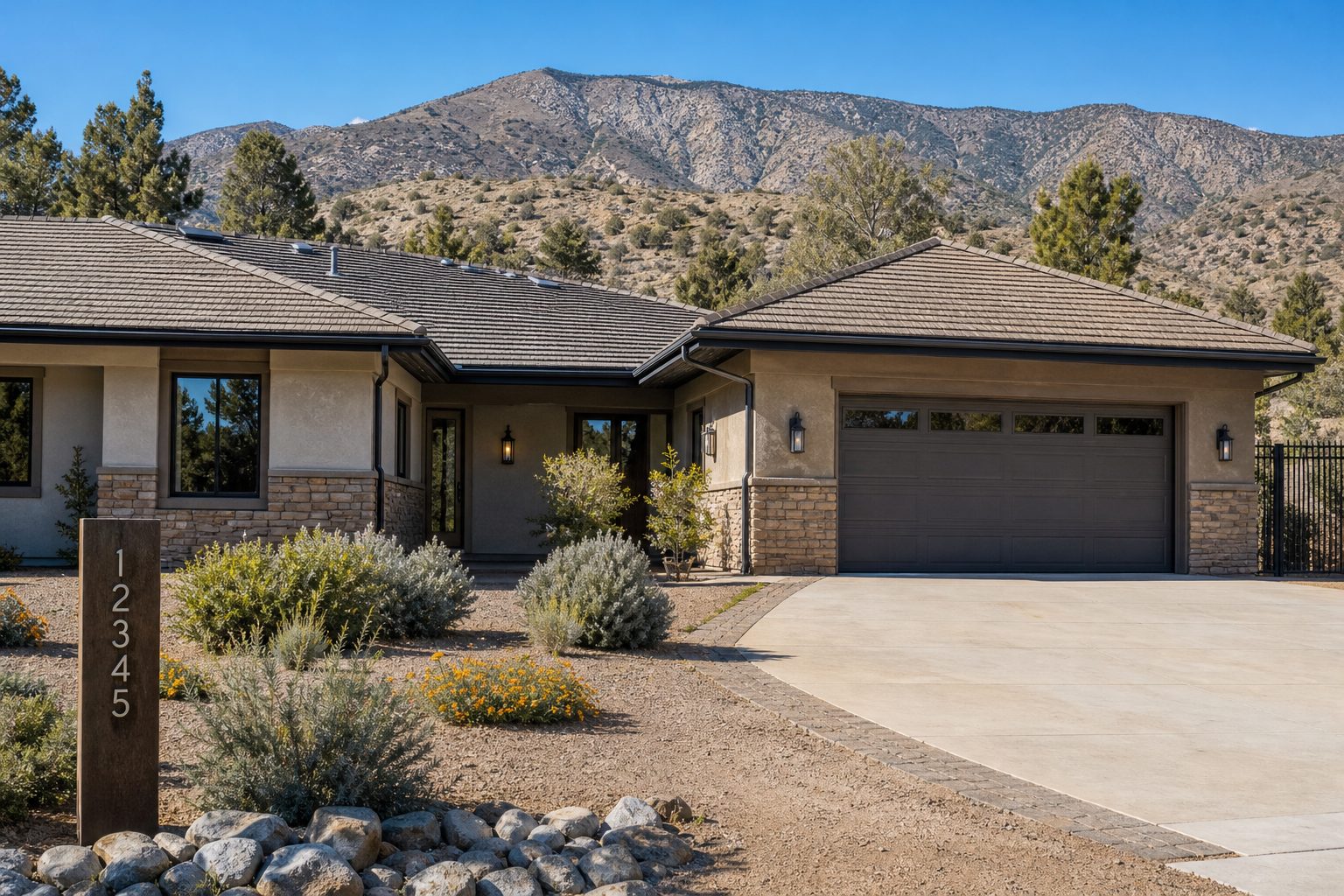
Protect Your Investment: Insurance, Home Inventory, and Records
This is the section most homeowners put off. Do not be that homeowner.
Insurance Review
- Verify your policy is active and adequate. Review your dwelling coverage against current rebuild cost, not market value. In Rancho Cucamonga, where the median home sale price was approximately $785,000 as of Q2 2026 (per a local market snapshot), rebuild costs can be significantly higher than you expect, especially with post-fire construction demand.
- Check for wildfire-specific deductibles. Some policies now include separate wildfire deductibles.
- Confirm your Additional Living Expenses (ALE) coverage. If you are displaced for weeks or months, this pays for temporary housing, food, and related costs.
- Smoke damage coverage. Verify whether your policy covers smoke damage without a fire touching your home.
- California’s “Safer from Wildfires” framework may provide insurance premium discounts for homes that have completed fire-hardening upgrades and defensible space compliance. Verify the current status and participating insurers with the California Department of Insurance.
- The California FAIR Plan exists as a last-resort option for homeowners who cannot obtain coverage through the standard market. It is limited coverage and typically more expensive, but it is available.
If you have inherited a property or are managing an estate in probate, pay special attention here: standard homeowner’s insurance may lapse or be voided when a property becomes vacant after the owner’s death. Executors and trustees should update to a vacant-home or estate policy immediately. We work with probate and trust situations regularly, and insurance is one of the first things we flag.
Home Inventory
- Do a video walkthrough of every room, including closets, garages, and outdoor structures.
- Open cabinets and drawers; zoom in on high-value items.
- Store the video in the cloud (not only on a phone that could be lost in an evacuation).
- Update annually or after major purchases.
What Rancho Cucamonga Fire Season Means for Sellers and Buyers
If You Are Selling
Fire preparedness is not just safety. It is a selling point. Buyers evaluating Rancho Cucamonga homes, especially in foothill neighborhoods, increasingly ask about defensible space compliance, home-hardening features, and insurance availability. Documented upgrades and a clean defensible space inspection can set your listing apart.
California law requires a Natural Hazard Disclosure when selling, which includes fire hazard zone status. Work with your agent to handle this properly.
If you are thinking about selling during fire season, timing your prep and listing photos matters. A freshly cleared lot photographs better and signals to buyers that the property has been well maintained. If you are curious about what your Rancho Cucamonga home is worth in today’s market, we are happy to provide a free, no-obligation home valuation.
If You Are Buying
Before you remove contingencies on a Rancho Cucamonga home, especially in the foothill areas, check the property’s fire hazard severity zone by address, confirm that homeowner’s insurance is available and what it will cost, and verify the status of defensible space compliance. These are not afterthoughts. They are part of due diligence. Learn more about the 2026 Rancho Cucamonga housing market and what fire preparedness means for property values in the area.
If You Have Inherited a Property
Inherited homes often sit vacant during probate proceedings, which can take many months in California. Vacant homes lack active monitoring, may have overgrown vegetation, and are more vulnerable during fire season. If you are managing an inherited property in Rancho Cucamonga, your fiduciary duty as executor or trustee includes preserving estate assets, and that includes fire-safety maintenance. We specialize in probate and trust real estate and can help you navigate both the property preparation and the sale.
Frequently Asked Questions About Rancho Cucamonga Fire Season
When is fire season in Rancho Cucamonga?
Fire season in Rancho Cucamonga generally runs year-round in terms of risk, but the highest danger comes during Santa Ana wind season, which typically runs from fall into winter and often peaks between December and January. The April 2014 foothill fire near Etiwanda, however, is a reminder that dangerous fire weather can occur in any month.
What are Santa Ana winds, and why do they increase fire risk in Rancho Cucamonga?
Santa Ana winds are hot, dry winds that blow from the northeast through the Cajon Pass and surrounding mountain corridors. They rapidly dry out vegetation and can drive fires at extreme speeds. Rancho Cucamonga’s location at the base of the San Gabriel Mountains places it directly in the path of these winds.
How do I know if my Rancho Cucamonga home is in a fire hazard zone?
Check your specific address on CAL FIRE’s Fire Hazard Severity Zone maps. Risk varies by address, not just by neighborhood, so it is important to verify your individual property.
What is defensible space, and how much do I need in California?
Defensible space is the area around a structure where vegetation and other combustible materials have been cleared or reduced to slow fire spread. California law (PRC 4291) requires 100 feet of defensible space around structures in fire-prone areas, divided into zones of increasing distance from the home.
What is Zone 0 in California?
Zone 0 refers to the ember-resistant zone within 0 to 5 feet of a structure. It is the most critical area for preventing ember ignition. California has been developing specific regulations for this zone; verify the current requirements and effective dates with CAL FIRE.
What should be in a wildfire go-bag?
Essential items include important documents or copies (IDs, insurance policies, deeds), medications, phone chargers and backup batteries, cash, a change of clothes, water, non-perishable snacks, pet supplies, and N95 masks for smoke protection. Store it near your door and update it regularly.
How do I sign up for emergency alerts in Rancho Cucamonga?
San Bernardino County operates an emergency notification system that sends alerts by phone, text, and email. Register through the San Bernardino County Office of Emergency Services. Also download relevant apps and follow local fire agencies on social media for real-time updates.
Can I still get homeowners insurance in a high fire risk area of Rancho Cucamonga?
Insurance availability in fire-prone areas has become more challenging across California. California’s FAIR Plan exists as a last-resort option for homeowners who cannot obtain coverage through the standard market. The state’s “Safer from Wildfires” framework may also provide premium discounts for fire-hardened homes. Contact a licensed insurance professional for guidance specific to your property.
Do fire-hardening upgrades increase home value in Rancho Cucamonga?
Fire-hardening upgrades, such as Class A roofing, ember-resistant vents, dual-pane tempered glass, and documented defensible space compliance, can improve marketability and buyer confidence, particularly in Rancho Cucamonga’s foothill neighborhoods. While no specific dollar-for-dollar return is guaranteed, these improvements may help your home stand out and sell with fewer obstacles.
Do I have to disclose a fire hazard zone when selling my home in Rancho Cucamonga?
Yes. California law requires a Natural Hazard Disclosure report as part of the sale, which includes whether the property is located in a state-designated fire hazard severity zone. Work with your Rancho Cucamonga real estate agent to ensure all disclosures are handled accurately and on time.
The Bottom Line
Fire season in Rancho Cucamonga is not a future problem. It is happening right now. The Santa Ana winds that drove fires in San Clemente, Malibu, Highland, Altadena, and Pacific Palisades are the same winds that blow through the Cajon Pass and across your foothill property. Defensible space, home hardening, a go-bag, an evacuation plan, and up-to-date insurance are the things that separate families who are ready from families who wish they had been.
Do not wait for the next red flag warning to start.
Have questions about protecting your home this fire season or your next move in Rancho Cucamonga? Let’s talk. Whether you are buying, selling, or just planning ahead, we will give you honest advice and a clear plan.
Brent Blay | Sold By Blay | Park Regency Realty | DRE #02068178 909-641-8751 | brentblay@parkregency.com | soldbyblay.com Your family deserves the best.

Leave a Reply