


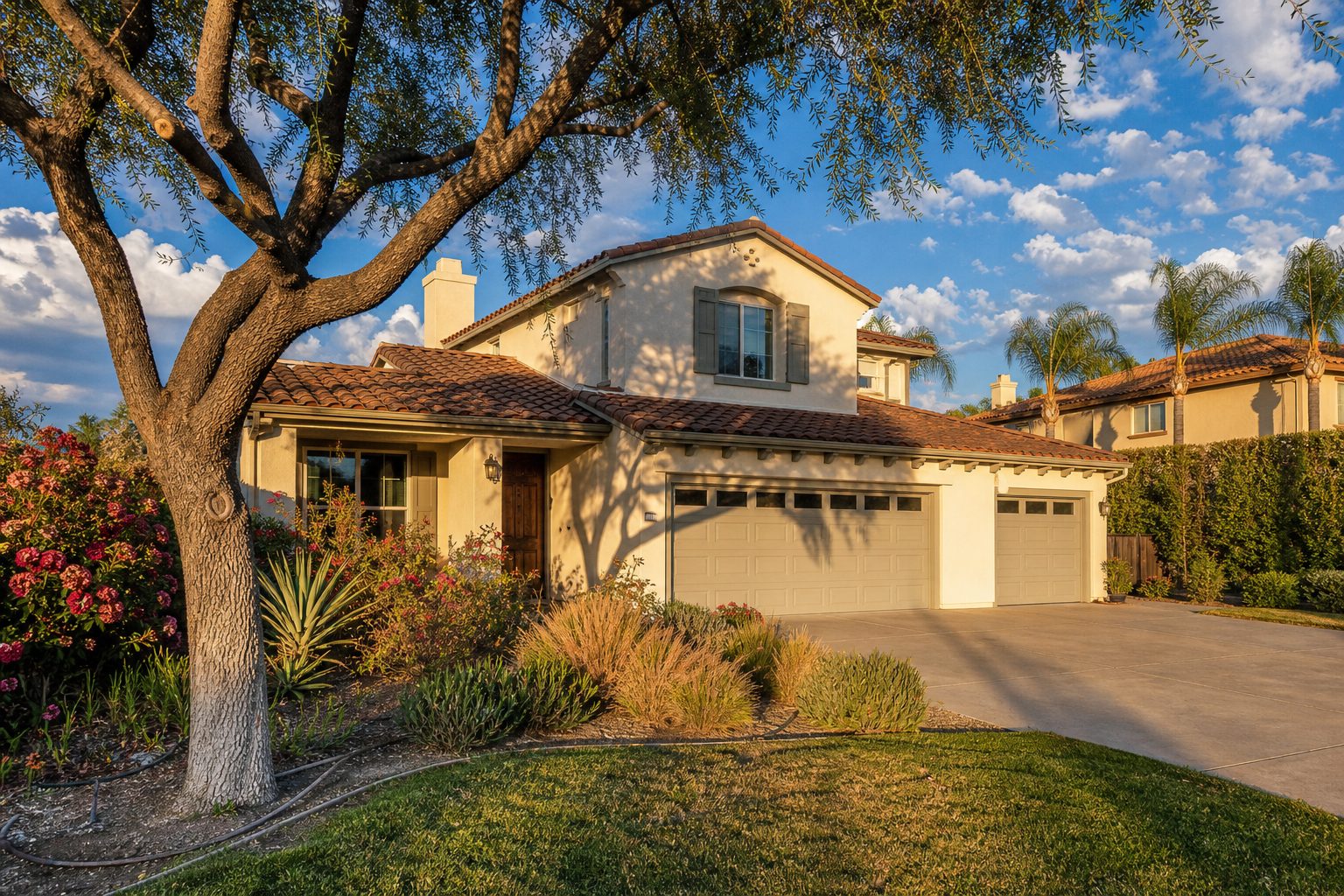
When a cash offer lands on your Rancho Cucamonga home, especially one below asking price, should you take it or hold out for more?
A cash offer below list price is not automatically a bad deal or a desperate move. The right answer comes from comparing your net proceeds, the true monthly cost of waiting, your timing in this market, and what peace of mind is worth to you personally.
A homeowner recently asked online whether they’d be desperate to take a cash offer. They listed their home around Labor Day for $549,000, then dropped the price to $539,000 a month later after little interest, with several other homes in the neighborhood also sitting. Then a cash offer came in: $470,000, as-is, closing in 10 to 14 days, from a buyer with no agent, which would save them roughly $14,000 in commission. They’ve already bought another home and live there now, and they want to use the proceeds to pay down that loan. They owe about $280,000 on the house they’re selling and estimate they’d net roughly $150,000 to $160,000. Their question: is taking this offer desperate, or the right move?
It is a question we hear in different forms all the time. The headline price on an offer is only one number. The number that actually matters is what lands in your bank account, and how long it takes to get there.
Before you make any decision, start with an honest read of what your home is worth in today’s Rancho Cucamonga market. Get your free home valuation.
Is Taking Less Than Asking Really a “Loss” in Rancho Cucamonga?
List price is not the same as market value. It is a starting point. Every seller picks a number based on comparable sales, hope, and strategy. But the market votes with offers, and when a listing sits without activity, that silence is data. It does not mean the home is worthless. It means the price or presentation is not aligning with what buyers in that price range are willing to pay right now.
Here is the frame shift that changes everything: “taking less than asking price” and “losing money” are not the same thing. A home listed at $539,000 that sits for four more months, requires a $15,000 price reduction, and closes with a buyer who asks for $10,000 in repair credits after inspection may net you less than the cash offer you are holding today, even if the final sale price looks higher on paper. The comparison that matters is net proceeds after all costs, not headline price.
What does that look like in Rancho Cucamonga right now? According to multiple market data sources, homes for sale in Rancho Cucamonga spent a median of 63 days on the market as of early 2026, with properties selling for about 98.05% of the asking price. Meanwhile, homes with price reductions climbed from 45.78% to 58.11% of active listings, per local market tracking data. That tells you this is not the market of two years ago where everything sold in a weekend. If your home is sitting, you are not alone, and it does not mean your home is a bad property. It means the math for buyers has changed.
10 Things to Check Before You Say Yes to a Rancho Cucamonga Cash Offer
1. Is the Buyer Really Paying Cash?
“Cash offer” is a term that gets used loosely. Before you do anything else, verify that the buyer actually has the funds to close without a lender. A legitimate cash buyer will provide proof of funds without hesitation.
What that actually means: a bank statement, brokerage account statement, or custodial account statement dated within the last 30 to 60 days, showing liquid assets at or above the purchase price. Not a letter from a financial advisor. Not a pre-qualification from a lender. An actual account statement with a balance and the account holder’s name matching the buyer’s legal name on the purchase agreement.
Quick Tip: Ask for proof of funds before you accept the offer or sign anything. Once escrow opens, have the buyer wire the earnest money promptly. That is a second signal the deal is real.
2. How Big Is the Earnest Money Deposit, and When Does It Become Non-Refundable?
The earnest money deposit is the buyer’s good-faith skin in the game. In California, the earnest money (called the “initial deposit” in the C.A.R. Residential Purchase Agreement) is typically 1% to 3% of the purchase price, wired to a licensed escrow company within 3 business days of offer acceptance. The deposit is fully protected while contingencies are active. Once contingencies are removed, the seller can keep up to 3% as liquidated damages if the buyer defaults.
The size of the deposit matters. A larger deposit signals a more committed buyer and gives you more protection if they walk away after removing contingencies.
Quick Tip: Ask when the deposit goes hard (non-refundable). In California, that typically happens at contingency removal, not at signing. Know that timeline before you accept.
3. What Contingencies Are Included, and Does “As-Is” Really Mean No Renegotiation?
An “as-is” offer does not automatically mean the buyer waives their right to inspect the property or walk away. In California, most purchase agreements include an inspection contingency that gives buyers the right to investigate the property’s condition, and potentially to cancel or renegotiate based on what they find.
Even in an as-is cash sale, a buyer can still come back after an inspection and request a price reduction, or simply cancel and recover their deposit during the contingency period. A truly as-is, no-renegotiation offer is one where the inspection contingency has been waived or the inspection period has already passed. Read the contract carefully.
Quick Tip: If the buyer says “as-is,” make sure the contract reflects that. Look for whether an inspection contingency is present, and what the buyer’s rights are during that window.
4. Can the Buyer Assign the Contract?
This is how you spot a wholesaler. Some cash buyers are not actually buying your home. They are locking it under contract and then assigning (selling) that contract to another buyer at a markup. You end up selling for less, and someone else profits from the spread.
Look for assignment language in the purchase agreement. If the buyer’s name includes “and/or assigns” or the contract has an assignment clause, ask questions. There is nothing illegal about wholesaling, but you deserve to know who is actually buying your property and what they intend to do with it.
Quick Tip: If you are uncomfortable with an assignment, you can negotiate to remove that language or add a clause requiring your written consent before the contract can be transferred.
5. What Is Your True Net in Rancho Cucamonga?
This is the number that matters more than any other. Your net is not the offer price. It is the offer price minus your remaining mortgage payoff, closing costs, prorations, any commission you have agreed to pay, transfer taxes, and any other fees.
In California, typical seller closing costs include escrow fees, title insurance, the county documentary transfer tax (in San Bernardino County, this is generally $1.10 per $1,000 of the sale price), prorations for property taxes, and any agreed-upon repairs or credits.
What we tell every seller who calls us: build two columns. Column one is the cash offer scenario, with its lower headline price but fewer costs and a faster close. Column two is the hold-and-list scenario, with a potentially higher sale price but additional months of carrying costs, possible price reductions, and possible repair credits.
For your real numbers, get a no-obligation net sheet by reviewing the Rancho Cucamonga housing market outlook.
6. What Is It Costing You Every Month to Keep the House?
Every month your Rancho Cucamonga home sits on the market, you are writing checks. Here is a framework to calculate your monthly holding cost:
- Mortgage payment (principal + interest + impounds)
- Property taxes (monthly share; Rancho Cucamonga’s effective rates vary by neighborhood and Mello-Roos/CFD district)
- Homeowners insurance
- Utilities (electric, gas, water, trash, even if vacant, you still pay base charges)
- Landscaping/gardener
- Pool service and chemicals (if applicable)
- HOA dues (if applicable)
- Mello-Roos/CFD (common in newer Rancho Cucamonga developments near Etiwanda and North Day Creek)
- Routine maintenance and repairs
- Vacant-home or security costs
- TOTAL per month × number of months remaining on market
Every extra month on the market is a cost that silently reduces your net, and a future price reduction may still be needed on top of it. For sellers in neighborhoods like Victoria, Terra Vista, or Alta Loma, where values range widely from the low $600s to above $1 million, the monthly burn rate will look very different. But the principle is the same everywhere: time is money.
If you are selling a probate or inherited property in Rancho Cucamonga and the home is vacant, these costs add up even faster because no one is living there to notice a leak, a broken sprinkler head, or a security issue. For guidance specific to inherited properties, visit our guide to selling a home in probate.
7. What Is the Rancho Cucamonga Market Telling You?
The data right now tells a clear story. According to local market data as of early 2026, about 32.8% of Rancho Cucamonga homes sold over the list price, while roughly 54.9% sold under it. That is a market where the most desirable homes still draw competition, but the majority of listings have real room for negotiation.
Meanwhile, 58.11% of active listings in Rancho Cucamonga had price reductions, per local market tracking data. And inventory has been growing, with roughly 360 homes for sale reported as of mid-2026, according to local listing aggregators.
What does that mean for you? If your home is sitting, it is not just your home. It is the broader market. Buyers have more choices than they did a year or two ago, mortgage rates averaged 7.40% as of October 15, 2026, and that combination means financed buyers are pickier and slower to commit. A bird in the hand may be worth more than you think.
8. Who Protects You If the Buyer Has No Agent?
When a buyer comes to you without their own agent, you need to understand who is handling the paperwork, disclosures, and negotiations. In California, your listing agent’s duties are to you, the seller. But certain disclosure obligations still apply regardless of whether the sale is cash, as-is, or off-market.
California sellers are generally required to provide the Transfer Disclosure Statement and other mandated disclosures, even on as-is sales. There are some exemptions for certain probate and trust sales, but the rules are specific and fact-dependent.
The risk with an unrepresented buyer is not that the deal cannot happen. It is that no one on the other side is managing their deadlines, contingency removals, or escrow requirements, and that disorganization can cause delays or kill the deal.
Quick Tip: Having your own experienced agent is even more important when the other side does not have one. Reach out to discuss your specific situation.
9. Can You Negotiate a Cash Offer Instead of Just Accepting or Rejecting It?
Absolutely. A cash offer is a starting point, not a take-it-or-leave-it ultimatum. You can counter on price, on earnest money amount, on timeline, on a rent-back period if you need time to move, or on the removal of contingencies.
What we tell sellers: you have more leverage than you think, even when a listing has been sitting. A cash buyer who has gone through the work of identifying your property, getting proof of funds together, and writing an offer is motivated. They will often negotiate. The worst they can say is no.
Real estate commissions are negotiable and are not set by law. Factor your commission arrangement into the net-proceeds comparison, but do not assume a cash sale automatically means zero commission owed.
10. What Is Your Goal, and What Is Your Peace of Mind Worth?
This is the question that no spreadsheet can answer for you. If you are carrying two mortgages, paying down a new loan, managing a vacant property from out of town, or dealing with the emotional weight of selling a family member’s home through probate, the monthly cost is not just financial. It is mental, emotional, and physical.
Some sellers rationally choose certainty over the highest possible number, and that is a legitimate, smart decision. But we also want you to consider the other side: the regret risk of accepting too quickly without running the full math or testing the market. Both are real. Your job is to make the decision with your eyes open, not under pressure.
The Real Cost of Waiting: Running the Numbers in Rancho Cucamonga
Let us return to the homeowner from the opening story and illustrate how we would think through the math. These numbers are hypothetical and illustrative only, not a prediction of any outcome.
Scenario A: Accept the $470,000 cash offer now
- Sale price: $470,000
- Minus mortgage payoff: $280,000
- Minus estimated closing costs (title, escrow, transfer tax, prorations): roughly $5,000 to $8,000 (illustrative)
- No buyer-agent commission (buyer is unrepresented)
- Seller-agent commission: negotiable, varies by agreement
- Estimated net before commission: approximately $182,000 to $185,000
- Close in 10 to 14 days
Scenario B: Hold and sell at $520,000 after 4 more months
- Sale price: $520,000
- Minus mortgage payoff: $280,000
- Minus estimated closing costs: roughly $6,000 to $9,000 (illustrative)
- Minus 4 months of holding costs (mortgage, taxes, insurance, utilities, maintenance): illustrative $2,500 to $4,000 per month = $10,000 to $16,000
- Minus possible buyer-agent commission (negotiable)
- Minus possible repair credits after inspection: $5,000 to $15,000 (illustrative)
- Estimated net before commissions: approximately $180,000 to $199,000
- Close in roughly 5 to 6 months from today
The break-even idea: how much higher does a future sale price need to be just to equal what you would net from today’s cash offer, after carrying costs, commission, and potential concessions? In many cases, the gap is smaller than sellers expect. In some cases, the cash offer actually wins on net proceeds.
Every situation is different. For your real numbers, we will build you a custom net sheet based on market conditions in your neighborhood.
Timing Matters for Rancho Cucamonga Home Sellers
Seasonality is real in Southern California. Fall and winter historically bring fewer active buyers. Combine that with mortgage rates averaging 7.40% as of October 15, 2026, and the pool of financed buyers who can qualify at Rancho Cucamonga price points shrinks further.
If your home is sitting now, in October, you are heading into a period where buyer activity typically dips. That does not mean a sale is impossible. It means the timeline to find the right buyer may stretch, and every month of waiting adds to your carrying costs.
For sellers juggling two properties, an inherited home in probate, or a vacant house in neighborhoods like Central Park, Chaffey, or Vintage Park, the cost of waiting is compounding while you wait.
You Cannot Put a Price on Peace of Mind
The spreadsheet only captures part of the picture. What it does not capture: the stress of keeping a home show-ready while living somewhere else, the uncertainty of not knowing when an offer will come, the weekends lost to open houses, the anxiety of watching competing listings get price reductions, the decision fatigue of re-evaluating your price every two weeks, and the strain on your family and your energy.
Some sellers rationally choose a certain, faster close over the possibility of a higher price months from now. That is not desperate. That is a legitimate decision based on a full accounting of costs, including the ones that do not show up on a ledger. We respect that.
But we also want you to guard against the other side: accepting too quickly under pressure, without running the math or testing a counter-offer. Both risks are real. The goal is to decide with full information.
Questions to Ask Yourself Before You Decide on a Rancho Cucamonga Cash Offer
- What is my actual goal for the proceeds?
- What is my monthly burn rate on this property?
- How long can I comfortably carry two homes?
- What is my walk-away number (the lowest net I will accept)?
- Have I gotten an independent opinion of value from a local agent who knows Rancho Cucamonga?
- Do I understand my tax situation (capital gains, stepped-up basis for inherited property)?
- Have I considered countering instead of just accepting or rejecting?
Back to Our Homeowner
So what would we tell that homeowner who posted online? Not whether to accept. That is their call, and no one who does not know their full picture should make it for them.
Here is how we would think it through. First, verify the buyer and the funds. Second, calculate the true monthly holding cost, because that is the invisible leak in the net-proceeds bucket. Third, get an independent value opinion from a local agent who knows the comparable sales in that specific neighborhood. Fourth, consider countering on price or terms, because the worst the buyer can say is no. Fifth, weigh the value of ending the double payments and the stress against the chance that a higher offer might come.
There is no universal right answer. There is only the right answer for you, and it comes from running the real math, not from guessing.
Frequently Asked Questions About Cash Offers in Rancho Cucamonga
Should I accept a cash offer below asking price?
It depends on your net proceeds, not the headline price. After subtracting closing costs, carrying costs for additional months on the market, possible price reductions, and commission, a lower cash offer can sometimes net you more than holding out. Run the full math before deciding.
How much less is a typical cash offer than market value?
Cash offers from investors often come in below full market value because the buyer is offering speed, certainty, and convenience in exchange for a discount. The exact discount varies widely depending on the buyer, the property condition, and local market conditions. Always compare any offer to recent comparable sales in your Rancho Cucamonga neighborhood.
Is a cash offer better than a financed offer?
A cash offer eliminates financing and appraisal contingencies, which reduces the risk of the deal falling apart. It can also close faster. But “better” depends on the price, terms, and your priorities. A financed offer at a significantly higher price may still net you more even with the added timeline.
How do I know if a cash buyer is legitimate?
Ask for proof of funds: a bank or brokerage statement dated within 30 days showing liquid assets at or above the purchase price. The account holder’s name should match the buyer on the purchase agreement. If the buyer hesitates or provides a vague letter, that is a red flag.
Can a cash buyer back out after accepting?
Yes, if contingencies are still active. In California, a buyer can cancel during the inspection contingency period and recover their earnest money. Once contingencies are removed, the seller may be entitled to keep the deposit as liquidated damages (up to 3% of the purchase price) if the buyer defaults.
What is a wholesaler and how do I spot one?
A wholesaler locks your home under contract and then assigns that contract to another buyer at a higher price, profiting from the spread. Look for “and/or assigns” in the buyer’s name line or an assignment clause in the contract. Ask directly whether the buyer intends to close on the property themselves.
Do I still need disclosures if I sell for cash as-is in California?
Generally, yes. California sellers are typically required to provide the Transfer Disclosure Statement and other mandated disclosures regardless of whether the sale is cash or as-is. Certain probate and trust sales may have specific exemptions, but the rules are fact-dependent. Consult your agent or attorney.
Can I sell my house without the buyer having an agent?
Yes, but proceed carefully. When the buyer has no agent, no one on their side is managing deadlines, contingency removals, or paperwork. Your listing agent’s duties are to you, but having an experienced agent representing your interests becomes even more critical.
How much does it cost per month to keep a house on the market?
It varies by property, but add up your mortgage payment, property taxes (monthly share), homeowners insurance, utilities, landscaping, pool service, HOA dues, Mello-Roos (common in newer Rancho Cucamonga neighborhoods), and maintenance. For many Rancho Cucamonga homeowners, the total can range from $2,000 to $5,000 or more per month.
Should I counter a lowball cash offer?
Almost always, yes. A counter-offer costs you nothing but a conversation. You can counter on price, earnest money amount, closing timeline, rent-back terms, or contingency removal. A buyer who has gone through the effort of making an offer is usually willing to negotiate.
Is it a bad time to sell a house in Rancho Cucamonga?
The market has shifted. As of early 2026, roughly 54.9% of Rancho Cucamonga homes sold under list price, and homes with price reductions have increased significantly, per local market data. It is not a bad time to sell, but it is a market that requires accurate pricing, strong marketing, and realistic expectations. With mortgage rates averaging 7.40% as of October 15, 2026, buyer pools are more selective.
Do I pay capital gains if I sell a house I no longer live in?
The primary-residence capital gains exclusion generally requires that you owned and lived in the home for at least 2 of the last 5 years. If you have moved out, your eligibility depends on timing and your specific situation. This is general information, not tax advice. Consult a CPA or tax professional for guidance on your situation.
The Bottom Line
A lower cash offer on your Rancho Cucamonga home can be the right move or a costly one. The answer is not in the headline price. It is in your net proceeds after all costs, your monthly holding expenses, your timing in this market, and your peace of mind. Run the real math, counter before you decide, and make the choice with your eyes open.
Have questions about a cash offer or your next move in Rancho Cucamonga? Let’s talk. Whether you are buying, selling, or just planning ahead, we will give you honest advice and a clear plan.
Brent Blay | Sold By Blay | Park Regency Realty | DRE #02068178 📞 909-641-8751 | ✉️ brentblay@parkregency.com | soldbyblay.com Your family deserves the best.
*This article is general information, not legal, tax, or financial advice. Consult a licensed professional. Information and data as of October 2026; figures change regularly.*

Leave a Reply