*Last updated: October 5, 2026. Market data and rates as of mid-2026 reporting periods noted per section; conditions change frequently.*
*This article is general information, not lending, financial, or tax advice. Consult a licensed mortgage professional and a CPA about your situation.*
Is now a good time to buy a home in Rancho Cucamonga, Alta Loma, Fontana, Ontario, or Upland?
For many buyers, yes. Higher mortgage rates have thinned out competition, inventory has grown compared to a year ago, and homes are sitting longer on the market. That means more price reductions, more seller concessions, and more room to negotiate than buyers had during the frenetic years of 2021 through 2023. Whether it is the right time for you depends on your budget, how long you plan to stay, and your financial readiness.
—
Why This Question Matters Right Now in Rancho Cucamonga and the Inland Empire
We hear this question constantly, and it deserves a straight answer grounded in data, not hype. The west Inland Empire housing market has shifted. Homes across Rancho Cucamonga, Alta Loma, Fontana, Ontario, and Upland are spending more time on the market than they did a year ago. More sellers are reducing their asking prices. And buyers who show up prepared are negotiating credits, rate buydowns, and repairs that would have been laughed off in 2022.
That does not mean every buyer should rush in. Mortgage rates are higher than many people hoped, and affordability is still a real challenge. But the balance of power has moved, and if you understand where you stand financially, this could be the window that works for you. Let us walk through the numbers.
—
The Market Right Now Across All Five Rancho Cucamonga Area Communities
Here is what the data shows across each area. Because Alta Loma is a community within the City of Rancho Cucamonga (not a separate city), some sources report it within Rancho Cucamonga’s citywide figures and others break it out by ZIP code (91701 and 91737). We note the distinction where data is available.
Rancho Cucamonga
- Median home sale price: Approximately $826,000 as of June 2026, at roughly $408 per square foot, per local market reporting
- Year-over-year price trend: Down about 4.4% over the most recent three-month period per one source; up 2.66% (from $759,800 to $780,000 between June 2025 and May 2026) per another source using different methodology
- Days on market: Median of 26 days per one mid-2026 report; other sources show 42 to 53 days depending on methodology and reporting period
- Inventory: Approximately 351 homes in for-sale inventory at the end of June 2026, up roughly 20% from the year prior
- Price reductions: The share of Rancho Cucamonga listings with price reductions climbed from 45.78% to 58.11%, according to local market tracking
- Sale-to-list ratio: 100% as of June 2026
What does this actually mean for you? More than half of sellers are cutting their asking price. Homes are sitting longer. And you are far less likely to walk into a bidding war than you would have been even 18 months ago.
Alta Loma (Within Rancho Cucamonga)
- Typical home value: $819,151 per the Zillow Home Value Index as of June 2026
- Price by ZIP: 91701 at approximately $851,785 ($466 per square foot); 91737 at approximately $1,022,378 ($462 per square foot)
- Alta Loma’s foothill setting and generally larger lots command premium pricing above Rancho Cucamonga’s citywide median
Fontana
- Median sale price range: Approximately $620,000 to $670,000 as of mid-2026, per multiple market data sources
- Year-over-year change: Roughly flat, ranging from negative 0.14% to positive 1.5% depending on source and reporting period
- Days on market: 43 to 67 days, up from 37 to 63 days the year prior
Ontario
- Median sale price: Approximately $665,000 over the trailing three months of Q2 2026
- Year-over-year change: Down 1.5%
- Days on market: Approximately 47 days
Upland
- Median price range: Approximately $749,900 to $815,579 as of mid-2026
- Days on market: 46 to 58 days, compared with 44 days the year prior
*Sources: Multiple market data platforms reporting mid-2026 periods including Q2 2026 market snapshots and ZHVI data as of June 30, 2026. Ranges reflect differences between sources. All figures are approximate benchmarks, not appraisals. Verify conditions on your specific timeline.*
—
Where Mortgage Rates Stand and Why It Matters for Rancho Cucamonga Buyers
As of late July 2026, the average 30-year fixed mortgage rate sits around 6.66%, according to weekly survey data. For context, Freddie Mac’s Primary Mortgage Market Survey showed the 30-year fixed at approximately 6.09% the week of February 12, 2026.
Higher rates are the biggest reason many would-be buyers have paused, and that is exactly what creates opportunity for those who are ready. Fewer active buyers means less competition for every listing in Rancho Cucamonga, Fontana, Ontario, Upland, and Alta Loma.
What Rates Mean for Your Monthly Payment
Here is a clearly hypothetical example to illustrate the math. On a $750,000 home with 20% down (borrowing $600,000) at a 6.66% rate over 30 years, the principal and interest payment alone would be roughly $3,860 per month. Add property taxes, insurance, and any HOA or Mello-Roos fees, and your total monthly housing cost could reach $5,000 or more depending on the specific property.
That is a real number, and it is important to look at it honestly. But it is also worth remembering: if rates ease in the future, refinancing may be an option (though it is never guaranteed). What you cannot get back is the negotiating leverage that exists right now while competition is lower.
—
Why Buyers Have More Options and Leverage Right Now in Rancho Cucamonga
This is the central point of this article, and the data supports it.
Fewer Competing Buyers Across the Inland Empire
Higher mortgage rates have priced some buyers out and prompted others to wait. The result is that about 32.8% of Rancho Cucamonga homes sold over the list price as of mid-2026, while roughly 54.9% sold under list price. Compare that to the pandemic era when nearly everything sparked a bidding war. You now have room to keep your inspection and appraisal contingencies in place, which protects you.
More Inventory Means More Choices
Active listings in Rancho Cucamonga are up roughly 20% from a year ago. That is more homes to tour, more time to compare, and less pressure to make a snap decision on a weekend.
Price Reductions Are Common
The share of Rancho Cucamonga listings with price reductions has climbed to 58.11%, according to local market data. That means more than half of sellers have had to adjust their expectations, and you benefit from that reset.
Seller Concessions and Closing Credits
In this environment, you can ask sellers to contribute toward your closing costs, pay for repairs identified during inspection, or fund a mortgage rate buydown. Concession limits vary by loan type: conventional loans typically allow 3% to 9% of the purchase price depending on your down payment, FHA loans allow up to 6%, and VA loans allow up to 4% plus reasonable closing costs. These are guidelines, not guarantees; your lender will confirm the specifics.
Rate Buydowns: Temporary and Permanent
A seller-funded temporary rate buydown (such as a 2-1 buydown) reduces your interest rate for the first year or two of the loan, easing your initial payments while you settle in. A permanent buydown lowers your rate for the entire loan term. Both are negotiable in the current market, and neither was typically available to buyers during the most competitive years.
Builder Incentives on New Construction
Builders across the Inland Empire have been offering incentives including rate buydowns, upgraded features, and closing cost credits on new construction. These offers vary by community and change frequently, so verify current availability before relying on them.
Important: Sellers and builders are never required to offer concessions or buydowns. These opportunities exist because market conditions currently favor negotiation, and that can change.
—
City-by-City Guide: What You Should Know Before Buying
Rancho Cucamonga
Rancho Cucamonga anchors the west Inland Empire with established neighborhoods, newer communities, and convenient freeway access along the I-210 and I-15 corridors. Neighborhood values vary dramatically: Deer Creek homes average around $1,668,181, Hermosa around $1,287,867, North Day Creek around $1,265,324, and Central Park around $794,998, per Zillow ZHVI data as of June 2026. The effective property tax rate is 0.71%, which translates to approximately $5,557 per year on a home worth around $782,617.
Alta Loma
Alta Loma sits in the northern foothills of Rancho Cucamonga and is not a separate city. It tends to feature larger lots and a more established, foothill character. With typical home values around $819,151 (per Zillow ZHVI as of June 2026) and ZIP 91737 values exceeding $1 million, Alta Loma represents some of the area’s most desirable and highest-priced real estate.
Fontana
Fontana generally offers more accessible entry points, with median sale prices in the $620,000 to $670,000 range as of mid-2026. Competition for entry-level homes under $700,000 can still be intense across the Inland Empire, which is worth factoring into your strategy if you are looking in this price range.
Ontario
Ontario’s median sale price of approximately $665,000 (Q2 2026 data) positions it between Fontana and Rancho Cucamonga in terms of cost. Ontario International Airport is a consideration for some neighborhoods. Verify flight paths and noise contours for any specific address you are considering.
Upland
Upland’s median prices in the $749,900 to $815,579 range place it between Rancho Cucamonga and Ontario. The city offers its own downtown character and established tree-lined streets.
Things to verify for any property in these five areas: Mello-Roos or Community Facilities District (CFD) assessments (common in newer developments), HOA fees, fire hazard severity zone designation (especially in foothill areas of Alta Loma and Etiwanda), and specific school assignments by address.
—
Challenges to Weigh Before Buying in Rancho Cucamonga or the Surrounding Cities
We believe in being honest about the headwinds, not just the tailwinds.
- Affordability: With a median household income of $85,250 and a median home price exceeding $780,000, the price-to-income ratio in Rancho Cucamonga stands at 7.6x. Living in Rancho Cucamonga costs about 77% more than the national average, though it is roughly 10% less expensive than the average California city, per ERI data updated in February 2026.
- Insurance costs: Homeowners insurance availability and cost, particularly in foothill and fire-prone areas, is a growing concern across California. Verify insurance quotes before you are deep into escrow.
- Property taxes and Mello-Roos: Newer developments in all five cities may carry CFD or Mello-Roos assessments that add hundreds or even thousands of dollars annually on top of standard property taxes.
- Commute costs: If you are commuting west toward Los Angeles or Orange County, factor in fuel, tolls, and time.
—
Should You Buy Now or Wait in California?
We cannot predict where rates or prices will be six months from now, and we would not trust anyone who claims they can. Here is what we can tell you about the tradeoffs:
Reasons today’s conditions work in your favor:
- More inventory and less competition give you negotiating power
- Seller concessions and rate buydowns are available now and may not be later
- If rates drop significantly, competition will almost certainly return, and with it, bidding wars and fewer concessions
- Home values in Rancho Cucamonga have increased 18.8% over the last five years, according to local market data; waiting has historically meant paying more
- Industry analysts anticipate modest, sustainable growth rather than a downturn; a crash is considered unlikely given current supply constraints
Reasons waiting might make sense for you:
- If your savings, credit, or employment situation is not yet solid
- If you are not confident you will stay in the area for at least three to five years
- If current rates push your monthly payment beyond a comfortable threshold
The right time to buy is when the numbers work for your household, not when a headline tells you to act.
—
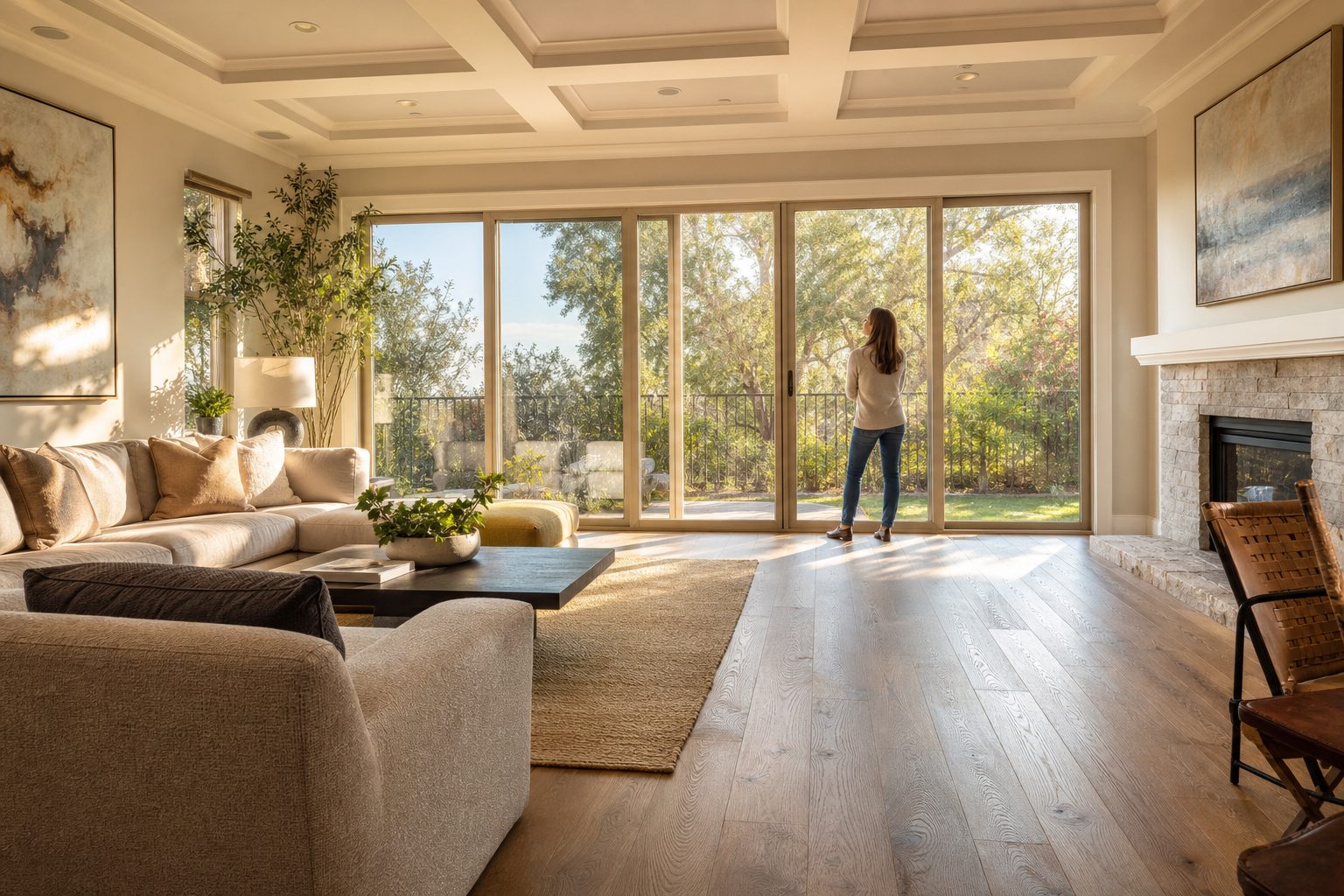
Renting vs. Buying in the West Inland Empire
This is deeply personal. Renting gives you flexibility and lower upfront costs. Buying builds equity over time and locks in a portion of your housing costs. But buying only makes financial sense if you plan to stay long enough to offset the transaction costs (closing costs, potential maintenance, the cost of selling later). In most cases, that means at least three to five years.
If you are renting comfortably and are not financially ready, there is no shame in waiting. If you are paying rent that rivals a mortgage payment and you are ready, the current market gives you more room to make a smart purchase than recent years have.
—
Are You Ready to Buy? A Personal Checklist
Before you start touring homes in Rancho Cucamonga, Alta Loma, Fontana, Ontario, or Upland, ask yourself:
- Time horizon: Do you plan to stay at least three to five years?
- Emergency savings: Do you have three to six months of expenses saved outside your down payment?
- Down payment: Have you confirmed your down payment amount and source?
- Credit: Is your credit score where it needs to be for the loan type you want?
- Debt-to-income: Will your total monthly debts (including the new mortgage) stay within lending guidelines?
- Job stability: Is your income steady and likely to continue?
- Total monthly cost: Have you budgeted for mortgage, taxes, insurance, HOA, Mello-Roos, and maintenance?
If most of these boxes are checked, you are likely in a strong position to take advantage of current conditions.
—
Down Payment Help and Programs for Rancho Cucamonga Buyers
California offers several down payment assistance programs through CalHFA and other agencies that may be available to qualifying buyers in San Bernardino County. Eligibility, funding availability, and terms change frequently, so verify current program details with a participating lender. You can learn more about homebuying preparation through consumer finance resources and assistance available from HUD.
One neutral note: the November 3, 2026 California ballot includes Proposition 37, which would create a homebuying loan program for buyers earning less than 200% of area median income, for homes priced under $1.5 million. We take no position on this measure; consult the official Voter Information Guide for details.
—
Buying While Selling Your Current Rancho Cucamonga Home
If you are a move-up buyer who needs to sell your current home and buy another, the same market dynamics affect both sides of your transaction. The good news: as a buyer, you have more leverage. The challenge: as a seller, you may face the same slower pace and need for strategic pricing. Understanding probate and trust sales can also provide helpful context if your situation involves estate planning.
Coordinating both transactions requires careful timing, and it is one of the situations where experienced guidance matters most. If your next home is in the higher price ranges common in Alta Loma or the foothill neighborhoods, jumbo loan requirements may also come into play.
—
How We Help Buyers Negotiate Across Rancho Cucamonga, Fontana, Ontario, and Upland
What we bring to the table is straightforward: neighborhood-level market data so you know what a home is actually worth (not just what the seller is asking), a negotiation strategy that targets price reductions, seller concessions, and rate buydowns appropriate to your situation, and coordination with your lender and inspectors so nothing falls through the cracks.
We specialize in luxury homes, probate and trust sales, and complex transactions across Rancho Cucamonga and the Inland Empire, and we approach every buyer’s situation with the same principle: you should buy when the numbers work for you, not because someone pressured you into it.
—
Frequently Asked Questions
Is now a good time to buy a house in Rancho Cucamonga?
For buyers who are financially ready, current conditions offer more inventory, more price reductions, and more negotiating power than the market provided in recent years. Over 54.9% of Rancho Cucamonga homes sold under list price as of mid-2026. Whether it is right for you depends on your budget and timeline.
Do buyers have more negotiating power right now in the Inland Empire?
Yes. Inventory in Rancho Cucamonga is up roughly 20% from a year ago, homes are sitting longer, and more than 58% of listings have taken price reductions, based on local market data. That creates real room to negotiate on price, concessions, and terms.
Should you buy a house now or wait in California?
That depends on your personal finances, not market timing. If rates drop later, competition will likely increase and concessions will shrink. If you are financially ready and plan to stay at least three to five years, current conditions favor buyers.
Can you ask the seller to pay for a rate buydown?
Yes. In the current market, many sellers are willing to fund temporary (2-1 or 3-2-1) or permanent rate buydowns. This reduces your effective interest rate and your monthly payment. It is a negotiable term, not a guarantee.
How much can a seller contribute toward closing costs?
Limits depend on your loan type. Conventional loans typically allow 3% to 9% of the purchase price depending on your down payment, FHA loans allow up to 6%, and VA loans allow up to 4% plus reasonable closing costs. Your lender will confirm the specifics for your situation.
What is a 2-1 buydown?
A 2-1 buydown is a temporary rate reduction where your interest rate is 2% below the note rate in year one, 1% below in year two, then reverts to the full rate in year three. The cost is typically funded by the seller or builder as a concession.
Will home prices drop in the Inland Empire?
We cannot predict future prices. Industry analysts anticipate modest, sustainable growth rather than a crash, citing ongoing supply constraints. Home values in Rancho Cucamonga have increased 18.8% over the past five years according to local market data. Prices in some areas have softened slightly year-over-year, which is different from a broad decline.
Are mortgage rates going down?
Rates have fluctuated in 2026. The 30-year fixed was around 6.09% in February 2026 (per Freddie Mac) and rose to approximately 6.66% by late July 2026. We do not predict future rate movements, and neither should anyone else with certainty.
Is Fontana or Rancho Cucamonga cheaper?
Fontana generally has lower median home prices, ranging from approximately $620,000 to $670,000 as of mid-2026, compared with Rancho Cucamonga’s median in the upper $700,000s to $820,000s depending on the source and period.
Is Ontario a good place to buy a home in 2026?
Ontario’s median sale price of approximately $665,000 (Q2 2026) positions it as a more accessible entry point than Rancho Cucamonga or Upland. It offers newer master-planned communities and proximity to Ontario International Airport, which is a convenience for some and a noise consideration for others depending on location.
Is Upland more expensive than Rancho Cucamonga?
Upland’s median prices ($749,900 to $815,579 as of mid-2026) overlap with Rancho Cucamonga’s range. Depending on the specific neighborhood and property type, one may be higher than the other. Compare by specific address and condition, not just city averages.
Is Alta Loma part of Rancho Cucamonga?
Yes. Alta Loma is a community within the City of Rancho Cucamonga, not a separate incorporated city. It has its own ZIP codes (91701 and 91737) and distinct neighborhood character, particularly in the foothill areas, but it falls under Rancho Cucamonga’s city government.
Is it better to rent or buy in the Inland Empire?
It depends on how long you plan to stay and your financial readiness. Buying generally builds equity over time, but the upfront costs and commitment only make sense if you expect to remain in the home for at least three to five years. If you are not ready financially, renting is a responsible choice.
How much do you need for a down payment in Rancho Cucamonga?
Down payment requirements depend on loan type. Conventional loans may require as little as 3% to 5%, FHA loans require 3.5% with qualifying credit, and VA loans may require no down payment for eligible veterans. On a $780,000 home, 5% down is $39,000, and 20% down is $156,000. Down payment assistance programs through CalHFA and other agencies may help qualifying buyers.
Do homes in Rancho Cucamonga or Ontario have Mello-Roos?
Some do, particularly in newer developments and master-planned communities. Mello-Roos (Community Facilities District assessments) can add significant costs to your annual tax bill. Always verify whether a specific property carries Mello-Roos before making an offer.
What is the best time of year to buy a house in Southern California?
Historically, competition tends to peak in spring and early summer, while fall and winter often bring fewer competing buyers and more motivated sellers. However, current conditions across all five areas already show reduced competition year-round. Focus on your personal readiness more than the calendar.
—
The Bottom Line
Buyers in Rancho Cucamonga, Alta Loma, Fontana, Ontario, and Upland have more options and more negotiating leverage today than they have had in years. That is a fact supported by inventory growth, longer days on market, widespread price reductions, and the availability of seller concessions and rate buydowns. But the right time to buy is when the numbers work for your household, you plan to stay long enough to build equity, and you have the financial cushion to handle homeownership. No headline should rush you into that decision, and no headline should talk you out of it if you are ready.
Thinking about buying in Rancho Cucamonga, Alta Loma, Fontana, Ontario, or Upland? Let’s talk. Whether you are buying, selling, or just planning ahead, we will give you honest advice and a clear plan.
Brent Blay | Sold By Blay | Park Regency Realty | DRE #02068178 909-641-8751 | soldbyblay.com Your family deserves the best.

Leave a Reply