



Did you just inherit a house in Upland, California, and you’re not sure what to do next?
You’re not alone, and you don’t have to figure this out by yourself. The five most expensive mistakes Upland heirs make are assuming the wrong probate path, missing the Prop 19 move-in deadline, skipping pre-listing inspections on an older home, leaving the property vacant without protection, and selling without a date-of-death appraisal. Each one is avoidable, and knowing about them now can save your family thousands of dollars.
*This article is general information, not legal or tax advice. Consult a licensed professional for guidance specific to your situation. Information and data as of November 2026; figures change regularly.*
Why This Matters for Upland Heirs Right Now
Upland sits at a unique crossroads in this market. According to Resideline’s market data as of October 2026, the median sold price in Upland is $782,000, with the middle half of sales closing between $650,000 and $925,000. That wide range reflects what makes Upland’s housing stock so diverse: roughly 27% of Upland homes were built between 1940 and 1969, per local housing data. You’ll find everything from 1,100-square-foot post-war bungalows south of Foothill Boulevard to 3,200-square-foot custom ranch homes on half-acre lots in the San Antonio Heights area.
That older housing stock is exactly the kind of property that gets inherited. And because Upland’s median value sits right at the threshold where California probate rules change, the decisions you make in the first few weeks after inheriting can cost or save your family tens of thousands of dollars.
Mistake #1: Assuming Every Inherited Upland Home Needs Full Probate
The first instinct many heirs have is to assume they’re locked into a long, expensive court process. Others make the opposite mistake, assuming probate isn’t required at all, only to discover the property can’t be sold or transferred without court involvement. The reality? Three distinct paths exist, and which one applies depends entirely on how the home was titled and what it was worth on the date of death.
Here’s how those three paths break down:
- Living Trust (no probate): If your parent titled the home in a revocable living trust before death, the successor trustee can transfer or sell the property without any court involvement, typically in four to eight weeks. A living trust sidesteps probate entirely for all assets titled in its name.
- AB 2016 Primary Residence Petition: Effective April 1, 2025, AB 2016 raised the probate threshold for a decedent’s primary residence to $750,000 gross value, per California Probate Code Section 13151. This is a court petition (not a simple affidavit), requiring one hearing, but it’s significantly faster and less expensive than full probate, typically taking three to five months. Important: it’s the gross value that counts, not the equity. Even if there’s a $700,000 mortgage, a property worth $749,000 still qualifies.
- Full Probate: If the home is valued above $750,000, isn’t in a trust, or wasn’t the decedent’s primary residence, full probate applies. Timeline: 12 to 24 months or longer with full court supervision.
Why does this matter so much in Upland specifically? With Upland’s median sold price at $782,000 as of October 2026, according to Resideline, many homes will come in above that $750,000 line at a date-of-death appraisal. But homes in lower-priced pockets, particularly in central Upland or areas south of Foothill Boulevard where ZIP code 91786 showed a median of $700,000 for closed sales over the last six months, may still qualify under AB 2016. A proper date-of-death appraisal by a certified appraiser is the only way to know for certain.
Decedent estate petitions for Upland residents are heard at the San Bernardino Superior Court, Probate Division.
Mistake #2: Missing the Prop 19 Move-In Deadline in Upland
If you inherit your parent’s Upland home and want to keep their low property tax base, you must act within one year. Under California’s Proposition 19, the parent-child property tax exclusion is no longer automatic. You must move in and make the inherited home your primary residence within one year, and the exclusion is capped based on value.
According to the California State Board of Equalization (March 2025 guidance), for transfers from February 16, 2025 through February 15, 2027, the exclusion covers the parent’s factored base year value plus $1,044,586. Where fair market value exceeds that sum, the excess is added to taxable value.
Here’s what that looks like in practice. Say your parent bought their Upland home decades ago when it was assessed at $200,000. Their factored base year value might be around $250,000. Add the $1,044,586 cap and the threshold is roughly $1,294,586. Since most Upland homes fall well under that number, a child who moves in within one year could preserve the entire lower tax base. But if you don’t move in, the property gets reassessed at full current market value, potentially tripling or quadrupling the annual property tax bill.
Three steps to protect the exclusion:
- Move in within one year of the date of transfer and make the Upland home your primary residence
- File Form BOE-19-P (Claim for Reassessment Exclusion for Transfer Between Parent and Child) with the San Bernardino County Assessor. This is a State Board of Equalization form filed with the county assessor’s office, not with the state board itself
- File the Homeowners’ Exemption within one year of the transfer. If you’re applying for the intergenerational transfer under Prop 19, the Homeowners’ Exemption filing is required to meet the exclusion requirements
What if you’re planning to sell rather than move in? Then Prop 19 isn’t your concern, but Mistake #5 (the stepped-up basis) absolutely is.
Mistake #3: Skipping Inspections on an Older Upland Home
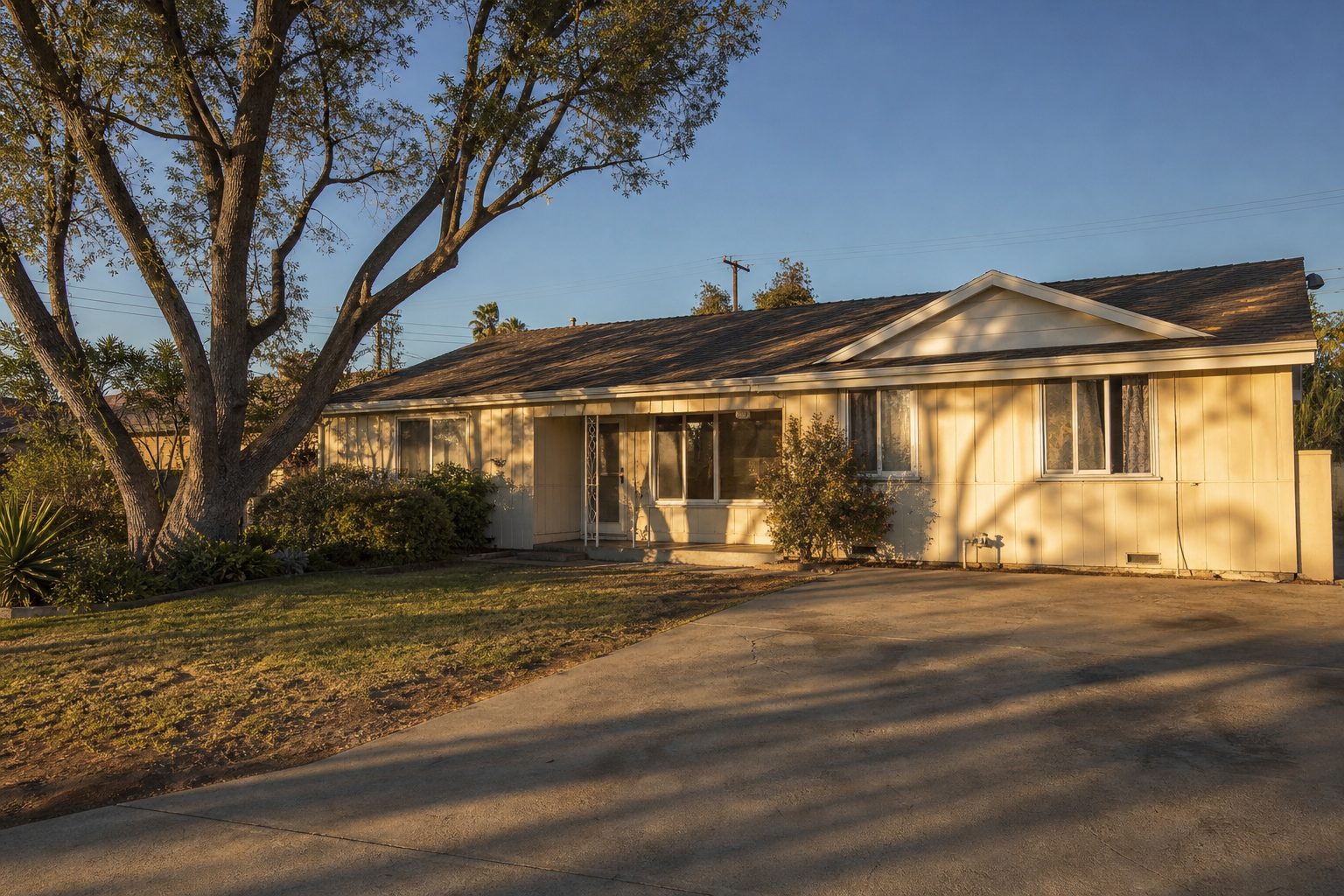
This is the mistake that blindsides heirs who think they know the property. With roughly 27% of Upland’s housing stock built between 1940 and 1969, inherited homes here often carry decades of deferred maintenance that isn’t visible during a walk-through.
What we consistently see in older Upland homes includes:
- Roofing: Original or second-generation roofs past their useful life, with hidden water damage underneath
- Sewer lines: Clay or cast-iron sewer laterals from the 1950s and 1960s that have cracked, shifted, or been infiltrated by tree roots. A sewer scope costs a few hundred dollars; a sewer line replacement can cost $10,000 to $25,000
- Electrical panels: Outdated panels (Federal Pacific, Zinsco, or fuse boxes) that insurance companies may refuse to cover and lenders may refuse to finance
- Unpermitted additions: Enclosed patios, converted garages, or added bedrooms done without permits, which can derail a sale or reduce the appraised value
A pre-listing inspection is not just about knowing what’s wrong. It’s about controlling the narrative. When a buyer’s inspection uncovers surprises, it shifts negotiating power entirely to the buyer. When you know about issues upfront, you can either address them strategically, price accordingly, or disclose them from a position of strength.
The numbers support this approach. As of October 2026, Upland homes are selling for 99.9% of the asking price according to market tracking data, and 52.94% sold above asking price, up from 45.45% the prior year. Properly prepared and accurately priced homes in Upland are still commanding strong offers. But a home that falls apart during buyer inspections? That’s where you lose $30,000 to $50,000 or more in renegotiation.
Mistake #4: Leaving the Inherited Upland House Vacant and Unprotected
Grief takes time. Probate takes time. And while you’re processing both, the house is sitting empty, costing you money every single month and potentially creating liability.
The financial drain of vacancy on a typical Upland inherited home:
- Property taxes: If the property is reassessed under Prop 19 (because you’re not moving in), you’re looking at taxes based on current market value rather than the original Prop 13 rate
- Insurance: Most homeowners policies have a vacancy clause that voids or limits coverage after 30 to 60 days of vacancy. You may need a separate vacant-property policy, which costs more
- Utilities: Even vacant homes need water (to prevent pipe issues), electricity (for security systems and periodic checks), and landscaping maintenance
- Security: Vacant properties attract vandalism, squatters, and theft, particularly copper wire and plumbing fixtures in older homes
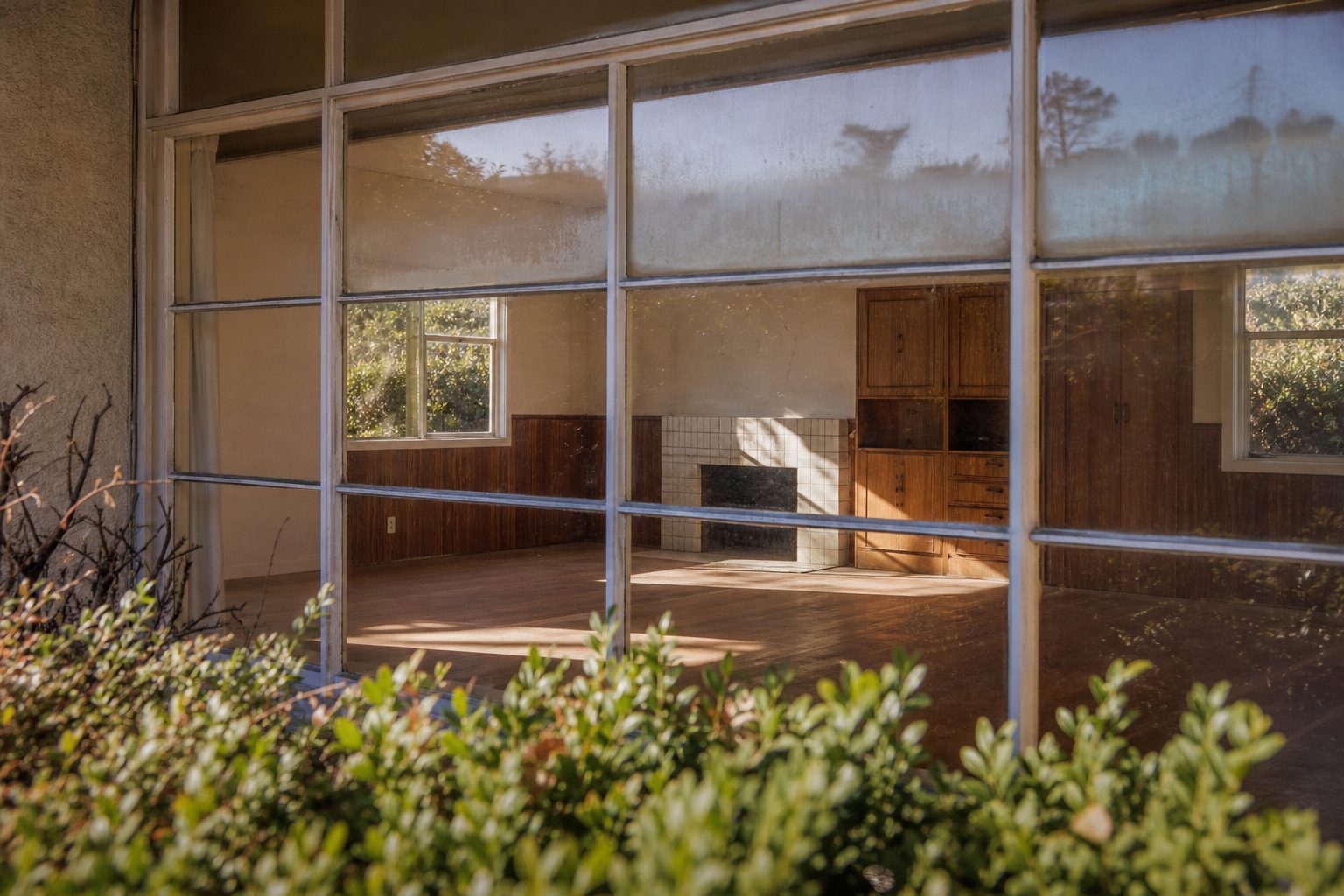
Beyond the carrying costs, vacant homes deteriorate faster than occupied ones. A small roof leak becomes mold damage. A slow plumbing drip becomes a flooded subfloor. Code enforcement notices pile up if the yard goes unmaintained.
How to protect the property while you plan your next steps:
- Notify your insurance carrier immediately and ask about vacancy coverage
- Keep utilities on and set thermostats to prevent pipe freezing or extreme heat damage
- Arrange regular property checks, weekly at minimum
- Maintain landscaping and exterior appearance
- Secure all entry points and consider a basic security camera system
- Continue mortgage payments (if any) and property tax payments to avoid default
The share of Upland listings with price reductions has been climbing across the broader Inland Empire market, per mid-2026 data. A home that sits vacant for months and then hits the market showing neglect will face even steeper discounts.
Mistake #5: Selling the Inherited Upland Home Without a Date-of-Death Valuation
This may be the most expensive mistake on the list, and it’s the easiest to prevent.
Under current federal tax law, when you inherit property, your cost basis “steps up” to the fair market value on the date of death. This means that decades of appreciation, the difference between what your parent originally paid and what the home is worth today, may not be subject to capital gains tax at all, as long as you can document that stepped-up value.
Here’s why a formal date-of-death appraisal matters. Say your parent bought their Upland home in 1985 for $120,000. It’s now worth around $782,000 (using Upland’s October 2026 median as a reference point, per Resideline). Without a date-of-death appraisal, you have no documented proof of the stepped-up basis. If the IRS or Franchise Tax Board questions the sale, you could face capital gains exposure on the difference between $120,000 and whatever you sell for, which at combined federal and California rates could be substantial.
With a date-of-death appraisal, your basis is documented at $782,000. If you sell shortly after for a similar amount, your capital gain may be zero or minimal.
The appraisal typically costs $400 to $600. The potential tax savings? Easily tens of thousands of dollars.
Important timing note: If you wait to sell and the market appreciates between the date of death and the sale date, you may owe capital gains on the appreciation above the stepped-up basis. This is one more reason not to let an inherited property sit idle.
Keep, Rent, or Sell? A Quick Decision Checklist for Upland Heirs
Before you decide what to do with the inherited Upland home, run through these questions:
- Do you want to live in the home? If yes, you may be able to preserve the low property tax base under Prop 19 by moving in within one year and filing the proper claim
- Can you afford the carrying costs? Property taxes, insurance, maintenance, and any mortgage payments add up quickly on a vacant property
- Are multiple heirs involved? If siblings or other heirs disagree on what to do, selling and splitting proceeds is often the most practical path
- What condition is the home in? Older Upland homes may need significant updates. Factor repair costs into your keep-or-sell analysis
- Are you local or out of area? Managing a rental property from across the country is challenging, and property management fees eat into rental income
- What does the market support? With Upland homes moving in a median of 52.5 days as of mid-2026 market data and 52.94% selling above asking price, the current market offers real opportunity for well-priced inherited properties
If you’re leaning toward selling, getting an accurate current market valuation is the logical first step.
Frequently Asked Questions
Do I have to go through probate to sell an inherited house in California?
Not always. If the home was held in a living trust, the successor trustee can sell without probate. If the home was the decedent’s primary residence and its gross value is $750,000 or less (for deaths on or after April 1, 2025), the simplified AB 2016 petition may apply. Only homes above that threshold or outside a trust typically require full probate, per California Probate Code Section 13151.
Can I sell an inherited house before probate is finished?
In most cases, yes. The executor or administrator can petition the court for authority to sell during probate, though the sale may require court confirmation depending on the type of authority granted. Trust properties can be sold immediately by the trustee without court approval.
What is the $750,000 probate exception in California?
AB 2016 allows the transfer of a decedent’s California primary residence worth $750,000 or less (gross value) through a streamlined Petition to Determine Succession instead of full probate, for deaths on or after April 1, 2025. This is a court petition under Probate Code Section 13151, not a simple affidavit, but it typically takes three to five months rather than 12 to 24 months.
Will my property taxes go up if I inherit my parent’s house in Upland?
Under Prop 19, yes, unless you move into the home as your primary residence within one year and file the required claim (Form BOE-19-P) with the San Bernardino County Assessor. Without meeting these requirements, the property will be reassessed at current market value, which can dramatically increase the tax bill.
Do I pay capital gains tax when I sell an inherited home?
You benefit from a stepped-up cost basis, meaning your basis is the fair market value on the date of death, not the original purchase price. If you sell near that value, your capital gain may be zero or minimal. A date-of-death appraisal documents this basis. Consult a CPA for your specific situation.
Can I sell an inherited house as-is in Upland?
You can, but selling as-is typically means accepting a lower price. Cash investor offers on inherited homes often come in at a significant discount to market value. With 52.94% of Upland homes selling above asking price as of mid-2026 market data, investing in basic preparation and listing on the open market often nets substantially more.
What if siblings disagree about selling the inherited house?
When multiple heirs can’t agree, the executor or trustee has a fiduciary duty to act in the best interest of the estate. In extreme cases, any heir can petition the court for a partition action to force a sale. We always recommend mediation before litigation, as court proceedings reduce what everyone takes home.
How long does it take to sell an inherited house in Upland?
That depends on the transfer path. Trust properties can be listed immediately. AB 2016 petitions take roughly three to five months before selling authority is established. Full probate can take 12 to 24 months. Once listed, Upland homes are moving in a median of 52.5 days as of mid-2026 market data.
Who pays the mortgage on an inherited house?
The estate is responsible for the mortgage. If mortgage payments aren’t maintained, the lender can initiate foreclosure regardless of probate status. Heirs should communicate with the mortgage servicer early and understand that reverse mortgages (common with older homeowners) may become due upon death.
What is the Prop 19 exclusion cap for 2026?
For transfers between February 16, 2025 and February 15, 2027, the exclusion covers the parent’s factored base year value plus $1,044,586, according to the California State Board of Equalization. The child must make the inherited home their primary residence within one year and file the required paperwork.
The Bottom Line
Inheriting a house in Upland doesn’t have to be overwhelming. The five mistakes that cost heirs the most money—choosing the wrong probate path, missing Prop 19 deadlines, skipping inspections on older homes, leaving the property vacant without protection, and selling an inherited home without proper documentation—are all avoidable with the right guidance early on. The key is working with professionals who understand both the legal process and the Upland real estate market before making decisions you can’t undo.
If you’ve inherited a home in another Inland Empire city, we’ve also published guides for Rancho Cucamonga’s housing market and investment opportunities covering similar estate planning and market considerations.
Have questions about selling an inherited home or your next move in Upland or Rancho Cucamonga? Let’s talk. Whether you’re navigating probate, figuring out Prop 19, or just trying to understand your options, we’ll give you honest advice and a clear plan.
Get your free home valuation → soldbyblay.com/home-value/ Schedule a consultation → soldbyblay.com/contact
Brent Blay | Sold By Blay | Park Regency Realty | DRE #02068178 📞 909-641-8751 | ✉️ brentblay@parkregency.com | soldbyblay.com Your family deserves the best.

Leave a Reply