


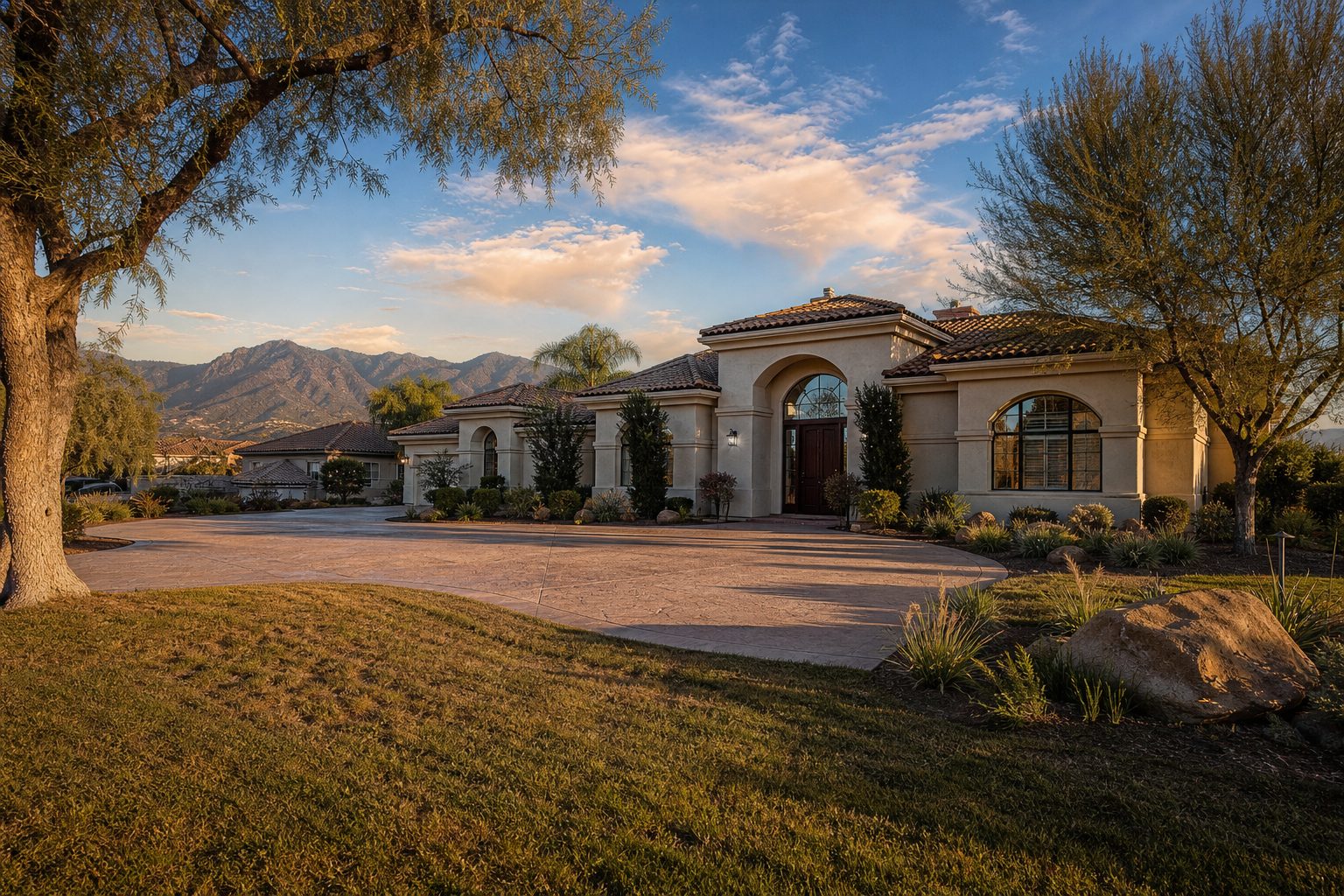
The midterms are over and rates are coming down. Is now the time to buy in Rancho Cucamonga?
Mortgage rates have dropped for three straight weeks to 7.18%, per Freddie Mac as of November 5, 2026, down from a nearly three-year peak of 7.40%. The post-election window historically brings less competition before the spring rush. Whether this moment is right for you depends on your numbers, your timeline, and what you need the move to accomplish.
Why This Matters Right Now in Rancho Cucamonga
Elections create uncertainty. Uncertainty makes bond investors cautious. And when bond investors get cautious, mortgage rates climb. That is exactly what happened through September and October 2026 as the 10-year Treasury yield surged to roughly 5.31% on October 5, 2026, per the U.S. Department of the Treasury, its highest level since 2002.
Now that the midterms are behind us, yields have pulled back to approximately 4.90% as of November 5, 2026, and rates followed them down. For anyone watching homes for sale in Rancho Cucamonga, the question is not whether rates moved. They did. The question is whether the trend has legs, and what you should do about it before spring buyers flood back in.
What the Midterms Did to Rancho Cucamonga Mortgage Rates (and What They Didn’t)
Elections do not set mortgage rates. Lenders do, and they price loans off the bond market, not the ballot box. But elections create *uncertainty*, and uncertainty drives yields higher. When results come in and the policy picture sharpens, some of that pressure releases.
Here is what happened: the 10-year Treasury yield, which had surged to roughly 5.31% on October 5, 2026, began pulling back. By November 4 and 5, yields had eased to approximately 4.89% to 4.90%, a near two-month low. Market commentators, including analysts at Charles Schwab and CNBC, attributed part of the drop to reduced political uncertainty and expectations around divided-government fiscal policy. We share this as market commentary, not as a prediction.
What the midterms did *not* do: they did not change the Federal Reserve’s mandate, they did not alter inflation data, and they did not guarantee rates keep falling. The Fed held the federal funds rate at 3.75% to 4.00% at its late-October 2026 meeting. Traders, as of early November, kept their pricing for a possible December rate hike intact. The California Association of REALTORS® has consistently noted that housing markets are driven more by rates, inventory, affordability, and jobs than by election outcomes, and that any election-year slowdown is typically temporary.
Why Mortgage Rates Follow the 10-Year Treasury Yield
This is one of the most common questions we hear: “The Fed held rates steady, so why did my mortgage rate change?”
Here is the plain-English version. The Federal Reserve controls the federal funds rate, the overnight rate banks charge each other. That rate directly influences short-term borrowing like credit cards and home equity lines. But 30-year fixed mortgage rates are priced off the 10-year Treasury yield, not the Fed funds rate.
Why the 10-year? Because even though a mortgage is a 30-year instrument on paper, most mortgages are paid off, refinanced, or sold within about 7 to 10 years. That makes the 10-year Treasury the natural pricing benchmark. Lenders add a spread, typically 1.5 to 2.5 percentage points, to cover their costs, credit risk, and profit margin. When the 10-year yield sat near 4.90% in early November 2026, the average 30-year fixed rate landed at 7.18%, per Freddie Mac’s Primary Mortgage Market Survey: roughly a 2.28-point spread.
6-Week Trend: 30-Year Fixed Rate (Freddie Mac PMMS)
- Sept. 24, 2026: 7.03%
- Oct. 1, 2026: 7.28%
- Oct. 8, 2026: 7.40%
- Oct. 15, 2026: 7.40% (near 3-year high)
- Oct. 22, 2026: 7.32%
- Oct. 29, 2026: 7.24%
- Nov. 5, 2026: 7.18% (third straight decline)
*One year ago, the 30-year fixed averaged 6.22%, per Freddie Mac. The 15-year fixed averaged 6.57% as of November 5, 2026.*
The trend is encouraging. But three weeks is not a forecast, and rates remain nearly a full point above where they were a year ago.
What Lower Rates Mean for Your Monthly Payment in Rancho Cucamonga
Numbers matter more than headlines. Here is what a 0.25% and 0.50% rate drop does to principal and interest on the loan sizes most relevant to Rancho Cucamonga buyers. All figures assume a 30-year fixed term, 20% down, principal and interest only (taxes, insurance, and HOA are additional).
Scenario 1: $612,000 Loan (based on $765,000 purchase, 20% down, conforming)
- At 7.18%: approximately $4,145/month P&I
- At 6.93% (minus 0.25%): approximately $4,046/month P&I, saving roughly $99/month
- At 6.68% (minus 0.50%): approximately $3,948/month P&I, saving roughly $197/month
Scenario 2: $960,000 Loan (based on $1.2M purchase, 20% down, jumbo)
- At 7.18%: approximately $6,503/month P&I
- At 6.93%: approximately $6,348/month P&I, saving roughly $155/month
- At 6.68%: approximately $6,195/month P&I, saving roughly $308/month
Scenario 3: $1,280,000 Loan (based on $1.6M purchase, 20% down, jumbo)
- At 7.18%: approximately $8,671/month P&I
- At 6.93%: approximately $8,464/month P&I, saving roughly $207/month
- At 6.68%: approximately $8,260/month P&I, saving roughly $411/month
*Note: Jumbo loan rates may differ from the Freddie Mac survey average. Confirm your rate with a licensed mortgage professional.*
So what does this actually mean for your decision? A half-point drop on a $960,000 loan saves you over $3,600 per year. That is real money. But if waiting for that drop means competing against 15 other buyers next spring instead of two right now, you may pay more for the house itself, and the savings evaporate.
Buy Now or Wait? The Real Tradeoffs for Rancho Cucamonga Buyers
This is the question that keeps people up at night. Here is the framework we use when someone asks us to help them think through it.
What Could Push Rates Lower
- Further easing in Treasury yields if inflation data softens
- A Fed pivot if economic conditions warrant rate holds or cuts (though as of early November, markets still see a possible December hike)
- Reduced federal spending expectations under divided government
What Could Push Rates Higher
- Sticky inflation that keeps the Fed hawkish
- Strong jobs reports that signal an overheating economy
- Rising oil prices or geopolitical disruptions
- Expanded federal deficits that increase Treasury supply
The Competition Factor
Here is the tradeoff most buyers miss: when rates fall meaningfully, sidelined buyers flood back in. As of October 2026, the median single-family home price in Rancho Cucamonga sat at $765,000, per local MLS data. About 28.38% of homes sold above asking price, per recent market data, down from 37.35% a year earlier. That tells you competition has eased *at current rate levels*. If rates drop to the mid-6% range, expect that percentage to climb back up, along with the number of offers on every well-priced listing.
Refinancing later is always a possibility if rates decline further. But refinancing is never guaranteed. You need to qualify again, your home needs to appraise, and there are closing costs. It is a reasonable strategy, not a promise.
The Seasonal Window
Research from the California Association of REALTORS® consistently shows that August through December is when buyer competition is lowest. The buyers actively searching in November tend to be motivated by life circumstances: relocations, estate settlements, trust distributions, or growing families. You are competing against fewer impulse shoppers and more serious buyers, which often means more level-headed negotiations.

If You Are Selling to Move Up in Rancho Cucamonga: How to Time Both Sides
If you already own a home in Rancho Cucamonga and you are planning to move up, easing rates can help you on both sides of the transaction. When rates drop, the buyer pool for *your* current home expands. More qualified buyers can afford your price point, which can mean faster offers and stronger terms.
Sell First vs. Buy First
- Sell first gives you a known number to work with and makes your offer on the next home stronger (no sale contingency). The risk: you may need interim housing.
- Buy first lets you move on your timeline, but you may need a bridge loan or contingent offer. In a market where roughly 58.11% of Rancho Cucamonga listings have had a price reduction, per recent market data, sellers of your next home may be more willing to work with a contingency than they would have been two years ago.
- Concurrent close is the goal whenever possible. It requires precise coordination, and it is something we navigate regularly.
If you want to know what your current Rancho Cucamonga home is worth before making any decisions, start with a home valuation to understand your equity position. Knowing your equity position is step one in any move-up plan.
Rancho Cucamonga Market Snapshot: Where Prices Sit Right Now
Prices vary dramatically across Rancho Cucamonga’s neighborhoods, and that variation matters for every buying and selling decision.
Current Price Points by Area
- Rancho Cucamonga citywide: Median single-family home price of $765,000 as of October 2026, per local MLS data
- Alta Loma: Median sale price of $928,000, with homes selling after an average of 57 days on market, per Redfin
- Etiwanda: Median listing price of approximately $1.157 million as of April 2026, per Realtor.com
- Rancho Cucamonga overall (August 2026): Median sale price of $810,000, up 3.8% from a year earlier, with homes spending a median of 42 days on market, per Redfin
Neighborhood Value Ranges (Typical Home Values)
- Deer Creek: approximately $1,668,181
- Hermosa: approximately $1,287,867
- North Day Creek: approximately $1,265,324
- Trails: approximately $1,183,651
- Vintage Park: approximately $886,432
- Alta Loma: approximately $819,151
- Central Park: approximately $794,998
*Source: Zillow Home Value Index, mid-2026 estimates.*
The gap between a home in Central Park and one in Deer Creek is nearly $875,000. This is why neighborhood-level pricing in Etiwanda and surrounding areas matters so much more than citywide averages when you are making your decision. With roughly 351 active listings and approximately 1.9 months of supply as of mid-2026, Rancho Cucamonga sits in balanced territory, not quite a seller’s market, not quite a buyer’s market.
A Note for Probate and Inherited-Property Sellers
If you have inherited a home in Rancho Cucamonga, the rate environment creates a window worth paying attention to. Approximately 78.28% of properties in Rancho Cucamonga carry more than 50% equity, and there are over 12,000 fully paid-off homes in the city, per local property data. Many inherited homes carry substantial equity. Easing rates can expand the buyer pool for your inherited property, potentially generating stronger offers. If you are navigating a probate or trust sale, understanding the current market is essential to making a well-informed decision about timing.
Frequently Asked Questions
Do midterm elections affect mortgage rates in Rancho Cucamonga?
Elections influence rates indirectly by creating or resolving uncertainty in bond markets. The 10-year Treasury yield, which drives mortgage pricing, fell from roughly 5.31% in early October to approximately 4.90% by November 5, 2026, as political uncertainty cleared. The California Association of REALTORS® notes that housing markets are driven more by rates, inventory, and jobs than by election outcomes.
Will mortgage rates keep going down after the 2026 midterms?
There is no guarantee. Rates have fallen for three consecutive weeks, per Freddie Mac, from 7.40% to 7.18% as of November 5, 2026. Factors that could push rates higher include sticky inflation, strong jobs reports, or a potential December Fed rate hike. Factors that could pull them lower include softening economic data and continued easing in Treasury yields.
Why do mortgage rates follow the 10-year Treasury yield?
Most 30-year mortgages are paid off or refinanced within about 7 to 10 years, making the 10-year Treasury the natural pricing benchmark. Lenders add a spread of typically 1.5 to 2.5 percentage points above the Treasury yield. As of November 5, 2026, the spread was approximately 2.28 points (4.90% yield plus spread equals 7.18% mortgage rate).
Will mortgage rates drop below 7% soon?
As of November 5, 2026, the 30-year fixed average is 7.18%, per Freddie Mac. Whether rates cross below 7% depends on Treasury yield movements, Fed policy, and inflation data. Rates briefly touched the low 7% range in late September before climbing to 7.40% in October, so movement below 7% is plausible but not assured.
Should I buy a home in Rancho Cucamonga now or wait for lower rates?
If you wait for significantly lower rates, you may face more competition and higher prices. As of October 2026, the median single-family price in Rancho Cucamonga is $765,000, and about 58.11% of listings have seen price reductions. Less competition in the November-to-December window can mean better negotiating position, even if your rate is slightly higher. Run the math on your specific scenario rather than waiting for a headline number.
Can I refinance later if rates drop after I buy?
Refinancing is possible but never guaranteed. You will need to requalify, your home needs to appraise at or above your loan balance, and you will pay closing costs again (typically 1% to 3% of the loan amount). It is a reasonable plan, not a promise.
Is it a good time to buy a home in Rancho Cucamonga in November 2026?
November and December typically bring less buyer competition in Rancho Cucamonga. Buyers searching during this period tend to be motivated by life circumstances rather than seasonal impulse. With rates easing from October highs, you may find a window of less competition before spring demand returns.
Is it better to buy a home in winter or spring in Rancho Cucamonga?
Research consistently shows that August through December brings lower buyer competition in this market. Spring typically brings more inventory but also significantly more buyer activity, which can lead to multiple-offer situations. Your decision should depend on whether you prioritize selection (spring) or negotiating leverage (winter).
Should I sell my Rancho Cucamonga home first or buy first when moving up?
Selling first gives you a known equity number and makes your offer stronger. Buying first gives you timeline control but may require a bridge loan or contingent offer. In the current market, where more than half of Rancho Cucamonga listings have seen price reductions, sellers of your next home may be more willing to accept a sale contingency than they would have been during peak competition.
How much does a 0.50% rate drop save on a Rancho Cucamonga mortgage?
On a $612,000 loan (typical for a home near the city’s median price with 20% down), a 0.50% rate drop saves approximately $197 per month, or roughly $2,364 per year. On a $960,000 loan, that same drop saves approximately $308 per month, or roughly $3,696 per year.
The Bottom Line
Rates are easing, not cratering. The post-midterm window has historically brought calmer markets before spring demand returns. Whether now is the right time depends on your personal math, not a headline. If the payment works, the home fits, and you plan to stay long enough for the investment to make sense, waiting carries its own risks: more competition, potentially higher prices, and no guarantee that rates cooperate.
Have questions about today’s rates or your next move in Rancho Cucamonga? Let’s talk. Whether you are buying, selling, or just planning ahead, we will give you honest advice and a clear plan.
Brent Blay | Sold By Blay | Park Regency Realty | DRE #02068178 📞 909-641-8751 | ✉️ brentblay@parkregency.com | soldbyblay.com Your family deserves the best.
*This article is general information, not financial or lending advice. Rates vary by borrower; consult a licensed mortgage professional. Information and data as of November 5, 2026; figures change regularly.*

Leave a Reply