


After watching Newport Beach flood on October 9, what should Rancho Cucamonga homeowners check and prepare at their own home?
You should check your FEMA flood zone status, verify that your insurance covers water damage, clear your gutters and drainage paths, and confirm you are signed up for local emergency alerts before storm season arrives.
Why This Matters Right Now
Our thoughts are with the residents and business owners of the Balboa Peninsula, the crews operating pumps and rebuilding sand berms around the clock, and every family who woke up Friday to water in their home. What happened in Newport Beach on October 9 is serious, and the days ahead are still uncertain.
If you are a Rancho Cucamonga homeowner watching this unfold, you may be wondering: could something like this happen here? The short answer is no, not from the ocean. But Rancho Cucamonga sits at the base of the San Gabriel Mountains, and that geography carries its own water risks. Different from coastal surge, but real. The purpose of this post is simple: walk you through what happened, help you check your own exposure, and give you a practical checklist so you are ready before the next big storm, not scrambling during one.
What Happened in Newport Beach on October 9
A tidal surge flooded streets on the Balboa Peninsula in Newport Beach on Friday, October 9, 2026, as Southern California felt the effects of damaging waves and high tides generated by Tropical Storm Rachel. When high tide hit at about 9 a.m., water surged onto the mainland and flooded streets along a roughly 2-mile stretch of the Balboa Peninsula, according to reporting from KTLA on October 9, 2026. The water appeared to come in primarily from The Wedge.
The city’s utilities director estimated 15 to 20 blocks of street flooding, per ABC7’s October 9 report. Parts of Balboa Boulevard were under nearly 2 feet of water, according to Newport Beach Fire Chief Jeff Boyles, as reported by CBS Los Angeles the same day.
Newport Beach declared a local emergency at approximately 1 p.m., issued by City Manager Seimone Jurjis, per KTLA and FOX 11 Los Angeles. Six crews were rebuilding sand berms while other teams operated pumps and opened tide valves to manage the flooding.
By Friday afternoon, the water had receded, leaving behind damage and a large cleanup effort. The full extent of property damage was not immediately known, according to KTLA and ABC7. A coastal flood advisory issued by the National Weather Service remained in effect for Orange County beaches through 2 p.m. Tuesday, October 13, with high tides forecast to reach 6.5 to 7 feet.
This is worth stating clearly: this was ocean flooding, driven by surf and elevated tides, not rainfall. That distinction matters when we talk about what it means for inland homeowners like you.
If you or a family member is in the Newport Beach area: follow official instructions from the City of Newport Beach and the National Weather Service. Do not attempt to drive through flooded roads. Officials specifically cautioned against driving low-clearance vehicles or electric cars through saltwater, noting the risk of damage or fire.
Does Rancho Cucamonga Flood? A Different Risk, Not Zero Risk
Rancho Cucamonga will never flood from the ocean. But it would be misleading to tell you your flood risk is zero.
Located at the base of the San Gabriel Mountains, the city has a documented history of flooding. Cucamonga Creek, Deer Creek, and Day Creek all originate high in the San Gabriels and flow south through the city. When atmospheric rivers hit the mountains, rainfall at elevation can exceed 4 inches in 24 hours, and all of that water funnels downhill through these three channels.
The San Bernardino County Flood Control District maintains debris basins at each creek mouth, including Cucamonga Basin, Deer Creek Basin, and Day Creek Basin. But extreme events can overwhelm them. The December 2010 storms overtopped the Deer Creek debris basin and sent water and sediment through neighborhoods north of the 210 freeway. Properties along the channel took mud, rocks, and water through their backyards. The basins have been expanded since then, but the underlying geographic risk has not changed.
There is also a wildfire connection. Once a hillside burns, vegetation that normally absorbs rain is gone. What comes down the mountain in the next storm is not just water; it is a debris flow carrying mud, rocks, and ash. Properties near recently burned areas carry elevated risk even from modest rainfall events.
The West Cucamonga Channel and the Cucamonga Creek Channel are mapped as Zone A, described as a Special Flood Hazard Area with a 1% annual chance of flooding, according to FEMA flood maps. Whether your specific address falls in or near one of these zones is something only a FEMA Flood Insurance Rate Map lookup by address can tell you.
The honest message: different risk, not no risk. And the only way to know your specific exposure is to check.
How to Check Flood Risk for Your Rancho Cucamonga Address
You do not need to hire anyone or make any calls to start. Here is where to look:
- Your Natural Hazard Disclosure (NHD): If you purchased your home in California, the seller was required to provide a Natural Hazard Disclosure Statement. That document, somewhere in your purchase file or closing paperwork, shows whether your property was mapped in a FEMA Special Flood Hazard Area or a dam inundation zone at the time of purchase. Pull it out and read it. It is one of the most useful documents you own.
- FEMA’s Flood Map Service Center: You can enter your address and view your official Flood Insurance Rate Map. Look for your flood zone designation. Zone A and Zone AE are Special Flood Hazard Areas. Zone X means lower risk, but not zero risk. Flood maps are updated periodically, so your current designation may differ from what was disclosed at closing.
- San Bernardino County Flood Control District: This is the agency that maintains the channels and debris basins protecting Rancho Cucamonga. Search for their name online to find information about drainage infrastructure near your home.
- The City of Rancho Cucamonga’s ReadyRC program: Since Rancho Cucamonga is vulnerable to flooding during winter storm season, the city maintains emergency preparedness resources. Check with the city for sandbag availability, alert sign-ups, and storm-readiness guidance before the season arrives.
Do not assume your home is outside a flood zone just because it has never flooded during the years you have lived there. Flood risk is address-specific, and conditions change after wildfires, new construction, and infrastructure aging.
What Your Homeowners Insurance Does and Does Not Cover in Rancho Cucamonga
This is the part where most homeowners find an unwelcome surprise. Standard homeowners insurance policies generally do not cover flood damage. That includes water damage from rising water, storm runoff, or debris flows.
Flood coverage is purchased separately, either through the National Flood Insurance Program or a private insurer. Here is what you should ask your insurance agent this week:
- Am I in a FEMA-designated flood zone? If yes, your mortgage lender may already require flood insurance. If no, you may still want coverage, especially in foothill areas.
- Does my current policy cover any water damage at all? Most standard policies cover sudden internal events like a burst pipe but exclude rising water from outside.
- What are the NFIP coverage limits? Ask about the current limits for building coverage and contents coverage.
- How long is the waiting period? There is typically a waiting period before a new flood insurance policy takes effect, which means you cannot buy a policy the day before a storm and expect coverage. Ask your agent about the current timeline.
If you inherited a property or have been managing one through probate, this is especially important to verify. Insurance policies can lapse during transitions of ownership, and coverage gaps leave the property fully exposed. We see this regularly when families are managing an inherited home while working through the probate process, and it is one of the first things we encourage people to check.
*This article is general information, not insurance, legal, or financial advice. Consult a licensed professional for guidance specific to your situation.*
A Simple Storm-Readiness Checklist for Your Rancho Cucamonga Home
You do not need to spend a weekend or a fortune on this. A couple of hours and a notepad will get you through most of it.
Exterior Walkthrough
- Gutters and downspouts: Are they clear of leaves and debris? Are downspouts directing water away from your foundation, not pooling against it?
- Grading: Walk the perimeter of your home. Does the ground slope away from the foundation on all sides? Settled or sunken soil near the foundation is a red flag.
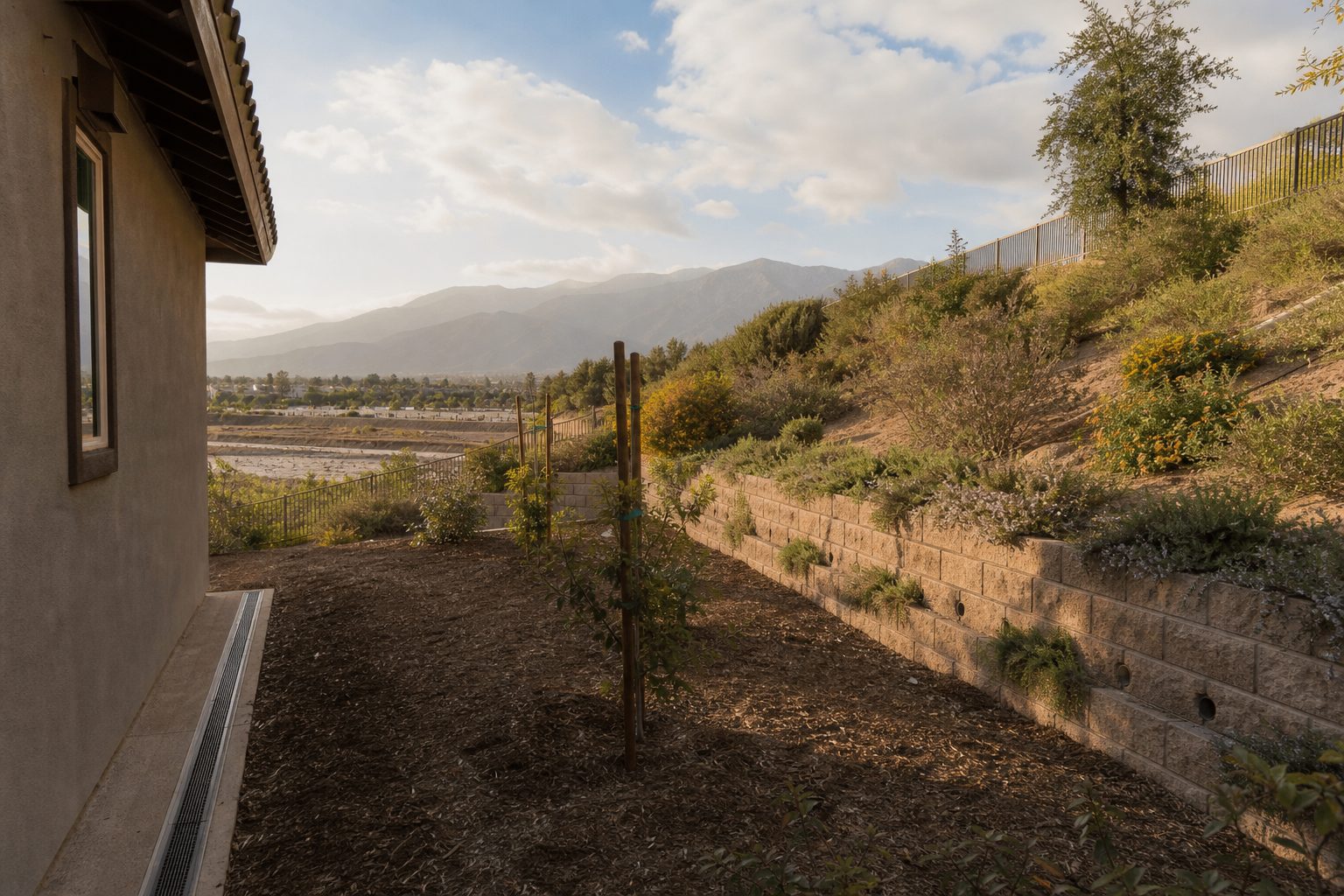
- Drainage paths: If you have French drains, channel drains, or any catch basins in your yard, are they clear and functional?
- Hardscape cracks: Look at your driveway, walkways, and patio. Are there cracks where water could pool and seep toward the foundation?
- Retaining walls: If your property has retaining walls, especially on hillside or foothill lots, check that weep holes are clear and the wall is not bowing or cracking.
Interior Walkthrough
- Ceilings and walls: Look for water stains, discoloration, or bubbling paint, especially in rooms below the roofline or near exterior walls.
- Musty odors: Persistent musty smells can indicate mold or mildew from hidden moisture.
- Flooring and baseboards: Warped or buckling flooring along exterior walls may signal past or ongoing water intrusion.
- Foundation and slab: Check visible foundation surfaces for new cracks. Older homes built on concrete slabs, common in Rancho Cucamonga, can develop slab leaks over time.
Documentation and Alerts
- Photo inventory: Walk through every room and take photos or video of your belongings, finishes, and the condition of the structure. Store the file somewhere outside your home (cloud storage or a family member’s house). If you ever need to file a claim, this is invaluable.
- Important documents: Keep copies of your insurance policy, mortgage documents, deed, and identification in a waterproof container or digital backup.
- Emergency alerts: Sign up for the City of Rancho Cucamonga’s emergency notification system and San Bernardino County alerts so you receive warnings before and during storms.
- Sandbags: Check with the City of Rancho Cucamonga for sandbag distribution locations before storm season starts. Availability can be limited once a storm is imminent.
- Never drive through floodwater: This cannot be stated enough. Six inches of moving water can knock you off your feet. Twelve inches can carry away a vehicle. If a road is flooded, turn around.
Having spent years in emergency medicine before entering real estate, we can tell you that most emergencies do not send a warning. The ones that give you lead time, like storm season, are a gift. Use it.
How to Help Our Neighbors in Newport Beach
If you want to help the residents affected by the Balboa Peninsula flooding, look for relief efforts confirmed by the City of Newport Beach, the County of Orange, or the American Red Cross. These organizations will post verified donation and volunteer opportunities through their official channels. Be cautious of unverified fundraisers, and direct your support where it will be accounted for.
Frequently Asked Questions
What caused the flooding in Newport Beach on October 9, 2026?
Tropical Storm Rachel generated large south swells and elevated tides along the Orange County coast. When high tide hit at approximately 9 a.m. on October 9, ocean water surged onto the Balboa Peninsula, flooding 15 to 20 blocks of streets according to city officials. This was coastal surge flooding, not rainfall.
Does Rancho Cucamonga flood?
Rancho Cucamonga does not face ocean flooding, but it has documented flood risk from mountain runoff, debris flows, and flash flooding. The city sits at the base of the San Gabriel Mountains, and three major creeks flow through it. The West Cucamonga Channel and Cucamonga Creek Channel are mapped as FEMA Zone A Special Flood Hazard Areas. Learn more about what’s happening in the Rancho Cucamonga housing market to understand your community better.
How do I find out if my Rancho Cucamonga home is in a flood zone?
Check your Natural Hazard Disclosure from when you purchased the property, or look up your address on FEMA’s Flood Map Service Center. You can also contact the San Bernardino County Flood Control District or the City of Rancho Cucamonga for local information. Flood zone status is address-specific.
Does homeowners insurance cover flood damage in California?
Generally, no. Standard homeowners insurance policies do not cover flood damage from rising water, storm runoff, or debris flows. Flood coverage must be purchased separately through the National Flood Insurance Program or a private insurer. Contact your insurance agent to verify your specific coverage.
Do I need flood insurance if I am not in a flood zone?
You are not required to carry it, but you may still want it. Properties outside designated flood zones still experience flooding. In fact, a significant portion of NFIP claims come from properties in moderate- and low-risk zones. The cost is often lower for properties outside high-risk zones.
How long does it take for flood insurance to start?
There is typically a waiting period before a new NFIP flood insurance policy takes effect. You cannot purchase a policy the day before a storm and expect to be covered. Ask your insurance agent about the current waiting period so you can plan ahead.
What is a debris flow, and are foothill homes at risk?
A debris flow is a fast-moving mass of mud, rocks, and vegetation that moves downhill during or after heavy rainfall, especially over terrain burned by wildfire. Foothill areas near recently burned hillsides are at elevated risk. If you live in areas like Etiwanda with its foothill views and new construction, understanding debris flow risk is particularly important. The San Bernardino County Flood Control District maintains debris basins to manage this, but extreme events can exceed their capacity.
Where can I get sandbags in Rancho Cucamonga?
Check with the City of Rancho Cucamonga before storm season for sandbag distribution locations and availability. During active storms, supplies can run out quickly. Planning ahead gives you the best chance of getting what you need.
How should I prepare my home before a big storm?
Clear your gutters and downspouts. Check that grading slopes away from your foundation. Verify your drainage paths are open. Take a photo inventory of your home and belongings. Sign up for local emergency alerts. Review your insurance policy for coverage gaps. Store important documents in a waterproof container or digital backup.
Is it safe to drive through a flooded street?
No. Six inches of moving water can knock a person off their feet. Twelve inches can carry a vehicle. Officials responding to the Newport Beach flooding specifically warned against driving through floodwater, particularly in low-clearance vehicles or electric cars. If a road is flooded, turn around.
The Bottom Line
Our thoughts remain with the residents of Newport Beach as they clean up and brace for continued high tides through early next week. What happened on the Balboa Peninsula is a reminder that water does not wait for anyone to be ready.
Here in Rancho Cucamonga, you have a window before storm season to check your flood zone status, verify your insurance coverage, and walk your property for vulnerabilities. A couple of hours this week could save you real damage and real money later. Different risk, not no risk, and the time to prepare is now.
—
If you have questions about your home’s natural hazard disclosures or what to ask your insurance agent, we’re glad to help. No agenda, just neighbors looking out for neighbors.
Schedule a consultation with us to discuss your home’s readiness and any questions about your property.
Brent Blay | Sold By Blay | Park Regency Realty | DRE #02068178 📞 909-641-8751 | ✉️ brentblay@parkregency.com | soldbyblay.com Your family deserves the best.
*Information and data as of October 9, 2026; conditions and figures change quickly.*
*This article is general information, not insurance, legal, or financial advice. Consult a licensed professional for guidance specific to your situation.*

Leave a Reply