



Should we sell, rent, or keep a parent’s home in the Inland Empire?
There is no single right answer. The best path depends on whether any heir will live in the home, what Proposition 19 means for property taxes, the home’s condition and carrying costs, how many family members share the decision, and each person’s financial reality.
Why This Matters Right Now in Rancho Cucamonga
If you have recently lost a parent who owned a home in Rancho Cucamonga or elsewhere in the Inland Empire, you are facing one of the largest financial decisions of your life during one of the most emotional periods. And the clock is ticking on certain decisions, especially around Proposition 19’s one-year primary-residence deadline.
As of June 2026, the median home sale price in Rancho Cucamonga is approximately $826,000, according to recent market data, at roughly $408 per square foot. That means inherited properties here often carry substantial equity, particularly if your parent purchased decades ago at a fraction of today’s value. Values also vary widely by neighborhood. According to available market data as of early 2026, foothill communities like Etiwanda carry typical values around $1.67 million, while homes in the city’s central and south-side areas may sit in the mid-$500,000s to $700,000s. Knowing exactly where the home falls in this range is the first step toward an informed decision.
First Steps After a Parent Passes in the Inland Empire
Before you choose to sell, rent, or keep, you need to handle a few things immediately.
Secure and Insure the Property
Change the locks. Notify the homeowner’s insurance carrier right away and ask about a vacancy or unoccupied dwelling endorsement, because standard policies often reduce or eliminate coverage after 30 to 60 days of vacancy. Keep utilities on. A vacant home sitting through Inland Empire summer heat develops problems fast. Walk through the property, document everything with photos, and arrange for basic lawn and landscape care so the home does not signal vacancy to the neighborhood.
Determine Who Has Legal Authority
This shapes everything else:
- If your parent had a living trust: The successor trustee named in the trust document typically has authority to manage and sell the property without court supervision, because the trust bypasses probate entirely for assets titled within it.
- If there was no trust: The estate likely must go through formal California probate. As of April 2025, formal probate is required when the gross value of the decedent’s probate estate exceeds $208,850, per AB 2016 and California Probate Code Section 13100. That threshold is based on gross fair market value, not equity, so a home worth $800,000 with a $500,000 mortgage still counts as $800,000 toward the limit.
- A possible shortcut: Under AB 2016, effective April 1, 2025, a decedent’s primary residence valued at $750,000 or less can be transferred through a simplified court petition rather than full probate.
- Full probate with IAEA authority: If the personal representative has been granted full authority under the Independent Administration of Estates Act, they can sell real property without a court confirmation hearing, though they must still issue a Notice of Proposed Action to all heirs.
If probate, trust sales, or successor trustee duties are new territory for you, we have covered the process of selling a home in probate in depth on our blog. Start there before making any major decisions.
Sell, Rent, or Keep: A Side-by-Side Comparison for Rancho Cucamonga Families
Here is how the three options stack up. No markdown tables, just a clear breakdown:
Option 1: Keep the Home (Move In)
- Upfront costs: Low to moderate (maintenance, potential sibling buyout)
- Ongoing costs: Mortgage (if any), property taxes, insurance, maintenance
- Prop 19 impact: Protected if you move in within one year and file the exemption
- Capital gains: Deferred as long as you live there
- Best fit: One heir wants to live in the home; strong emotional attachment; low assessed value worth preserving
Option 2: Rent It Out
- Upfront costs: Moderate (repairs to make it rent-ready, possible Prop 19 reassessment)
- Ongoing costs: Mortgage, property management, vacancies, maintenance, reassessed property taxes
- Prop 19 impact: Full reassessment to current market value is likely
- Capital gains: Deferred, but depreciation recapture applies at future sale
- Best fit: Strong rental income versus carrying costs; all heirs agree; someone is willing to manage it
Option 3: Sell It
- Upfront costs: Low to moderate (light prep or sell as-is)
- Ongoing costs: None after closing
- Prop 19 impact: Not relevant after sale
- Capital gains: Stepped-up basis significantly reduces exposure if you sell relatively soon after inheriting
- Best fit: Multiple heirs; no one moving in; property needs work; family wants a clean resolution
What does the home need? What do all the heirs want? What do the numbers actually say? Those questions matter more than any general rule.
Keeping Your Parent’s Rancho Cucamonga Home
Keeping the home can be the right call, but only if you walk in with your eyes open.
Proposition 19 and Property Taxes
This is the single most consequential financial factor for Inland Empire families. Effective February 16, 2021, Proposition 19 narrowed the parent-to-child property tax exclusion dramatically. It now applies only to a primary residence, and only if the child moves into the home and establishes it as their primary residence within one year of the transfer.
The California State Board of Equalization announced on March 7, 2025, that the current adjusted exclusion cap for transfers occurring between February 16, 2025, and February 15, 2027, is $1,044,586. That means the exclusion covers the parent’s assessed value plus up to $1,044,586 in additional value.
If you do not move in within one year, the property will be fully reassessed to current fair market value, per Revenue and Taxation Code Section 63.2. That loss is permanent for that transfer. In Rancho Cucamonga, where the median single-family home sale price is approximately $825,000 per recent market data, a home your parent purchased in the 1980s or 1990s for well under $200,000 could see property taxes jump from roughly $2,000 per year to well over $8,000 per year. That is real money, and it changes the math on every other option.
Inheriting a Mortgage
If your parent still had a mortgage, federal law (the Garn-St Germain Act) generally prevents a lender from enforcing the due-on-sale clause when a home transfers to a relative upon the borrower’s death. You can typically keep making payments on the existing loan without triggering acceleration. Confirm this with the lender in writing.
Carrying Costs Add Up
Between mortgage payments, property taxes, insurance, utilities, HOA dues (if applicable), and maintenance on a vacant property, you could be looking at several thousand dollars a month. If no one is living in the home, those costs add up with zero return.
Renting Out an Inherited Home in the Inland Empire
The Inland Empire rental market is strong. Average monthly rent in Rancho Cucamonga is approximately $4,456, according to available market data. Regional apartment vacancy tracks between 4.6% and 5.6%, per industry reports, which has preserved landlord pricing power. The widening rent gap between the Inland Empire and neighboring coastal markets ensures steady demand from budget-conscious households.
But here is what we tell families: the gross rent number is not your profit. You need to subtract reassessed property taxes under Prop 19, insurance, maintenance, vacancy periods, and property management fees (typically 8% to 10% of monthly rent). Many inherited homes also need updates before they are rent-ready, because deferred maintenance is extremely common.
California Tenant Protections
If you rent the home, California’s Tenant Protection Act limits annual rent increases and requires just cause for most evictions. Certain single-family homes owned by individuals are exempt when proper notice is included in the lease, but the rules are specific. You may also want to review what the Consumer Finance Bureau has to say about the rent-or-buy decision. Consult a qualified attorney before you draft a lease.
How Renting Affects Co-Heirs
If multiple siblings co-own the property, renting introduces complexity. Who covers shortfalls? Who makes management decisions? Who gets the income? These questions need to be answered in writing before the first tenant moves in.
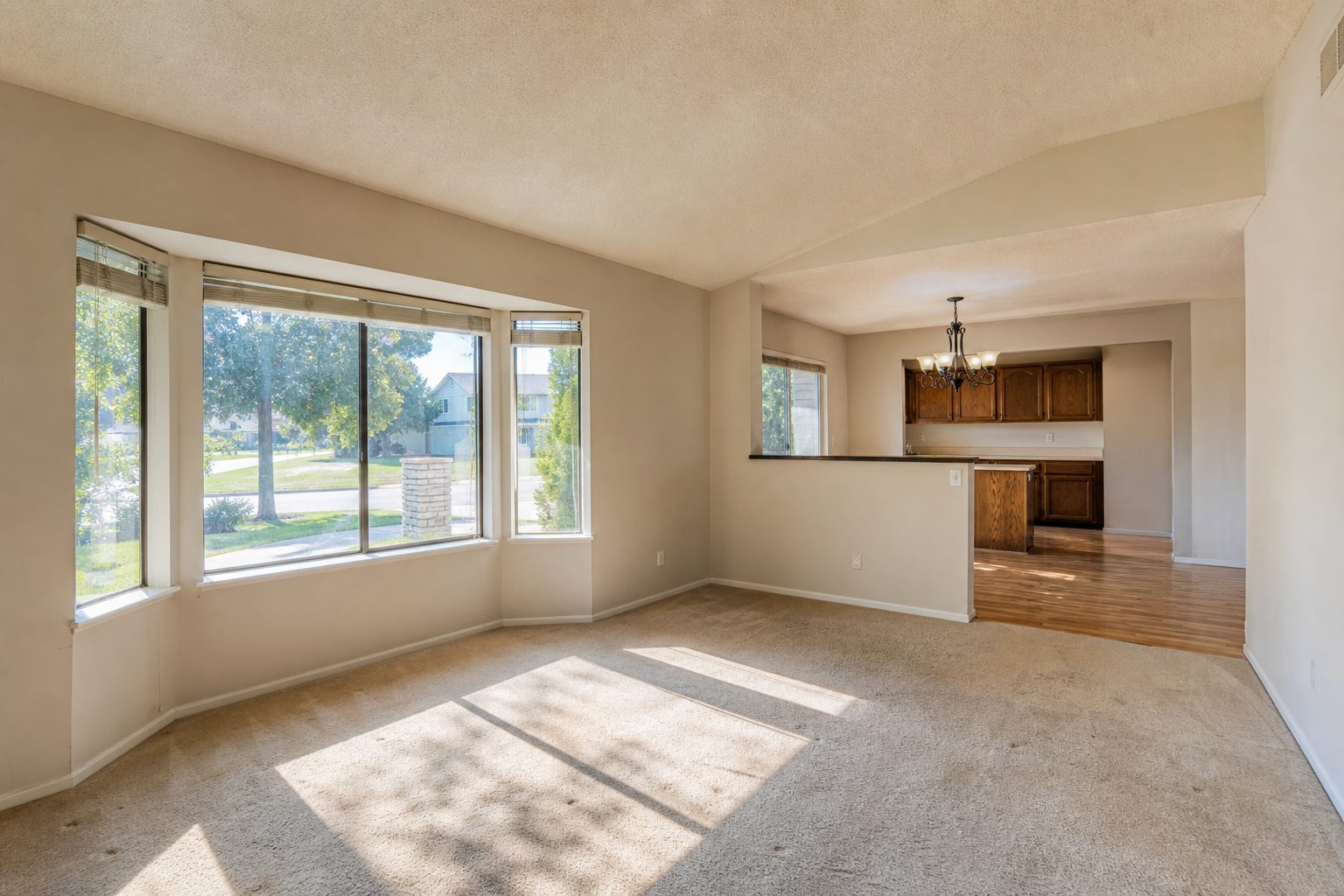
Selling an Inherited Home in Rancho Cucamonga
For many families, especially those with multiple heirs or a home that needs significant work, selling is the clearest path.
The Stepped-Up Basis Advantage
Inherited property generally receives a stepped-up cost basis equal to fair market value at the date of death, per IRS Publication 551. This means you only owe capital gains tax on appreciation that occurs after you inherit the home. If you sell relatively soon, that exposure can be minimal or even zero. This is one of the most valuable tax benefits available to heirs, and the longer you wait, the more potential gain accumulates.
Selling As-Is vs. Preparing the Home
In today’s Rancho Cucamonga market, as of June 2026, homes are selling in a median of 26 days. But pricing and presentation matter more than ever. According to recent data, 33.96% of homes listed have dropped their price, up 12.8 points year-over-year, and the median sale-to-list-price ratio is 99.24%. Homes that are priced right and presented well still move efficiently. Homes that sit tend to go stale.
Whether to invest in updates depends on the home’s condition, your timeline, and your budget. Light cleaning, decluttering, and addressing obvious safety issues often provide the best return. Full renovations on inherited properties are rarely worth the investment, especially when flip margins are the thinnest in years across the Inland Empire.
Probate Sales vs. Trust Sales
If the home is in a living trust, the successor trustee can typically list and sell without court involvement, which streamlines the timeline considerably. If the home must go through probate, the timeline depends on whether the personal representative has full or limited IAEA authority. Full authority avoids the court confirmation hearing. Limited authority requires it, which can add months and invite overbidding in court. In California, statutory probate attorney and executor fees are set by Probate Code Section 10810.
When Rancho Cucamonga Siblings or Co-Heirs Disagree
This is one of the hardest parts, and we see it regularly. Multiple heirs with different financial situations, different emotional attachments, and different ideas about what Mom or Dad “would have wanted.”
Buyouts
One sibling can buy out the others at fair market value. This requires an appraisal everyone trusts and, usually, financing for the buying sibling. If you want to understand what the home is worth before starting that conversation, a professional market analysis is the starting point.
Partition as a Last Resort
Under California’s Partition of Real Property Act, any co-owner can petition the court to force a sale if the parties cannot agree. This is expensive, adversarial, and something no family wants. Mediation is almost always a better first step.
Dividing Carrying Costs
If one sibling is paying the mortgage, taxes, and insurance while others are not, resentment builds fast. Get agreements in writing. A family meeting with a neutral third party, whether that is a mediator, an attorney, or a trusted advisor, can prevent problems that take years to untangle.
What This Means for Your Family: A Decision Checklist
Before you commit to any path, work through these questions honestly:
- Will anyone actually live in the home? (This determines Prop 19 eligibility.)
- Can the estate or the heirs afford the carrying costs while you decide?
- What will property taxes be after reassessment?
- What condition is the home in, and what would it cost to address?
- Do all heirs agree, or is there conflict?
- What does your CPA say about capital gains, depreciation, and tax exposure?
- What is the home actually worth right now?
- How long can you realistically wait before making a decision?
If you cannot answer several of these, you are not ready to choose yet, and that is okay. What is not okay is letting the home sit vacant with no plan while carrying costs drain the estate.
Frequently Asked Questions
Do I have to go through probate to sell my parent’s house in California?
Not always. If the home was held in a living trust, the successor trustee can typically sell without probate. If there was no trust and the estate’s gross value exceeds $208,850, per the threshold effective April 1, 2025 under AB 2016, formal probate is generally required. A primary residence valued at $750,000 or less may qualify for a simplified petition under the same law.
Will property taxes go up if I inherit my parent’s house in Rancho Cucamonga?
They will unless you move in and make it your primary residence within one year of the transfer, per Proposition 19. For transfers between February 16, 2025, and February 15, 2027, the exclusion cap is the parent’s assessed value plus $1,044,586, according to the California State Board of Equalization. If you do not meet these requirements, the home will be fully reassessed to current market value.
Do I pay capital gains tax if I sell an inherited house?
Inherited property generally receives a stepped-up cost basis equal to fair market value at the date of death, per IRS Publication 551. You owe capital gains only on appreciation that occurs after you inherit. If you sell soon after inheriting, your tax exposure is often minimal. Consult a CPA for your specific situation.
Can I rent out my parent’s house while it is in probate or trust administration?
Generally yes, with the right legal authority. A successor trustee or a personal representative with appropriate powers can lease the property. However, renting during this period introduces Prop 19 implications (the home will not qualify for the parent-child exclusion if it is not your primary residence), tenant protection obligations, and management complexity.
What happens to the mortgage on an inherited house?
Federal law under the Garn-St Germain Act generally prevents a lender from calling the loan due when a home transfers to a relative upon the borrower’s death. You can typically continue making payments on the existing loan. Confirm with the lender in writing to document this protection.
How long do we have to decide what to do with a parent’s home?
There is no universal deadline, but the Prop 19 one-year primary-residence clock starts at the date of transfer. Every month of indecision also means carrying costs: mortgage, taxes, insurance, and maintenance on a vacant property. Probate itself can take 12 to 18 months in San Bernardino County, so some decisions are constrained by the court timeline.
What if one sibling wants to keep the house and the others want to sell?
The sibling who wants to keep it can buy out the others at fair market value. If no agreement is reached, any co-owner can petition for a partition sale under California’s Partition of Real Property Act. Mediation is strongly recommended before taking that step.
Should we fix up an inherited house before selling it?
It depends on the home’s condition and your timeline. Light cleaning, decluttering, and addressing safety issues typically provide the best return. Full renovations on inherited properties are rarely worth the cost. In Rancho Cucamonga’s current market, homes that are priced right and presented well sell in a median of 26 days, as of June 2026.
Can we sell an inherited house as-is in the Inland Empire?
Yes. Many inherited homes sell as-is. You may net less than you would with light preparation, but you avoid upfront investment and reduce your timeline. The right pricing strategy matters more than the upgrades in most cases.
How much does it cost to keep a vacant inherited home each month?
Depending on the mortgage balance, reassessed property taxes, insurance, utilities, landscaping, and maintenance, carrying costs on a vacant Rancho Cucamonga home can easily reach several thousand dollars per month. That figure is higher for larger homes or those in HOA communities.
The Bottom Line
There is no one-size-fits-all answer. The right choice for your family depends on who wants to live there, what the home is worth, what it costs to carry, what Prop 19 means for your taxes, and whether all heirs can agree. Start with the numbers, involve your CPA and attorney early, and do not let grief or inertia make the decision for you.
Whatever path your family chooses, the goal is the same: reach a clear decision together before carrying costs, family tension, or inertia make it for you. Take the time to understand what the home is worth, what it will cost to hold, and what each heir actually needs. Grief complicates everything, and that is understandable, but the home itself will not wait indefinitely for a plan.
Questions about your own situation? Call or text Brent Blay at 909-641-8751 or visit soldbyblay.com.
Brent Blay | Sold By Blay at Park Regency Realty | CalDRE #02068178
Your family deserves the best.

Leave a Reply