


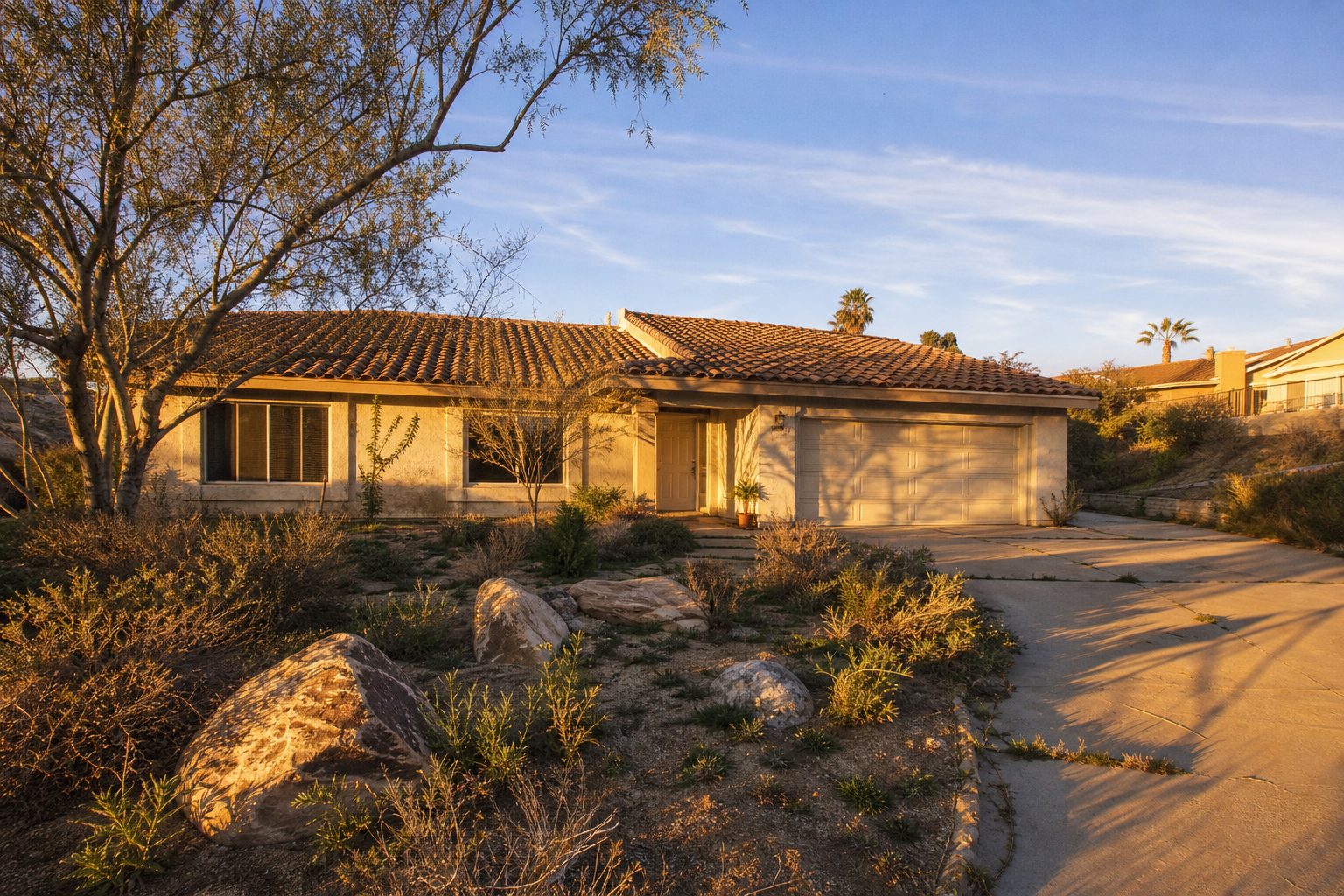
If your Rancho Cucamonga home needs major repairs, should you invest in renovations before listing, or sell it in its current condition and move on?
Not necessarily. Whether selling as-is leaves you worse off depends on what needs fixing, how much it costs, how long repairs take, and how the home is marketed. Selling as-is does not automatically mean accepting a lowball cash offer.
A homeowner recently asked online about a California house that needs major work: a new roof, a replacement HVAC system, and some plumbing repairs, with estimates somewhere in the $30,000 to $40,000 range. They don’t have the cash to cover it and don’t want to take on a loan to renovate a home they plan to sell anyway. Friends keep warning them that selling in its current condition will cost them a lot, but no one can tell them how much. Their real question: after repair costs, agent commissions, and the cost of holding the house while work gets done, does fixing everything first actually leave them with more money, or is selling as-is the smarter move?
That is exactly the right question. And the honest answer is: it depends on the specifics. Before you decide, the smartest first step is getting a clear picture of both your as-is value and your estimated after-repair value.
Why This Matters Right Now in Rancho Cucamonga
The Rancho Cucamonga housing market in 2026 has shifted into a place where presentation matters more than it did during the frenzy years. As of mid-2026, homes are taking around 63 days to sell, according to local market data, up slightly year over year. Price reductions have climbed, with roughly 58% of listed homes seeing at least one price cut before going under contract. Homes are selling for about 98% of asking price on average.
What does that mean for you? If your home needs a roof, new HVAC, or plumbing work, buyers are going to notice, and they are going to factor it into their offers. But “factor it in” does not necessarily mean “slash the price to investor levels.” The question is whether the discount buyers apply is larger or smaller than what you would spend fixing everything yourself, plus the months of carrying costs while contractors do the work. That math is what we are going to walk through together.
What Does “As-Is” Really Mean for Rancho Cucamonga Sellers?
“As-is” is a position on repairs, not a legal loophole. It means you are telling buyers: we are not planning to fix anything before closing. The buyer takes the property in its current condition.
What it does not do is cancel your duty to disclose. Under California Civil Code Sections 1102 through 1102.18, sellers must complete a Transfer Disclosure Statement sharing all known material facts about the property’s condition, including roof leaks, foundation issues, plumbing problems, past flooding, unpermitted additions, and more. A waiver of TDS requirements is void as against public policy, per Civil Code Section 1102. Writing “sold as-is, no disclosures” into a contract does not make the obligation go away.
Most as-is sellers in California handle three disclosures: the Transfer Disclosure Statement, the Natural Hazard Disclosure, and, for homes built before 1978, the federal lead-based paint disclosure.
What about probate and trust sales? Certain transfers, including some probate and trust sales, may be exempt from the TDS itself, but sellers and personal representatives are still generally required to disclose known material facts about the property’s condition. If you are handling an inherited home or estate property in Rancho Cucamonga, this is an area where you want guidance from both a probate attorney and an agent experienced in these transactions.
What “as-is” does NOT mean:
- That you can skip disclosures (you cannot)
- That buyers cannot inspect the property (they absolutely can, and should)
- That you are locked into selling to an investor (you are not)
- That the price is non-negotiable (buyers can still make offers and counter)
The Case for Selling As-Is in Rancho Cucamonga
Selling as-is is not a last resort. For many sellers, it is the most rational financial decision, especially when repairs are major, timelines are tight, or cash is limited.
Who benefits most from selling as-is:
- Sellers who do not have $30,000 to $40,000 or more in liquid cash for repairs
- Heirs, trustees, and executors who need to settle an estate efficiently
- Sellers facing divorce, relocation, or other time-sensitive situations
- Owners of older homes in neighborhoods like southwest Rancho Cucamonga or parts of Alta Loma, where one repair on a pre-1980s home often reveals three more
Pros of selling as-is:
- No upfront repair costs
- Faster to list (days, not months)
- No contractor delays, permit headaches, or cost overruns
- No carrying costs during a renovation period
- Certainty: what you see is what you sell
Cons of selling as-is:
- Smaller buyer pool if priced incorrectly
- Some buyers using FHA or VA financing may face hurdles
- Investors may make below-market offers
- Perception of “something wrong” if not marketed well
- Appraised value may come in lower
The biggest misconception is that as-is always means accepting an investor price. It does not. A well-priced, well-disclosed as-is listing on the MLS reaches renovation-loan buyers, move-up buyers, and investors simultaneously, and that competition drives the price up.
The Case for Repairing First
Repairing before listing can absolutely net you more money, under the right circumstances. A move-in-ready home typically commands a higher sale price, attracts more buyers (including those using FHA, VA, and conventional financing), appraises more cleanly, and often sells faster.
But the math is more complicated than “fix it and get more.”
Pros of repairing first:
- Higher potential list price
- Broader buyer pool, including FHA, VA, and conventional eligible buyers
- Stronger appraisals
- Better home insurance picture for buyers
- Avoids the stigma some buyers attach to as-is listings
Cons of repairing first:
- Upfront cash required, often $20,000 to $60,000 or more
- Monthly carrying costs add up fast
- Contractor delays are common
- Permits can extend timelines by weeks or months
- Cost overruns can erase projected gains
- No guarantee you will recover what you spent
The renovation question comes down to one number: what is the gap between the as-is price and the after-repair price, and does that gap exceed the total cost of repairs plus carrying costs plus financing? We will lay out that math below.
Why Roofs, HVAC, and Plumbing Are Different From Cosmetic Updates
Here is the part most sellers miss. Not all repairs are created equal. There is a major difference between cosmetic updates (paint, flooring, fixtures) and major-system replacements (roof, HVAC, plumbing).
How buyers react: Cosmetic issues are visual. Buyers see dated countertops and mentally subtract a number. But a bad roof, a failing HVAC system, or deteriorating plumbing triggers something deeper: fear. Fear of the unknown. Fear that one problem means ten more. That emotional reaction often leads to bigger discounts than the actual repair cost would justify.
How lenders react: This is critical. FHA and VA appraisals have minimum property requirements. A roof with less than two years of remaining useful life, an HVAC system that does not function, or active plumbing leaks can trigger lender-required repairs before closing. That means if you list as-is with these issues, you may be limiting your buyer pool primarily to conventional buyers, cash buyers, and buyers using renovation loans like FHA 203(k) or Fannie Mae HomeStyle.
How insurers react: In California’s current insurance environment, the age and condition of a roof can directly affect whether a buyer can obtain homeowners insurance at all, and at what cost. An older or damaged roof can make it difficult for buyers to secure coverage, which in turn affects their ability to close.
How appraisers react: Major system deficiencies get noted and can result in a lower appraised value, which can derail a financed sale even if a buyer is willing to pay your asking price.
So does this mean you should always fix major systems before selling? Not necessarily. It means you need to understand that these issues affect financing, insurance, and buyer psychology differently than a dated kitchen, and price accordingly.
Three Ways to Sell a Home That Needs Major Repairs
You are not choosing between just two options. There are three distinct paths, and each has a different cost, timeline, buyer pool, and likely net outcome.
Path 1: Sell to an investor or cash-buyer company
- Upfront cost to you: Zero
- Timeline to close: Typically 7 to 21 days
- Buyer pool: Limited to investors and cash buyers
- Typical outcome: Fastest close, but typically the lowest net proceeds. Investors are building in their own renovation costs, holding costs, and profit margin.
Path 2: List as-is on the open market with an agent
- Upfront cost to you: Minimal (cleaning, basic prep, professional photos)
- Timeline to close: Varies; in Rancho Cucamonga, homes are currently averaging around 63 days on market as of 2026
- Buyer pool: Broad. Includes cash buyers, investors, renovation-loan buyers, and conventional buyers willing to take on projects
- Typical outcome: Higher net than Path 1 because competition among multiple buyer types drives price up. Still typically lower than a fully renovated comp, but you avoid all renovation costs and risks.
Path 3: Repair first, then list
- Upfront cost to you: Significant ($20,000 to $60,000 or more depending on scope)
- Timeline to close: Add 2 to 4 months for renovation, permitting, and inspections before you even list
- Buyer pool: Broadest. Includes all buyer types, including FHA and VA
- Typical outcome: Highest potential sale price, but net proceeds depend entirely on whether the price increase exceeds total costs (repairs plus carrying costs plus financing)
Running the Numbers: An Illustrative Rancho Cucamonga Example
Let us use the scenario from the homeowner’s question and apply it to a hypothetical Rancho Cucamonga property. These numbers are illustrative only, not a prediction for any specific home. The only way to know your real numbers is a local pricing analysis for both conditions.
Assumptions for this example:
- As-is estimated value: $700,000
- After-repair estimated value: $750,000
- Repair costs (roof, HVAC, plumbing): $35,000
- Monthly carrying costs (property tax, insurance, utilities, basic maintenance): roughly $1,000 to $1,500 per month, based on local averages
- Renovation timeline: 3 months
- Real estate commissions: negotiable; for illustration, assume a total of 5% of sale price
- California closing costs: roughly 1% to 2% of sale price
Path 1: Sell to an investor. Investor offers on as-is homes in this range often come in well below market. For this example, assume an offer around $600,000 to $630,000, with no commissions (investor buys direct) and minimal closing costs. Estimated net: $590,000 to $620,000.
Path 2: List as-is with an agent. List at $700,000. After commissions (5% of $700,000 = $35,000) and closing costs (roughly $10,000), estimated net: approximately $655,000.
Path 3: Repair first, then list. Spend $35,000 on repairs. Pay 3 months of carrying costs (roughly $3,000 to $4,500). List at $750,000. After commissions (5% of $750,000 = $37,500) and closing costs (roughly $11,000), estimated net: approximately $664,000 to $665,500.
What does that tell you? In this hypothetical, repairing first yields roughly $9,000 to $10,000 more than listing as-is with an agent, but it requires $35,000 in upfront cash, three months of your time, and the risk of cost overruns. Both open-market paths significantly outperform the direct investor sale.
This is why we always recommend running the numbers all three ways before deciding.
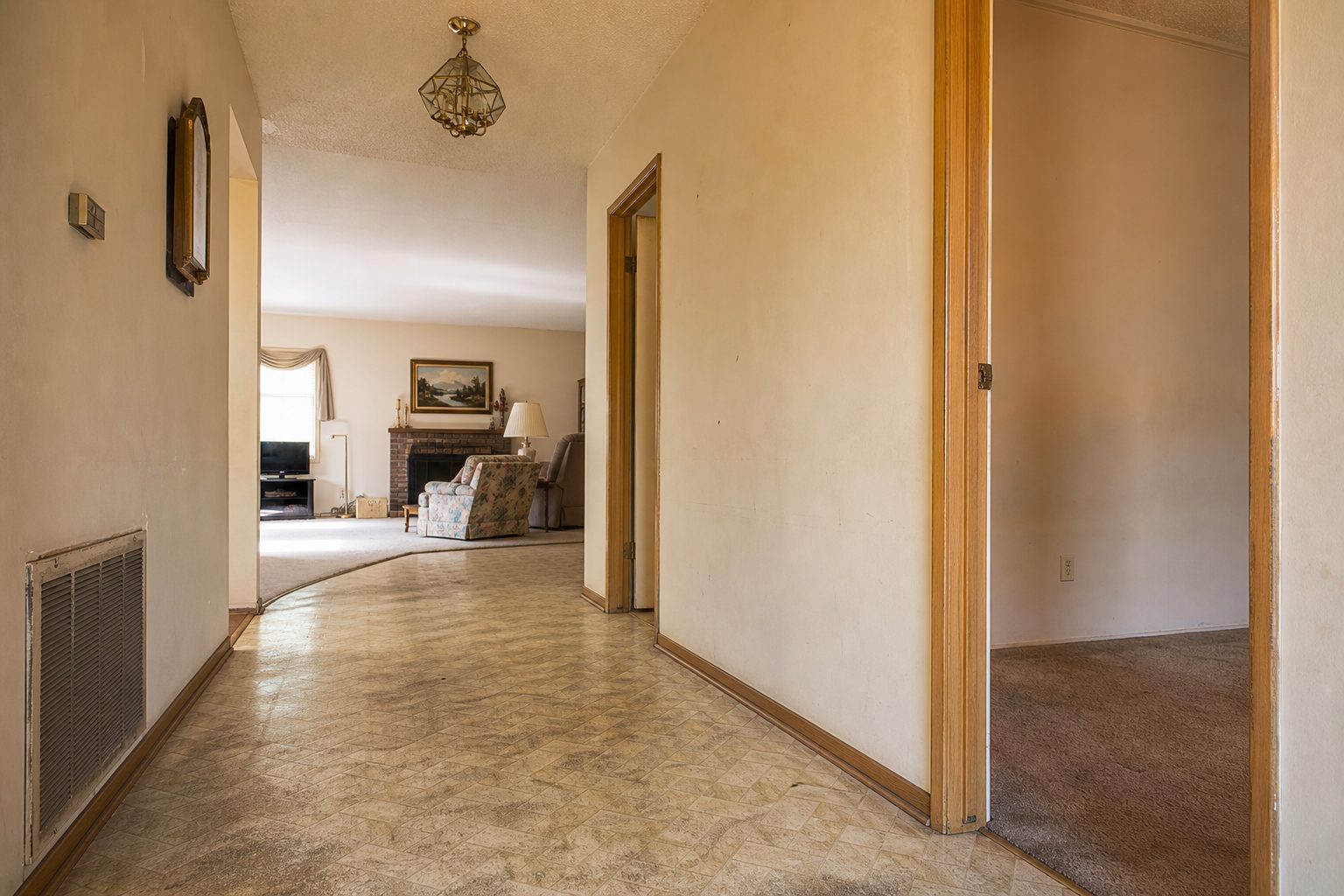
The Middle Path Most Rancho Cucamonga Sellers Miss
Here is what we tell sellers who come to us torn between the two extremes: there is a middle path, and it often nets more than either selling completely as-is or doing a full renovation.
The middle path looks like this:
- Get a pre-listing inspection. Spend a few hundred dollars to know exactly what you are dealing with. No surprises for you or the buyer.
- Fix only safety and deal-killer items. If there is an active leak or a safety hazard, address it. Skip cosmetic upgrades.
- Offer a repair credit instead of doing the work. Many buyers prefer a credit at closing so they can choose their own contractor and materials. This keeps the sale moving without you managing a renovation.
- Paint, deep clean, and stage. These are low-cost, high-impact moves. Fresh paint and professional cleaning can transform how buyers perceive a property, even one with deferred maintenance. According to the National Association of REALTORS, staged homes tend to sell faster and for higher prices compared to unstaged homes.
- Disclose everything upfront. Full transparency builds trust and reduces the chance of renegotiation after the buyer’s inspection.
This approach works especially well for inherited homes in Rancho Cucamonga. Many of these properties are in neighborhoods like Terra Vista, Victoria, or Alta Loma where the bones are solid but the finishes are dated. A clean, well-priced, well-disclosed listing with a repair credit can attract strong offers without the seller ever picking up a hammer.
How Price Point Changes the Answer in Rancho Cucamonga
The as-is vs. renovate question looks very different depending on where your home sits in the market. Rancho Cucamonga has enormous price variation across its sub-markets. According to demographic and housing data as of 2026, median values range from around $565,000 in southwest Rancho Cucamonga up to roughly $1.67 million in the Deer Creek neighborhood, per Zillow’s Home Value Index.
At the entry-level and mid-range price points (roughly $565,000 to $750,000, in neighborhoods like southwest Rancho Cucamonga, Terra Vista, and Victoria), selling as-is is more viable. Buyers in this range are often more willing to take on projects, renovation-loan buyers are active, and investor demand is steady.
At the luxury and upper-tier price points (roughly $1 million and above, in neighborhoods like Deer Creek, Hermosa, North Day Creek, and Alta Loma), buyer expectations for condition are dramatically higher. A dated luxury home faces a disproportionately larger discount because buyers at that price point expect move-in-ready finishes. In these sub-markets, targeted renovations can make a bigger difference in your net proceeds.
Special Situations: Inherited, Probate, Trust, and Divorce Sales
If you are selling an inherited home, a property held in a trust, or a home as part of a divorce, the as-is question takes on additional dimensions.
Inherited and probate homes are among the most common as-is sales for good reason. The heirs often live out of the area, may not have cash for repairs, and need to settle the estate. In Rancho Cucamonga, over 36,000 properties have more than 50% equity and more than 12,000 homes are fully paid off, according to local property data as of 2026. Many inherited homes carry substantial equity or are mortgage-free, which gives heirs flexibility.
However, there is a clock ticking. Under California’s Proposition 19, effective since February 2021, inherited properties used as anything other than the heir’s primary residence get reassessed to current market value for property taxes. That can increase annual property taxes from a few thousand dollars under the original purchase basis to $8,000 or more. Every month you hold the property while debating renovations, you are paying those reassessed taxes.
For probate sales specifically: If the will grants authority under the Independent Administration of Estates Act (IAEA), the executor can sell the property without court confirmation, which significantly streamlines the process. Without full IAEA authority, a court confirmation hearing adds time and complexity.
For divorce sales: Speed often matters most. Selling as-is or with minimal repairs can allow both parties to move forward faster.
How to Decide: A Simple Framework
When you are weighing as-is versus renovating, work through these questions:
- What specifically needs repair? Major systems (roof, HVAC, plumbing) or cosmetic updates?
- Do you have cash available for repairs? If not, are you willing to finance them?
- What is your timeline? Can you wait 3 to 6 months for renovations, or do you need to close sooner?
- Where is the home on the price spectrum? Entry-level or luxury?
- Who is the likely buyer? First-time buyer, move-up buyer, or investor?
- Do you have the bandwidth to manage contractors? Especially from out of area?
- What is the actual gap between your as-is value and after-repair value? Not a guess, but a number based on local comps.
Run the numbers all three ways. If the gap between as-is and after-repair value does not clearly exceed total repair costs plus carrying costs, selling as-is or taking the middle path is likely your best move.
Back to Our Homeowner
So what about that California homeowner with $30,000 to $40,000 in needed repairs and no cash to cover them? Here is how we would approach that decision.
First, get repair bids from licensed contractors, not internet estimates. Then get a pricing analysis for both conditions: as-is and after-repair. Compare the net proceeds from an open-market as-is listing against repairing first, including every carrying cost during the renovation period. Also consider offering a repair credit instead of doing the work yourself.
In many cases like this, where the seller does not have the cash and does not want to borrow, listing as-is on the open market with an experienced agent, full disclosure, competitive pricing, and professional marketing will net significantly more than selling to an investor, and may net nearly as much as repairing first once you account for all the costs and risks of renovation.
The key is not which strategy sounds better in theory. It is which one leaves more money in your pocket after every cost is accounted for.
Frequently Asked Questions
Is it better to sell a house as-is or fix it up?
It depends on the type and cost of repairs needed, your available cash, your timeline, and your home’s price point. For homes needing major-system repairs like roofs or HVAC, selling as-is on the open market often nets close to what repairing first would yield once you subtract renovation costs, carrying costs, and risk of overruns. The only way to know for certain is to run the numbers both ways with a local pricing analysis.
How much less will I get selling my house as-is?
There is no universal discount percentage. The difference depends on what needs repair, how the home is marketed, and the buyer pool. Selling as-is to an investor typically results in the deepest discount. Selling as-is on the open market with an agent, proper pricing, and full disclosure narrows the gap significantly because you are attracting multiple buyer types competing for the property.
Do I have to disclose problems if I sell as-is in California?
Yes. Under California Civil Code Sections 1102 through 1102.18, sellers must complete a Transfer Disclosure Statement sharing known material facts about the property’s condition. The disclosure duty survives as-is clauses. A waiver of TDS requirements is void as against public policy. Some probate and trust sales may be exempt from the TDS itself, but disclosure of known material facts is still generally required.
Should I replace the roof before selling my house?
Not always. A new roof broadens your buyer pool (especially for FHA and VA buyers) and can improve insurability, but roof replacements often recover less than their full cost at resale, according to national remodeling cost-recovery data. If you cannot afford it, consider listing as-is at a price that reflects the roof’s condition or offering a repair credit at closing.
Can I sell a house that needs a new roof or HVAC?
Yes. You can sell a home with any condition issues as long as you disclose them. However, buyers using FHA or VA financing may face lender-required repairs before closing, which can limit your buyer pool to cash buyers, conventional buyers, and those using renovation loans like FHA 203(k) or Fannie Mae HomeStyle.
Is it better to give a buyer a repair credit or fix it myself?
In many cases, a repair credit is the better option. It keeps the sale moving without you managing contractors, and many buyers prefer the flexibility to choose their own contractor and materials. A credit also eliminates your risk of cost overruns and construction delays.
What repairs should I make before selling?
Focus on safety hazards, active leaks, and anything that would prevent a buyer from obtaining financing or insurance. Beyond that, cosmetic improvements like paint and deep cleaning offer high return relative to their low cost. Skip expensive upgrades that are unlikely to recover their full cost before a sale.
Can a buyer still negotiate on an as-is home?
Yes. “As-is” means you are not planning to make repairs, but buyers can still submit offers, request credits, or negotiate on price. You are under no obligation to accept, but buyers retain the right to negotiate, and they retain their inspection contingency unless they waive it.
Can I list an as-is house with a real estate agent?
Absolutely. This is Path 2 in our framework and often the highest-net option for sellers who cannot or choose not to renovate. Listing on the MLS exposes your home to all buyer types, not just investors, and competition among those buyers drives the price up.
Should I sell an inherited house as-is?
It depends on the property’s condition, your timeline, and whether multiple heirs need to agree on a strategy. Many inherited homes are sold as-is because heirs live out of the area, lack renovation capital, or need to settle the estate quickly. Under California’s Proposition 19, holding an inherited property as a non-primary residence triggers a property tax reassessment, which can increase carrying costs substantially and create urgency to sell.
The Bottom Line
Selling as-is is not automatically worse than renovating first. The answer depends on what needs fixing, how much it costs, how long it takes, and how the home is marketed. In Rancho Cucamonga’s current market, where pricing and presentation matter more than ever, the smartest move is to run the numbers all three ways: investor sale, open-market as-is listing, and repair-then-list. Then choose the path that puts the most money in your pocket after every cost is accounted for.
This article is general information, not legal, tax, lending, insurance, or financial advice. Consult a licensed professional. Information and data as of October 2026; figures change regularly.
Have questions about selling as-is or repairing first, or about your next move in Rancho Cucamonga? Let’s talk. Whether you are buying, selling, or just planning ahead, we will give you honest advice and a clear plan.
Brent Blay | Sold By Blay | Park Regency Realty | DRE #02068178 📞 909-641-8751 | ✉️ brentblay@parkregency.com | soldbyblay.com Your family deserves the best.

Leave a Reply