
What does it take to sell a luxury estate home in probate or trust in Rancho Cucamonga?
It takes a well-documented valuation, a plan to protect the property while it sits vacant, luxury-level presentation, access to qualified buyers, and clear communication with every beneficiary. The core process mirrors any inherited home sale, but the stakes climb significantly when the property is a custom foothill estate valued well above the citywide median. We walk fiduciaries through every step at Sold By Blay, and you can learn more about our full probate and trust real estate services on our probate and trust page.
If you are newer to the overall inherited-property process, our post “How Do I Sell an Inherited House in Rancho Cucamonga?” covers the step-by-step framework. And if property condition is a concern, our post “Can You Sell a Probate Home As-Is in Rancho Cucamonga?” addresses that question directly. This post focuses on what changes at the luxury level.
Why Luxury Estate Sales in Rancho Cucamonga Are Different
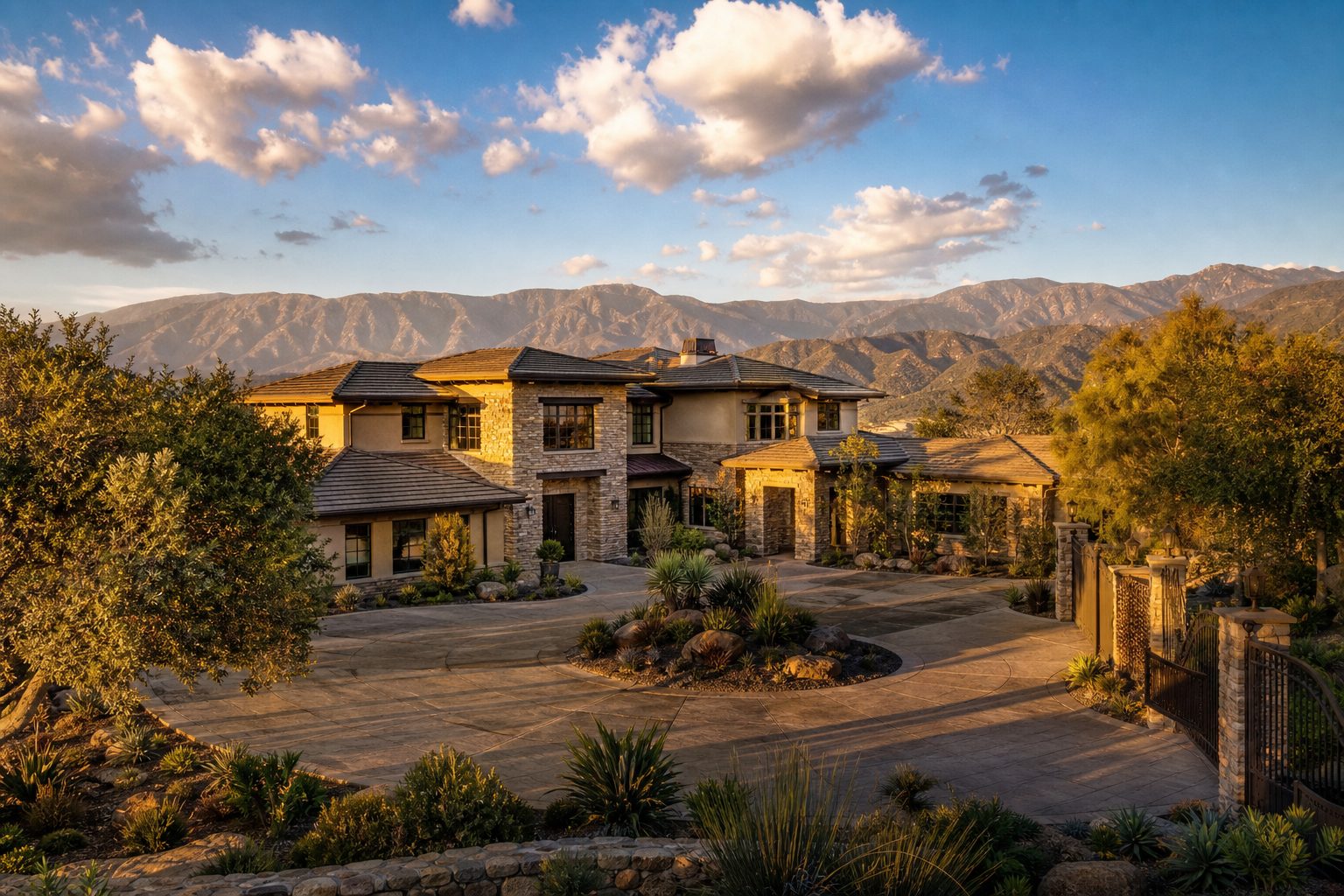
Rancho Cucamonga’s luxury inventory is concentrated in the northern foothill areas: Deer Creek, Alta Loma, Haven View Estates, Carriage Estates, Etiwanda Estates, and pockets like Sheridan Estates, La Ventana, and Red Hill. These are custom homes on larger lots with mountain views, mature landscaping, and features that rarely repeat from one property to the next. According to June 2026 market data, Deer Creek alone carries a typical value of roughly $1.67 million, more than double the citywide median of approximately $826,000. Zip codes 91739 and 91737 carry median estimated values above $1 million, per the same dataset.
What does that mean for you as an executor, successor trustee, or heir? Four things shift:
- A smaller buyer pool. Qualified buyers at $1.5 million and above are fewer. Cash buyers, jumbo-loan borrowers, and relocators from the Los Angeles basin and Orange County make up most of this audience, and reaching them requires targeted marketing rather than a sign in the yard.
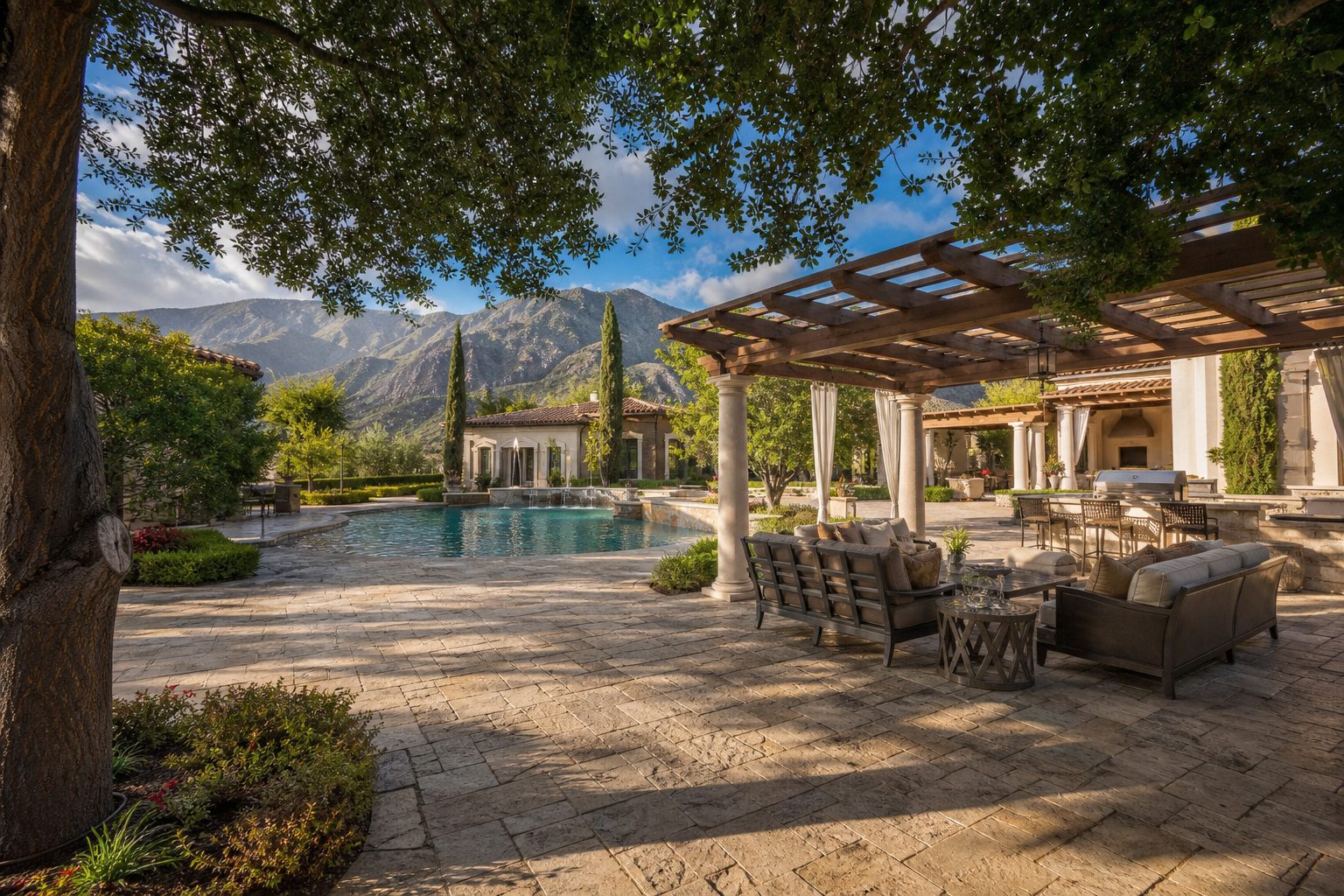
- Properties that are genuinely hard to comp. A custom home with panoramic San Gabriel Mountain views, an equestrian setup, a detached guest house, or a resort-style outdoor living area rarely has a clean comparable sale nearby. Our post “Do Views of the San Gabriel Mountains Increase Home Value, and by How Much?” explores one dimension of this challenge.
- More valuable contents. Fine art, designer furnishings, jewelry, vehicle collections, and personal property can represent significant estate value on their own, and they must be handled before marketing begins.
- Greater fiduciary scrutiny. Beneficiaries, estate attorneys, and potentially the court will review how you valued the property, marketed it, evaluated offers, and communicated decisions. At the luxury level, the gap between a well-executed sale and a poorly executed one can be six figures.
Probate vs. Trust: What Changes at the Rancho Cucamonga Luxury Level
The legal pathway governing the sale shapes everything from timeline to marketing strategy. Here is a high-level comparison:
Court involvement
- Probate: Required unless the personal representative has full authority under the Independent Administration of Estates Act (IAEA). With full IAEA authority, you can sell the property without a court confirmation hearing by filing a Notice of Proposed Action (DE-165) and giving heirs 15 days to object. Without full authority, the sale must be confirmed in court.
- Trust: Generally none. The successor trustee acts independently, subject to fiduciary duties.
Overbid risk
- Probate (without full IAEA): Any buyer can top your accepted offer in open court. Under Probate Code Section 10311, the minimum opening overbid must exceed the accepted price by 10% of the first $10,000 plus 5% of the remainder. For a luxury home, this means a competing bidder could appear at the hearing with a cashier’s check for 10% of that minimum bid.
- Trust: No court overbid process exists.
Minimum price rule
- Probate (court confirmation): The sale price must be at least 90% of the probate referee’s appraised value, per California Probate Code.
- Trust: No statutory floor. The trustee’s duty of prudence governs pricing.
Privacy
- Probate: Sale terms are filed in public court documents.
- Trust: Relative privacy, as trust documents are not part of the public record.
Timeline
- Probate with full IAEA: Roughly 45 to 75 days from accepted offer to close.
- Probate with court confirmation: Roughly 90 to 150 or more days.
- Trust: Similar to a standard residential sale once authority is confirmed.
Statutory fees
- Probate: California Probate Code sets statutory fees for executors and probate attorneys on a sliding scale. Research data indicates that on a $1 million estate, statutory fees can total $46,000 or more. On a higher-value luxury estate, the combined statutory fees for both attorney and executor climb further.
- Trust: Fees are typically negotiated, not statutory.
If your estate is going through probate, requesting full IAEA authority on the initial petition (DE-111) is critical. Most experienced California probate attorneys recommend it for any estate with real property.
*This is general information, not legal advice. Consult a probate or estate attorney about your specific situation.*
Valuing a One-of-a-Kind Rancho Cucamonga Estate Home
Two valuations matter in an estate sale: the date-of-death value (for tax and estate purposes) and the current market value (for pricing and sale purposes). These may differ significantly if the owner passed months or years before the property reaches the market.
For luxury homes in the Rancho Cucamonga foothills, arriving at an accurate current market value is one of the most difficult steps. Custom floor plans, large lots, views, guest houses, equestrian facilities, pools, and premium finishes all resist clean comparison. The probate referee’s appraisal, required in probate cases, establishes the property’s official value for the estate. If more than one year passes between that appraisal and the confirmation hearing, a reappraisal is needed, per California Probate Code.
An independent appraisal and a detailed comparative market analysis from a real estate team with luxury experience serve complementary purposes. The appraisal satisfies legal requirements; the market analysis accounts for current buyer behavior, seasonal timing, and competitive inventory. Our post “Appraisers Are Quitting… How Does This Affect Me If I’m Selling My Home in Rancho Cucamonga?” discusses the shrinking appraiser pool and its impact on valuations.
You can also request a confidential home valuation from our team through our home valuation page to get an initial sense of current market positioning before commissioning a formal appraisal.
Protecting a Vacant Luxury Home During Administration
A luxury estate home may sit vacant for months during probate or trust administration. The risks, and the costs of ignoring them, are proportionally higher on a high-value property.
Here is a practical checklist:
- Notify your insurance carrier immediately. Most homeowners policies contain vacancy or unoccupancy clauses that can void coverage if the home is unoccupied beyond a set period, often 30 to 60 days. You may need a separate vacancy endorsement or a standalone vacant-home policy. Consult your insurance professional about your specific coverage.
- Security. Consider monitored alarm systems, exterior cameras, and timed lighting. In foothill communities, properties on larger lots can be less visible from the street, making them more vulnerable.
- Climate control. Maintain HVAC operation to prevent mold, humidity damage, and temperature extremes that can harm hardwood floors, cabinetry, and finishes.
- Pool and landscaping maintenance. Neglected pools, overgrown yards, and dead landscaping signal vacancy and reduce curb appeal. Maintain these on a regular schedule.
- Regular inspections. Walk the property every one to two weeks. Check for leaks, pest intrusion, mail accumulation, and any code violations.
- Utilities. Keep water, electric, and gas active. Shutting off water may save a small amount but creates risk if a leak develops undetected.
The carrying costs on a luxury home, including property taxes, insurance, HOA dues, utilities, pool service, and landscaping, can run into thousands of dollars per month. Factor this into your timeline planning.
Handling High-Value Contents Before Marketing
Before a luxury estate home can be photographed, staged, or shown, the personal property inside needs attention. Fine art, designer furnishings, jewelry, collectibles, vehicle collections, and wine cellars may hold substantial value independent of the real estate.
Steps to consider:
- Separate personal property appraisals. Engage qualified appraisers for fine art, antiques, jewelry, and vehicle collections. These valuations serve the estate and inform decisions about sale, distribution, or donation.
- Estate sale or auction specialists. For significant collections, professional estate sale companies or auction houses can maximize recovery. Your estate attorney or CPA can advise on timing and tax implications.
- Remove items before marketing. Once valued and accounted for, personal property should be removed or secured before professional photography and showings begin. Buyers need to see the home, not the contents.
This step takes time, so begin it early in the process. Rushing it can lead to undervalued items, disputes among beneficiaries, or marketing delays.
Preparing the Home: As-Is With a Plan for Maximum Value
At Sold By Blay, we sell all of our properties as-is. No repairs are ever required. What we do provide is honest guidance on where selective improvements, professional staging, and luxury-level photography and video can move the needle on value.
At the luxury level, the condition spectrum matters more, not less. A well-maintained custom home in Deer Creek or Haven View Estates that simply needs professional staging and a deep clean is a very different proposition than one with deferred maintenance, outdated finishes, or unpermitted additions. Each stage of condition attracts certain buyers, and different buyers bring different pricing. The decision of how much to invest before listing always belongs to the executor, trustee, or heirs.
Our post “Can You Sell a Probate Home As-Is in Rancho Cucamonga?” covers this framework in detail. And our post on what luxury homebuyers want in 2026 outlines the features and presentation standards that today’s luxury buyers prioritize.
For vacant luxury homes, professional staging is particularly impactful. Empty rooms in a large estate home can feel cavernous and make it difficult for buyers to envision scale and flow. Quality staging, combined with professional photography, cinematic video, drone footage, and 3D walkthroughs, is not optional at this price point.
Discreet Marketing to Qualified Rancho Cucamonga Buyers
Privacy is often a priority for estate sales, and luxury properties in particular. You may not want the entire market to know the circumstances of the sale or the details of the estate. At the same time, limiting exposure can limit price. This is a genuine tradeoff that deserves a candid conversation.
Current MLS and industry rules offer some options for private or limited marketing, but each comes with trade-offs in exposure and potentially in final sale price. We walk through these options with every executor and trustee to find the right balance for your situation.
Regardless of the marketing approach:
- Showings are by appointment only. Luxury estate homes are not open-house properties, especially during probate or trust administration.
- Every buyer is vetted. Proof of funds for cash buyers, strong pre-approval with a reputable lender for financed buyers. At this price point, jumbo loan qualification is a real filter. Our post “What Do I Need for a Jumbo Loan in 2026?” outlines the requirements.
- Reach extends beyond Rancho Cucamonga. Many luxury buyers in the Inland Empire foothills are relocating from the Los Angeles basin, Orange County, or the San Gabriel Valley. Marketing must reach those audiences through targeted digital channels, agent-to-agent networking, and exposure to the relocating-buyer pipeline.
Our post “How Do Luxury Homes Sell in a Slower Market?” covers additional strategies for maximizing exposure without sacrificing discretion. To discuss a private consultation for your property, reach out through our contact page.
Evaluating Offers on a Luxury Estate in Rancho Cucamonga
When offers arrive on a luxury estate home, the evaluation goes beyond price. Here are the variables we help fiduciaries weigh:
- Cash vs. jumbo financing. Cash offers eliminate appraisal risk and typically close faster. Jumbo-financed offers may come in higher but carry appraisal contingency risk, especially on hard-to-comp properties.
- Contingency terms. Inspection, appraisal, and loan contingencies each introduce potential renegotiation points. At the luxury level, appraisal gaps are a particular concern because appraised values on unique homes can fall below contract price.
- Buyer qualification and motivation. A well-qualified buyer who has toured comparable properties and understands the market is more likely to close than one making speculative offers.
- Court confirmation timing (probate without full IAEA). If your sale requires court confirmation, the buyer must understand the additional timeline and the overbid process. Some buyers will not participate in a court-confirmed sale, which narrows the pool further.
Document your rationale for accepting or rejecting each offer. This protects you as fiduciary.
Taxes, Prop 19, and Carrying Costs for Rancho Cucamonga Estates
Three financial considerations deserve attention:
- Step-up in basis. Inherited property generally receives a stepped-up cost basis to fair market value at the date of death, per IRS Publication 551. This can significantly reduce capital gains tax if the property is sold relatively soon after inheritance. Our post “Do I Pay Taxes When I Sell an Inherited Home in California?” covers this in detail.
- Prop 19 and the parent-child exclusion. If an heir wants to keep the home as a primary residence, the parent-child exclusion under Proposition 19 allows the transfer of the parent’s lower assessed value, but only up to the parent’s taxable value plus an inflation-adjusted cap. For many luxury homes in Rancho Cucamonga, the current market value exceeds this cap significantly, meaning the heir would still face a substantial property tax increase on the difference. Consult a CPA or tax advisor for your specific numbers.
- Carrying costs during administration. Property taxes, insurance (potentially at vacancy rates), HOA dues, utilities, pool and landscape maintenance, and any necessary repairs accumulate monthly. On a luxury home, these costs can be substantial, and they are borne by the estate.
*This is general information, not tax or financial advice. Consult a CPA about your specific situation.*
Keeping Beneficiaries Aligned Throughout the Sale
Multiple heirs with different financial needs, emotional attachments, and opinions about value can turn a luxury estate sale into a family conflict. As fiduciary, your role is to act in the best interest of all beneficiaries, not just the most vocal one.
Practical steps that help:
- Set a communication cadence. Regular updates, whether weekly emails or scheduled calls, reduce anxiety and prevent surprises.
- Document every decision. Who was consulted, what options were considered, and why you chose a particular path.
- Address disagreements early. If one heir wants to sell and another wants to keep the property, discuss buyout options, fair market valuation, and the costs of holding early in the process. Our post “Should We Sell, Rent, or Keep a Parent’s Home in the Inland Empire?” explores these scenarios.
- Stay neutral. Your duty is to all beneficiaries equally. If disagreements become unmanageable, the estate attorney can help mediate or seek court guidance.
In probate with IAEA authority, the Notice of Proposed Action process gives beneficiaries a formal 15-day window to object. If even one beneficiary timely objects, the sale must proceed through court confirmation, per California Probate Code. Transparent communication before you reach that point makes objections far less likely.
Your Luxury Estate Sale Team in Rancho Cucamonga
Selling a luxury estate home is a team effort. The professionals you need around the table include:
- Estate or probate attorney: Guides legal authority, court filings, notices, and beneficiary communications
- CPA or tax advisor: Handles estate tax returns, step-up in basis documentation, Prop 19 analysis, and income tax implications
- Wealth advisor: Coordinates proceeds distribution, investment of estate assets, and financial planning for heirs
- Insurance professional: Adjusts coverage for vacancy, liability, and valuable contents
- Contents appraisers and estate sale specialists: Value and liquidate personal property
- Our team at Sold By Blay: Provides accurate valuation, property protection guidance, luxury-level presentation, qualified buyer access, and clear communication with every beneficiary throughout the sale
We coordinate with every member of your professional team to keep the process moving and documented. You can learn more about how we work with executors and trustees on our probate and trust real estate page.
Frequently Asked Questions
How do you sell a luxury home in probate in Rancho Cucamonga?
The personal representative petitions the court, ideally requesting full IAEA authority. With full authority, you can list and sell the property much like a standard sale after filing a Notice of Proposed Action and allowing 15 days for beneficiary objections. Without full authority, the sale requires court confirmation, including a public hearing where other buyers may overbid. Consult your probate attorney about which pathway applies to your estate.
Can a trustee sell a house in Rancho Cucamonga without court approval?
Generally, yes. A successor trustee of a revocable living trust can sell trust property without court involvement, on a standard sale timeline, once their authority is confirmed and the deed is recorded. Fiduciary duties to beneficiaries still apply in full. Consult the trust document and your estate attorney for your specific authority.
Is a luxury probate sale public in California?
In a probate proceeding, the sale terms, property value, and court filings are part of the public record. Trust sales offer relative privacy because trust documents are generally not filed with the court. If privacy is a priority, discuss marketing approaches and disclosure minimization strategies with your real estate team and attorney.
How is a high-value inherited home appraised in Rancho Cucamonga?
In probate, a court-appointed probate referee establishes the property’s value for estate purposes. An independent appraisal and a comparative market analysis from an experienced luxury real estate team provide additional support for pricing decisions. For custom foothill homes with unique features, all three tools may be necessary because clean comparable sales are rarely available nearby.
Do we need to insure a vacant estate home differently?
Most homeowners insurance policies contain vacancy or unoccupancy clauses that can limit or void coverage after a set period, often 30 to 60 days. Notify your insurance carrier immediately and discuss whether a vacancy endorsement or standalone policy is needed. Consult your insurance professional about your specific policy terms.
What should we do with valuable furnishings and art in an estate home?
Engage qualified appraisers for fine art, antiques, jewelry, and vehicle collections early in the process. Once items are valued, coordinate with estate sale or auction specialists for liquidation, or arrange distribution to beneficiaries according to the estate plan. Remove or secure all valuable personal property before professional photography and buyer showings begin.
Should we renovate a luxury estate home in Rancho Cucamonga before selling?
Not necessarily. We sell all of our properties as-is, with no required repairs. What we do provide is guidance on which selective improvements, professional staging, and presentation upgrades are likely to move the needle on value relative to cost. The decision always belongs to the executor, trustee, or heirs.
Can an heir keep a luxury home and avoid a property tax increase?
Under Proposition 19, the parent-child exclusion applies only if the heir uses the home as a primary residence, and it is capped at the parent’s assessed value plus an inflation-adjusted amount, per the California State Board of Equalization. For many luxury homes in Rancho Cucamonga, the current market value exceeds this cap, meaning a significant property tax increase on the difference is likely. Consult a CPA for your specific situation.
How long does it take to sell a luxury estate home through probate?
Timeline depends on the type of authority granted. With full IAEA authority, the process from accepted offer to close is roughly 45 to 75 days. With court confirmation required, expect 90 to 150 days or more. Trust sales follow a standard residential timeline once the trustee’s authority is confirmed. Marketing time varies based on price point, condition, and buyer demand.
What if beneficiaries disagree about the sale price in Rancho Cucamonga?
The fiduciary’s duty is to obtain fair market value, supported by a well-documented valuation and a defensible marketing process. If beneficiaries disagree, transparent documentation of how the price was determined, how offers were evaluated, and how decisions were made protects the fiduciary. If disagreements escalate, the estate attorney can mediate or seek court direction. In probate with IAEA authority, a beneficiary objection during the 15-day Notice of Proposed Action window forces the sale into court confirmation.
The Bottom Line
Selling a luxury estate home in probate or trust in Rancho Cucamonga requires more than a standard listing strategy. The smaller buyer pool, harder-to-comp properties, higher carrying costs, and greater fiduciary scrutiny all demand a deliberate, documented, and discreet approach. The right team, one that understands both luxury marketing and the probate and trust process, protects the estate’s value and keeps the family aligned from first valuation to final closing.
Have questions about selling a luxury estate home or your next move in Rancho Cucamonga? Let’s talk. Whether you are navigating probate, administering a trust, or just planning ahead, we will give you honest advice and a clear plan.
Get your free home valuation at soldbyblay.com/home-value
Schedule a consultation at soldbyblay.com/contact
Brent Blay | Sold By Blay | Park Regency Realty | DRE #02068178 📞 909-641-8751 | ✉️ brentblay@parkregency.com | soldbyblay.com Your family deserves the best.
*This article is general information, not legal, tax, insurance, or financial advice. Consult a probate or estate attorney, a CPA, and your insurance professional about your specific situation.*
*Information and data as of October 2026; figures change regularly.*

Leave a Reply