



What’s the difference between summer blend and winter blend, and when do prices drop?
California allowed an early switch to cheaper winter-blend gasoline on September 28, 2026, but relief at the pump will likely be modest and gradual because crude oil prices, refinery capacity, and state fuel standards still drive most of what you pay.
*Information current as of October 2, 2026. Gas prices change daily; check current prices before you fill up.*
—
Why This Matters Right Now in Rancho Cucamonga
If you live in Rancho Cucamonga or anywhere in the Inland Empire, you have felt this at the pump. As of October 2, 2026, the San Bernardino County average for a gallon of regular sits at $6.3229, according to AAA. That is roughly $2 more per gallon than the national average of $4.3961 on the same date. For families here, where Rancho Cucamonga’s cost of living is already 27% above the national average (per ERI data, February 2026), every extra dollar per gallon adds real pressure to the household budget. The governor’s decision to suspend summer-blend requirements weeks ahead of the usual October 31 deadline grabbed headlines, but understanding what actually changes, and when you might see prices ease, requires looking past the announcement. That is exactly what we are going to break down for you.
—
California Just Switched to Winter Blend Early
On September 28, 2026, the governor suspended California’s seasonal summer-blend gasoline requirement and directed state agencies to allow the early manufacturing, importation, distribution, and sale of winter-blend gasoline. Under normal rules, most of California switches to winter blend on October 31.
So why the early move? According to Denton Cinquegrana, the chief oil analyst for Dow Jones Energy, California’s continued use of summer-blend gas in recent weeks helped explain why prices in the state kept climbing even as they flattened elsewhere. Most of the country usually switches to winter blend in mid-September, and the EPA allowed states to switch as early as September 1 this year. That meant California drivers were paying for the pricier summer blend for several extra weeks while much of the nation was already enjoying cheaper winter fuel.
The governor cited a state law giving California the power to protect consumers by temporarily suspending summer-blend rules amid a price spike, according to his letter to the California Air Resources Board (CARB). Whether you view this as meaningful relief or a symbolic gesture depends on several factors we will cover below, but here is the key takeaway: the switch opens the door for cheaper fuel to enter the supply chain. It does not guarantee an immediate drop at the pump.
—
Where Rancho Cucamonga and Southern California Gas Prices Stand Right Now
All prices below come from a single AAA data pull on October 2, 2026, so every figure is directly comparable. Prices and regulations change daily.
Los Angeles, Long Beach
- 87 Regular: $6.4322
- 89 Mid-Grade: $6.6474
- 91 Premium: $6.8240
- Diesel: $8.3595
Orange County
- 87 Regular: $6.3994
- 89 Mid-Grade: $6.6262
- 91 Premium: $6.7894
- Diesel: $8.2063
San Bernardino County (includes Rancho Cucamonga)
- 87 Regular: $6.3229
- 89 Mid-Grade: $6.5278
- 91 Premium: $6.7231
- Diesel: $8.2361
California Statewide Average
- 87 Regular: $6.4008
- 89 Mid-Grade: $6.6290
- 91 Premium: $6.8211
- Diesel: $8.3785
National Average (Regular only): $4.3961
How Close Are We to the Record?
The statewide average for regular gasoline is $6.4008 as of October 2, 2026, according to AAA. That is just fractions of a cent below California’s all-time AAA record of $6.4375, set on June 14, 2022. For context, California regular was $5.7369 just one month ago and $4.6461 one year ago, meaning drivers have absorbed a roughly $1.75 per gallon increase over the past twelve months, per AAA.
On the diesel side, California set a new statewide record average of $8.4387 on September 22, 2026, according to AAA. The October 2 figure of $8.3785 reflects a slight pullback from that peak but remains at historically elevated levels.
—
Summer Blend vs. Winter Blend in Plain English
The core of this conversation comes down to one technical term: Reid Vapor Pressure, or RVP. RVP measures a fuel’s tendency to evaporate at a standard reference temperature of 100 degrees Fahrenheit, expressed in pounds per square inch. The higher the RVP, the more readily the fuel vaporizes.
Here is the simple version. Summer fuel is engineered to resist evaporation in the heat. If gasoline evaporated too freely on a 100-degree afternoon in the Inland Empire, it would contribute to smog and ozone pollution, and could even cause vapor lock in your fuel system. So refiners remove cheaper, more volatile ingredients (primarily butane) and replace them with costlier components to bring the RVP down. California’s summer-blend standard requires an RVP as low as 7.0 psi, among the strictest in the nation, per CARB.
Winter blend works in the opposite direction. Because cold weather makes fuel harder to ignite, refiners add more butane and other volatile components to raise the RVP. The result is a fuel that is less complex and less expensive to produce.
Summer Blend
- Sold in California from roughly March or April through October 31
- Purpose: Lower RVP controls evaporation and reduces smog in hot weather
- Cost to produce: Higher, because butane is replaced by costlier components
Winter Blend
- Sold in California from November 1 through roughly March (or earlier by waiver)
- Purpose: Higher RVP helps cold-weather ignition
- Cost to produce: Lower, because more inexpensive butane is used
The differences are especially pronounced in California due to its stricter air quality standards, per CARB regulations. That production cost gap is what creates the potential for lower retail prices when the seasonal switch happens.
—
How Much Will Prices Drop After the Rancho Cucamonga Switch?
Here is where we need to set realistic expectations. During the 2022 early switch to winter blend, a Southern California Auto Club spokesperson estimated the transition would likely save consumers roughly 15 to 20 cents per gallon, as reported at the time. That is a historical reference point from 2022, not a forecast for 2026, and past results do not guarantee future savings.
Even that modest relief does not happen overnight. After the 2022 early switch, reporting noted that refineries needed time to prepare winter-blend fuel, and existing summer-blend inventory in the supply chain had to sell through before cheaper winter blend reached retail pumps. The same dynamics apply now.
What does that mean for your budget? If you drive a vehicle with a 15-gallon tank and fill up once a week, a 15 to 20 cent per gallon reduction would save you roughly $2.25 to $3.00 per fill-up based on the 2022 historical estimate. Meaningful over time, but not the dramatic overnight relief that headlines might suggest.
—
Why Gas Prices in Rancho Cucamonga Do Not Always Drop Right Away
You might be wondering: if winter blend is cheaper to make, why does it take so long to see savings? Several factors are at work.
- Refinery transition time. Refineries cannot flip a switch. Retooling production lines for a different formulation takes days to weeks.
- Existing inventory. Summer-blend gasoline already manufactured and sitting in storage tanks, pipelines, and station tanks must sell through before winter blend replaces it.
- Crude oil prices. The cost of crude is the single largest component of what you pay per gallon. If crude rises, it can overwhelm any savings from the blend switch.
- Limited California refinery capacity. California’s historically high prices are fueled in part by limited local refinery capacity, according to 2026 reporting by NBC Bay Area. Fewer refineries means less flexibility when disruptions occur.
- State fuel standards. California’s CARB-compliant gasoline formulations are required year-round, adding baseline production costs that other states do not face.
- Taxes and fees. California’s state excise tax on gasoline is among the highest in the nation.
None of these factors are inherently good or bad. They are structural realities that help explain why California regularly pays more than the rest of the country, even before any global supply disruption enters the picture.
—
What About Diesel Prices in Southern California?
The summer and winter blend regulations apply to gasoline, not diesel. So if you are driving a diesel truck to haul items from an inherited property, or you rely on diesel for work, the seasonal switch alone is unlikely to provide direct relief at the diesel pump.
That matters here because diesel set a new California statewide record average of $8.4387 on September 22, 2026, according to AAA. As of October 2, 2026, diesel in San Bernardino County averages $8.2361. For anyone managing an inherited property in Rancho Cucamonga and coordinating cleanouts, hauling, or contractor deliveries, diesel costs are a real line item to track.
—
Does Winter Blend Affect Your Mileage?
You may notice a slight decrease in fuel economy after the switch to winter blend. Because winter-blend gasoline contains more butane and other volatile compounds, it has a marginally lower energy content per gallon. The effect is small, typically in the range of a few percentage points, per the U.S. Environmental Protection Agency and the U.S. Energy Information Administration.
For most drivers, this is not something you will notice on any single tank. Over a full winter of driving, it may add up to one or two extra fill-ups compared to summer.
—
Simple Ways to Save at the Pump in Rancho Cucamonga
You cannot control crude oil prices or refinery output, but you can control how efficiently you use fuel.
- Keep your tires properly inflated. Under-inflated tires increase rolling resistance and reduce fuel economy.
- Combine errands into fewer trips. Cold starts burn more fuel, so batching errands saves gas.
- Use a gas price comparison app. Several free apps (we will not name specific brands) let you find the lowest prices near you on any given day.
- Consider a warehouse club membership. If you fill up frequently, the per-gallon savings at warehouse club stations can offset the membership cost.
- Drive the speed limit on the I-210 and I-15 corridors. Fuel economy drops significantly above 50 mph for most vehicles.
- Remove unnecessary weight from your trunk or truck bed. Every 100 pounds of extra weight reduces fuel economy by roughly 1%, per the U.S. Department of Energy.
- Use cruise control on highway stretches. Consistent speed uses less fuel than frequent acceleration and braking.
—
What This Means for Inland Empire Commuters and Homeowners
Gas prices are not just a fill-up problem. They are a cost-of-living factor that shapes where you choose to live, how much house you can afford, and what your monthly carrying costs look like. Rancho Cucamonga’s cost of living is already 27% above the national average (per ERI data, February 2026), and transportation is one of the primary drivers of that cost profile, according to the same data.
If you are managing or inheriting a property here, those costs compound. Property taxes, insurance, maintenance, and now $6.32 per gallon for regular gas all add up while an estate works through probate or while you decide whether to sell, rent, or keep the home. That is exactly the kind of full-picture planning we help families with every day at Park Regency Realty.
EV Charging as a Home Feature
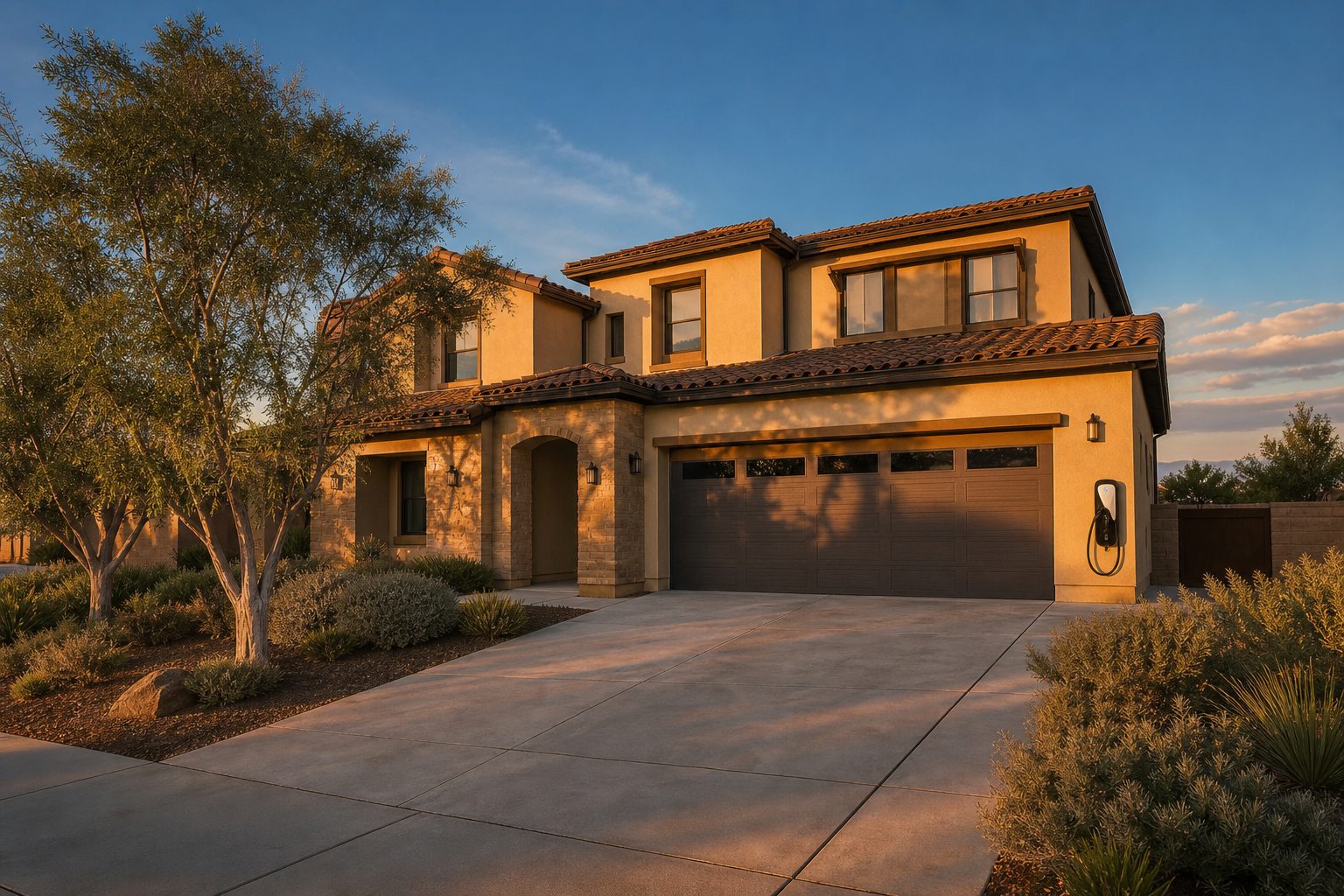
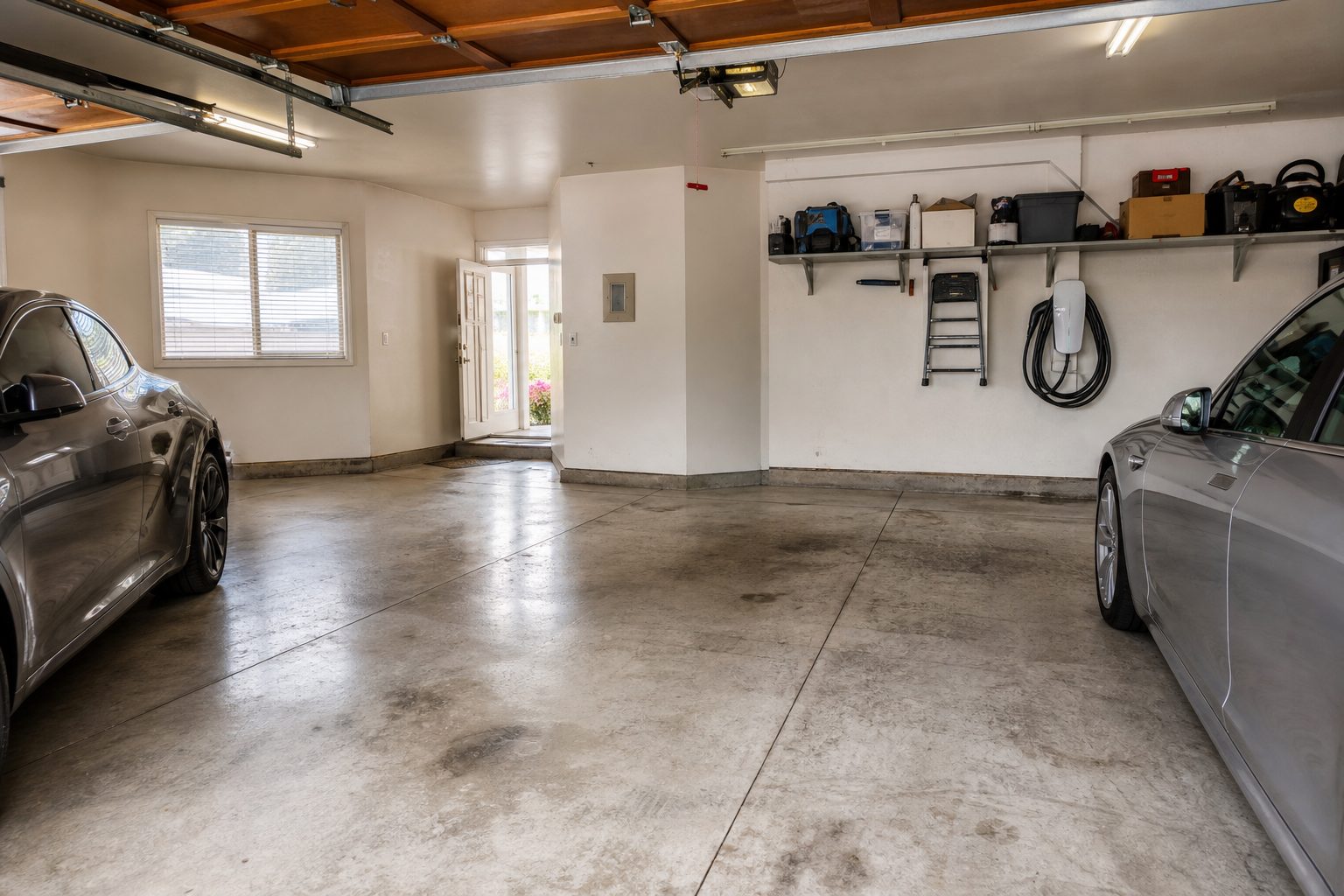
One trend worth noting: more buyers in the Inland Empire are looking at homes with EV charging capability. Whether it is a 240-volt outlet in the garage or a dedicated charging station, this feature can offset the monthly fuel bill entirely for some families. If you are thinking about selling a home in Rancho Cucamonga, an existing EV setup can be a genuine selling point.
For a current look at what your Rancho Cucamonga home might be worth, you can request a free valuation at soldbyblay.com/home-value.
—
Frequently Asked Questions
Did California switch to winter blend gas early in 2026?
Yes. On September 28, 2026, the governor suspended California’s seasonal summer-blend gasoline requirement for the remainder of the season, allowing winter-blend gasoline to be manufactured, imported, distributed, and sold ahead of the usual October 31 switchover date.
When does California normally switch to winter blend?
Most parts of California normally switch to winter-blend gasoline on October 31 each year. The switch back to summer blend typically happens in March or April, depending on regulatory timelines set by CARB.
How much cheaper is winter blend gas?
Based on a 2022 estimate from the Southern California Auto Club, the switch from summer to winter blend was expected to save consumers roughly 15 to 20 cents per gallon. That figure is a historical reference, not a guarantee for 2026, and actual savings depend on crude prices, refinery conditions, and supply levels.
When will gas prices go down in Southern California?
There is no guaranteed timeline. Historically, California gas prices tend to ease in the fall as summer driving demand fades and winter blend enters the supply chain. However, crude oil prices, refinery capacity, imports, and inventories all play larger roles than the blend switch alone.
Why is California gas so much more expensive than other states?
Multiple structural factors contribute: strict CARB fuel formulation standards, limited in-state refinery capacity, state excise taxes, and the fact that California uses a unique gasoline blend that cannot easily be supplemented with imports from other states.
Does the winter blend switch lower diesel prices?
No. The summer and winter blend regulations apply to gasoline, not diesel. Diesel prices are driven by crude oil costs, refinery capacity, and separate market dynamics.
Does winter gas give you worse mileage?
Slightly. Winter-blend gasoline contains more volatile compounds with marginally lower energy content per gallon. The effect is typically only a few percentage points, per the EPA and EIA, and most drivers will not notice it on any single tank.
Is California gas at a record high right now?
As of October 2, 2026, California’s statewide regular average of $6.4008 (per AAA) is just fractions of a cent below the all-time record of $6.4375 set on June 14, 2022. California diesel did set a new statewide record of $8.4387 on September 22, 2026.
Will the early switch save me money this month?
It is possible, but do not expect instant relief. Summer-blend inventory already in the supply chain must sell through, and refineries need time to transition. The blend switch is one factor among many, including crude prices, refinery operations, and taxes.
How do gas prices affect the cost of owning a home in Rancho Cucamonga?
Transportation is one of the primary drivers of Rancho Cucamonga’s cost of living, per ERI data (February 2026). For homeowners, gas costs are a recurring monthly expense that affects your total budget. For those managing an inherited property from out of the area, fuel costs for trips to the property add up during probate or pre-sale preparation.
—
The Bottom Line
The switch to winter-blend gasoline is welcome news, but it is not a silver bullet. With San Bernardino County regular averaging $6.3229 as of October 2, 2026 (per AAA), and structural factors like limited refinery capacity and strict state fuel standards keeping California prices well above the national average, the blend change alone will not bring dramatic overnight relief. What it does is remove one cost layer from an already expensive equation, and over the coming weeks, you may see modest easing as winter blend works its way through the supply chain.
*This article is general information. Gas prices change daily; check current prices before you fill up. Prices from AAA as of October 2, 2026; prices and regulations change daily.*
—
Have questions about the cost of living in the Inland Empire or your next move? Let’s talk. Whether you are buying, selling, or just planning ahead, we will give you honest advice and a clear plan.
Get your free home valuation at soldbyblay.com/home-value Schedule a consultation at soldbyblay.com/contact
Brent Blay | Sold By Blay | Park Regency Realty | DRE #02068178 909-641-8751 | brentblay@parkregency.com | soldbyblay.com Your family deserves the best.

Leave a Reply