


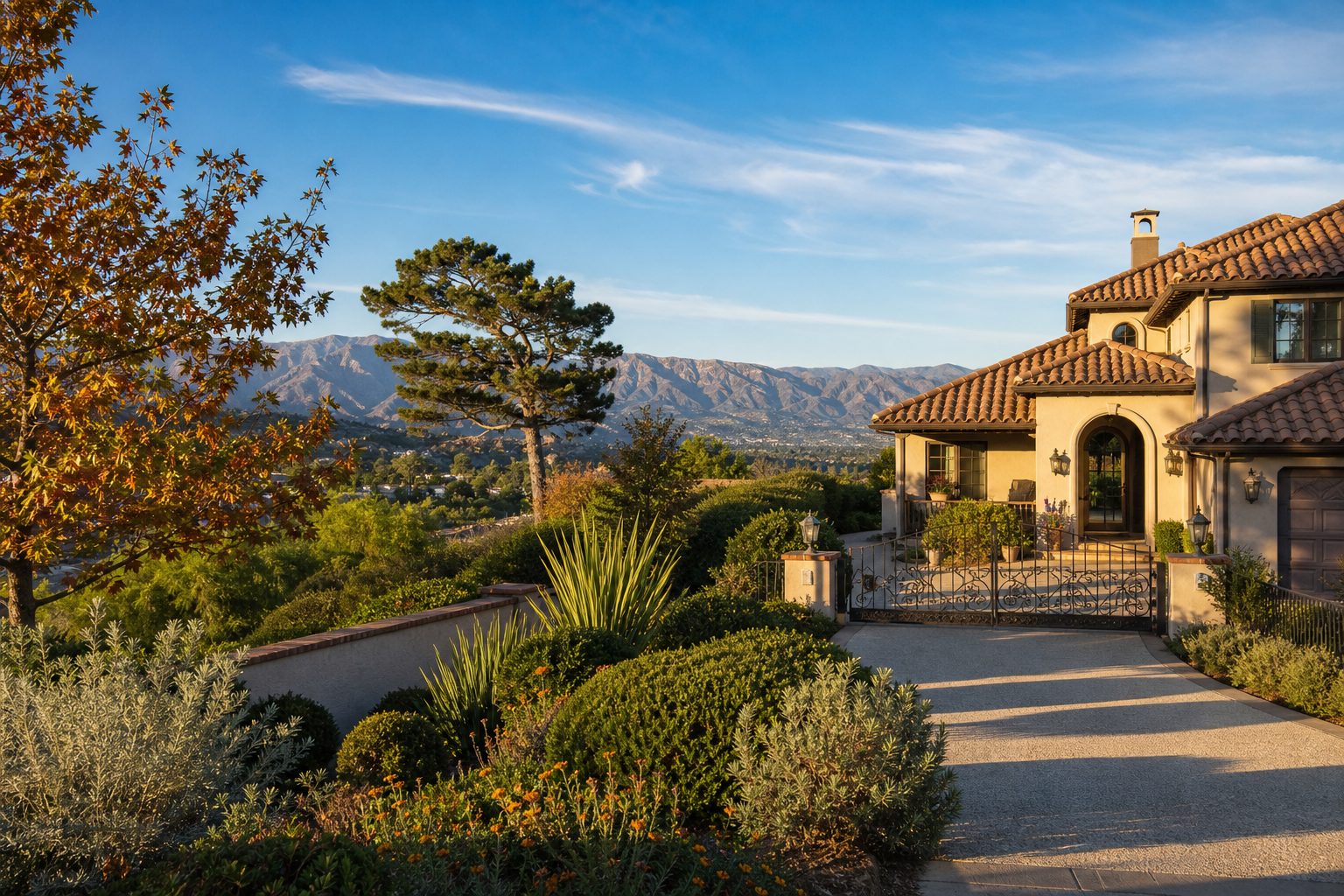
Is it windy in Rancho Cucamonga?
Yes, during Santa Ana wind events, especially along the foothills and the east side near the Cajon Pass. But the winds come in episodes, not every day, and with preparation, they are manageable.
Why This Matters Right Now in Rancho Cucamonga
If you own a home in Rancho Cucamonga or you are researching the area before buying, wind is one of those topics that comes up in every conversation but rarely gets explained well. You hear about it from neighbors. You see the occasional viral video of patio furniture sailing across a backyard. And if you have recently inherited a property in the foothills or along the east side, you may be wondering whether wind exposure affects your home’s value or how you should prepare it for sale.
The City of Rancho Cucamonga adopted its 2026 Local Hazard Mitigation Plan Update on October 7, 2026, according to City Council records. Wind and windstorm hazards are part of the conversation at the city planning level. That is your signal that this is worth understanding, whether you plan to stay, sell, or buy.
Why Rancho Cucamonga Gets So Windy
The short answer is geography. Santa Ana winds form when a strong high-pressure system over the Great Basin (Nevada and Utah) creates a pressure gradient that accelerates winds through the mountain passes and canyons of Southern California, according to the National Weather Service. The air is dense, dry, and fast, and it needs somewhere to go.
Rancho Cucamonga sits directly in the path of that funnel. The Cajon Pass, the natural gap in the San Gabriel and San Bernardino Mountains just northeast of the city, acts as a wind tunnel. As air compresses through that gap, it accelerates and rushes down toward the valley floor.
What does that actually mean for your street? Communities closest to the Pass and highest in elevation feel it the hardest. The bottom of the Cajon Pass and the wind-prone areas along Interstate 15 north of the 210, as well as the 210 corridor between Rancho Cucamonga and the Rialto and Fontana border, are particularly vulnerable to powerful gusts, according to CBS Los Angeles reporting on Santa Ana corridors. If you live south of Foothill Boulevard and west of Haven Avenue, you will still feel wind events, but typically at a lower intensity than what your neighbors in the northern foothills experience.
This is not a design flaw. It is physics. And it is why we always encourage both buyers and sellers to understand their specific lot’s exposure before making decisions.
When Is Wind Season in Rancho Cucamonga?
Santa Ana wind events usually arrive in the fall and winter months, coinciding with Southern California’s fire season. A National Weather Service lead forecaster has described these as “offshore, gusty, warm, and dry winds” with a season that “is typically October through December,” according to NWS briefings. Some meteorologists note that Santa Ana winds can occur during the cooler months from September through May, though the lighter, off-peak events are far less intense.
Here is what you need to know about the pattern:
- Duration of a typical event: One to three days, with the strongest gusts usually concentrated in a 12 to 24 hour window
- Frequency: Several events per season, with two or three major events in most years
- Consistency: Santa Ana winds are a recurring feature regardless of whether El Niño, La Niña, or neutral conditions prevail in the Pacific, according to National Weather Service climate data
- Between events: Conditions return to normal. Most days in Rancho Cucamonga, even during “wind season,” are calm
Wind advisories and High Wind Warnings are issued by the National Weather Service’s San Diego office, which covers the Inland Empire. We always tell our clients to sign up for Wireless Emergency Alerts on their phones and to monitor NWS forecasts for the San Bernardino County Valleys zone.
Where Is It Windiest in Rancho Cucamonga?
Not every block in Rancho Cucamonga gets the same wind. Elevation, lot orientation, tree coverage, and distance from the Cajon Pass all play a role, and exposure can vary meaningfully from one street to the next. That said, the general pattern is consistent and well documented.
Highest Exposure: North of the 210 Freeway and the Foothills
Alta Loma, north Etiwanda, Etiwanda Estates, and Rancho Etiwanda Estates sit at the greatest elevation gain and closest to the mountain front where winds accelerate downslope. These are some of the most desirable neighborhoods in the city, with typical home values in the Deer Creek area reaching roughly $1,668,181 and Hermosa at roughly $1,287,867, according to neighborhood-level home value data as of spring 2026. The wind does not diminish that desirability. It does mean you need to prepare differently.
High Exposure: East Side Near the Cajon Pass
Etiwanda, Coral Sky, Brentwood, and La Ventana sit closest to the Cajon Pass corridor. During the January 2025 Santa Ana event, a mesonet station at Deer Canyon recorded an 80 mph gust, and a station identified as Rancho Cucamonga recorded an 83 mph peak gust, according to mesonet records from that event. The NWS has confirmed that “winds will be mainly out of the north and northeast, with the strongest winds in the foothills and below passes.”
Moderate Exposure: Central Rancho Cucamonga
The area near Foothill Boulevard, 19th Street, and the Milliken Avenue corridor sits at slightly lower elevation, and urban development provides some wind break. You will still notice Santa Ana events here, but sustained speeds are typically lower than what the foothills experience.
Lower Relative Exposure: West Side and Lower Elevation
Areas near Archibald Avenue and west of Haven Avenue sit at the greatest distance from the Pass and from the mountain front. Valley floor buffering reduces gust intensity, though strong events still register.
Important: These are generalizations based on elevation and geography, not guarantees. A hilltop lot on the west side can be windier than a sheltered lot backed against a wall in Etiwanda Estates. We always recommend reviewing local weather station data for a specific address.
Is It as Bad as People Think?
During a major event, yes, it can be intense. National Weather Service meteorologist Alex Tardy confirmed that winds near the north end of Haven Avenue above Rancho Cucamonga reached 82 mph during a March 2024 Santa Ana event, according to Los Angeles Times reporting. In November 2022, at least five big rigs overturned on the 210 and 15 freeways in the Rancho Cucamonga area, temporarily closing all southbound lanes of the 15, per Los Angeles Times coverage from November 17, 2022.
Those are real numbers and real events. So is this: on a typical afternoon in June, July, or August, Rancho Cucamonga’s weather is calm, dry, and as pleasant as anywhere in the Inland Empire. Wind season is episodic. Most residents go about their lives normally for weeks between events, and the lifestyle, schools, mountain views, and community amenities are exactly why the city’s population stands at 175,411, per U.S. Census Bureau data, with a median household income of $111,895 that sits 13% above the state average.
During typical High Wind Warnings, the NWS forecasts northeast winds of 25 to 35 mph with gusts of 55 to 65 mph possible, and gusts over 65 mph possible near the Cajon Pass. Those are the events most residents experience. The 80+ mph gusts are the extreme tail of the distribution, concentrated in the highest foothill exposures.
What we tell every buyer who asks about the wind: the people who love living here know about the wind. They are not ignoring it. They have adapted, and they would not trade their mountain views, their lot sizes, and their neighborhoods for a calmer zip code.
How Wind Affects Your Rancho Cucamonga Home
If you own a home here, or if you have inherited one, understanding what the wind actually does to a property is more valuable than worrying about the wind in the abstract. Here is what we see most often:
- Fences: Wood fences, particularly older ones with weakened posts, are the most common casualty. Wrought iron or vinyl fencing holds up significantly better.
- Trees: Mature trees with shallow root systems or heavy canopies can topple or lose major limbs. Eucalyptus and pine are particularly vulnerable. Regular pruning before wind season is one of the most effective investments a homeowner can make.
- Roofs and tiles: Concrete and clay tile roofs, common in Rancho Cucamonga’s foothill communities, can lose individual tiles in high winds. Missing tiles create entry points for water damage during winter rains.
- Patio covers and pergolas: Lightweight aluminum patio covers and fabric shade structures are vulnerable. Securing or removing shade sails before a wind event is essential.
- Solar panels: Properly installed solar panels are engineered to withstand high winds, but older or improperly mounted systems should be inspected.
- Pools and outdoor furniture: Debris from trees and neighboring properties ends up in pools. Unsecured furniture becomes a projectile. This sounds dramatic until you see a patio chair embedded in stucco.
- Dust and air quality: Santa Ana winds carry fine dust and particulates, which can be harsh on HVAC filters and on anyone with respiratory sensitivity.
- Power outages and Public Safety Power Shutoffs: Southern California Edison may proactively de-energize lines in high-risk fire weather conditions. You can check whether your address may be affected through SCE’s outage and PSPS notification system, which we recommend every homeowner sign up for.
With a background in emergency medical services, we have seen how quickly wind events turn into emergencies when preparation is skipped. A loose tree limb and a downed power line can escalate from inconvenience to danger in minutes. Preparation is not optional in the foothills.
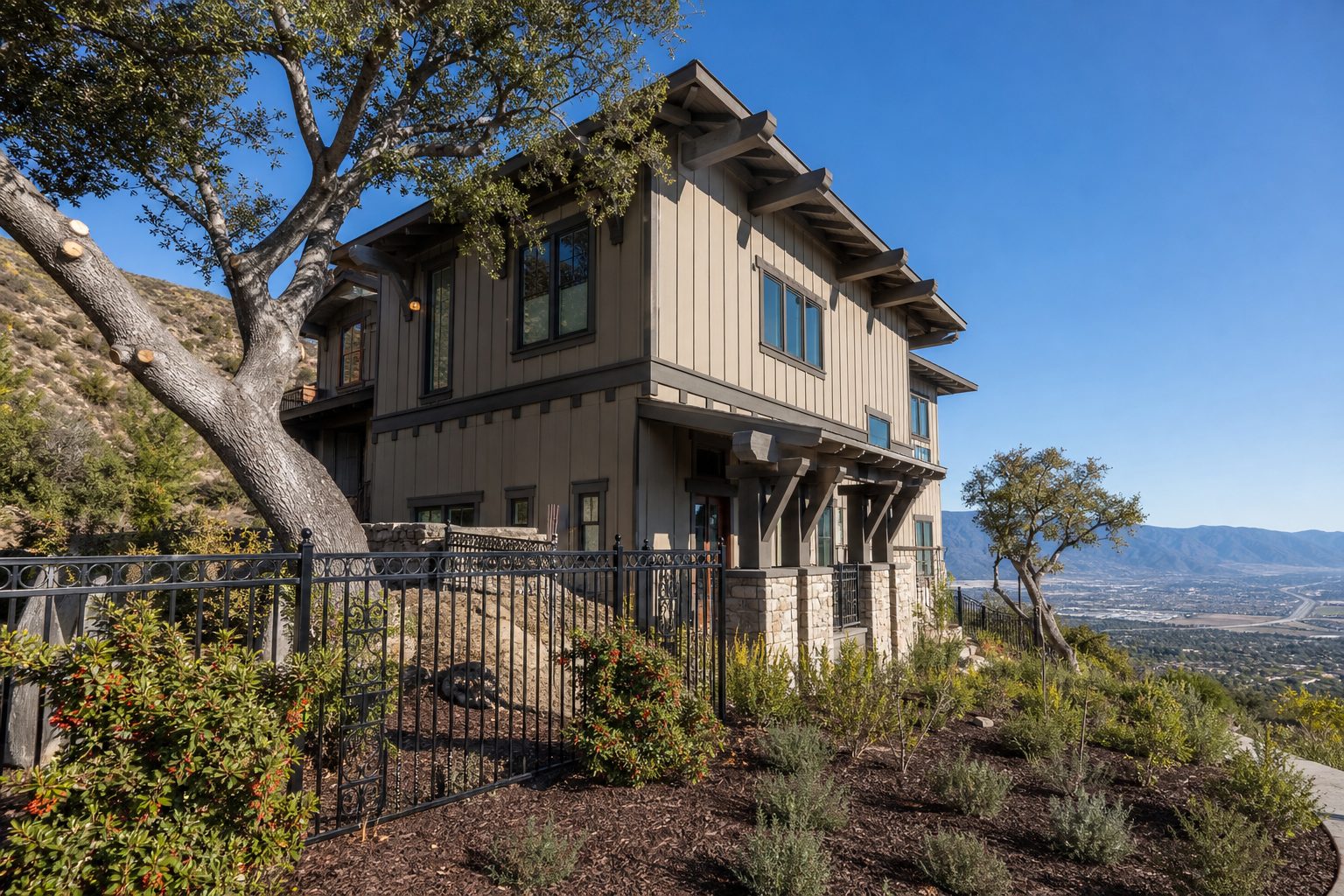
Wind and Wildfire Risk in Rancho Cucamonga
Santa Ana winds and wildfire risk are deeply connected. The same dry, hot, fast-moving air that rattles your fence also creates extreme fire weather conditions. Red Flag Warnings, issued by the National Weather Service when low humidity combines with strong winds, are the signal that fire danger is at its highest.
Rancho Cucamonga’s northern foothill neighborhoods sit adjacent to wildland areas, and defensible space around your property is both a legal requirement and a practical necessity. CAL FIRE’s defensible space guidelines apply to properties within the State Responsibility Area and local Very High Fire Hazard Severity Zones.
If you are evaluating a foothill property, whether as a buyer or as someone who has inherited one, understanding evacuation routes is just as important as understanding the floor plan. We have written extensively about this topic as it applies to neighborhoods like Etiwanda Heights.
Wind-Season Checklist for Rancho Cucamonga Homeowners
Before a Wind Event
- Trim trees and remove dead branches, especially those overhanging your roof, fences, or power lines
- Secure or store outdoor furniture, trash cans, decorations, and shade sails
- Inspect your fence for loose or rotted posts and repair before the season starts
- Check your roof for loose or cracked tiles and have them repaired
- Clean gutters and downspouts to prevent debris buildup
- Charge backup batteries and flashlights in case of power outages or PSPS events
- Sign up for Southern California Edison PSPS alerts for your address
- Confirm your homeowners insurance policy is current
During a Wind Event
- Bring pets indoors
- Avoid parking under trees or near structures that could lose debris
- Stay off the roads during peak gusts if possible; big rigs have overturned on the 210 and 15 freeways during past events
- Monitor NWS alerts for updated wind forecasts
- If you see downed power lines, call 911 immediately and stay away
After a Wind Event
- Walk your property and document any damage with photos before making repairs
- Report non-emergency damage, such as downed trees not blocking roads or streetlight outages, through the City of Rancho Cucamonga’s RC2GO portal, per guidance the city posted on October 13, 2026
- Call 911 for emergencies such as downed power lines or structural hazards
- Contact your insurance company promptly if you have damage to file a claim
What Wind Season Means for Sellers and Buyers in Rancho Cucamonga
If You Are Selling
Wind season does not mean you should wait to list. It means you should prepare differently. Homes for sale in Rancho Cucamonga during October through March need staging that accounts for the reality: secure any outdoor decor, ensure your landscaping is well maintained and freshly pruned, and make sure your fences, patio covers, and roof tiles are in good condition before photos are taken and showings begin.
Timing open houses around wind advisories is practical, not paranoid. If the NWS has issued a High Wind Warning for Saturday, moving your open house to Sunday afternoon, after the event passes, gives buyers a much better first impression. California’s Transfer Disclosure Statement requires sellers to disclose known material facts about the property, and past wind damage or repairs would generally fall into that category. Being transparent about repairs you have made actually builds buyer confidence rather than undermining it.
If you have inherited a property in the foothills or along the east side and you are evaluating what it is worth, the wind is already factored into comparable sales. Buyers who choose these neighborhoods do so with eyes open. The views, the lot sizes, and the privacy of foothill living more than compensate. As of October 2026, the median price for a single-family home in Rancho Cucamonga is $765,000, per PropertyFocus, with foothill neighborhoods like Deer Creek and Hermosa commanding significantly higher values.
If You Are Buying
Ask the right questions during your home inspection. Have the inspector evaluate fence condition, roof tile integrity, tree health and root stability, patio cover anchoring, and the age and condition of any solar panel mounting. Ask the seller whether they have filed any wind-related insurance claims. Look at the orientation of the lot relative to the mountains and canyons to the north and northeast.
And then remember why you are looking here in the first place. Rancho Cucamonga’s foothill and east-side neighborhoods remain among the most sought-after in the Inland Empire precisely because the tradeoffs are worth it for the vast majority of residents. Before making an offer, understand how the 2026 housing market and Brightline West development may affect your investment.
Frequently Asked Questions
Is it windy in Rancho Cucamonga?
Yes, particularly during Santa Ana wind events that typically occur from October through March. The city sits near the Cajon Pass, which funnels winds from the desert toward the coast. However, these events are episodic, usually lasting one to three days, and most of the year the weather is calm and mild.
Why is Rancho Cucamonga so windy?
Santa Ana winds form when high pressure over the Great Basin forces dry air through mountain passes. The Cajon Pass, located just northeast of Rancho Cucamonga, acts as a natural wind tunnel that accelerates those winds as they descend toward the valley floor, according to the National Weather Service.
What months are the Santa Ana winds in Rancho Cucamonga?
The primary Santa Ana wind season runs from October through December, according to National Weather Service forecasters. However, events can occur from September through May, with the strongest and most frequent events concentrated in the fall and early winter months.
What part of Rancho Cucamonga is the windiest?
The foothills north of the 210 Freeway and the east side closest to the Cajon Pass generally experience the strongest winds. This includes neighborhoods like Alta Loma, Etiwanda Estates, Rancho Etiwanda Estates, and the Coral Sky and Brentwood areas. Lower-elevation western neighborhoods typically experience less intense gusts.
Is Etiwanda windier than Alta Loma?
Both areas experience significant wind during Santa Ana events because both sit at higher elevations near the mountain front. Etiwanda and the east-side neighborhoods may have slightly more direct exposure to the Cajon Pass corridor, but wind intensity varies by specific lot, elevation, and orientation rather than strictly by neighborhood name.
How strong do the winds get in Rancho Cucamonga?
During typical High Wind Warnings, the NWS forecasts northeast winds of 25 to 35 mph with gusts of 55 to 65 mph. During extreme events, gusts have exceeded 80 mph. A mesonet station recorded an 83 mph peak gust in Rancho Cucamonga during the January 2025 Santa Ana event, per mesonet records.
Does homeowners insurance cover wind damage in California?
Wind damage is generally covered under standard California homeowners insurance policies. However, coverage details, deductibles, and exclusions vary by carrier and policy. We always recommend reviewing your policy with your insurance agent before wind season and documenting your property’s condition with photos annually. For guidance on preparing your finances for homeownership, the Consumer Finance Bureau offers resources on how much to spend on a home. This article is general information, not insurance or legal advice.
How do I report wind damage in Rancho Cucamonga?
For emergencies such as downed power lines, call 911. For non-emergency damage such as downed trees not blocking roads or streetlight outages, use the City of Rancho Cucamonga’s RC2GO portal, per city guidance posted on October 13, 2026.
Should I avoid buying a home in north Rancho Cucamonga because of the wind?
No. The foothill neighborhoods are among the most desirable and highest-valued in the entire Inland Empire. Buyers who choose these areas do so for the views, lot sizes, privacy, and quality of life. Understanding wind exposure and preparing for it is part of homeownership here, just as earthquake preparedness is part of living anywhere in California.
Is it a bad idea to list my home during wind season?
Not at all. Homes sell year-round in Rancho Cucamonga. The key is preparation: secure your landscaping and outdoor features, time your open houses around wind advisories when possible, and make sure any past wind-related repairs are documented. Proper presentation during wind season actually demonstrates to buyers that the home has been well maintained.
The Bottom Line
Yes, it gets windy in Rancho Cucamonga, especially in the foothills and along the east side near the Cajon Pass. The Santa Ana winds are seasonal, episodic, and well understood. They have not changed why people want to live here, and they are not going to. What matters is preparation, honest information, and working with someone who knows this market at the street level.
Have questions about wind season or your next move in Rancho Cucamonga? Let’s talk. Whether you are buying, selling, or just planning ahead, we will give you honest advice and a clear plan.
Get your free home valuation at soldbyblay.com/home-value
Schedule a consultation at soldbyblay.com/contact
Brent Blay | Sold By Blay | Park Regency Realty | DRE #02068178 909-641-8751 | brentblay@parkregency.com | soldbyblay.com Your family deserves the best.
*This article is general information, not insurance or legal advice. Consult a licensed professional for guidance specific to your situation.*
*Information and data as of October 2026; figures change regularly.*

Leave a Reply